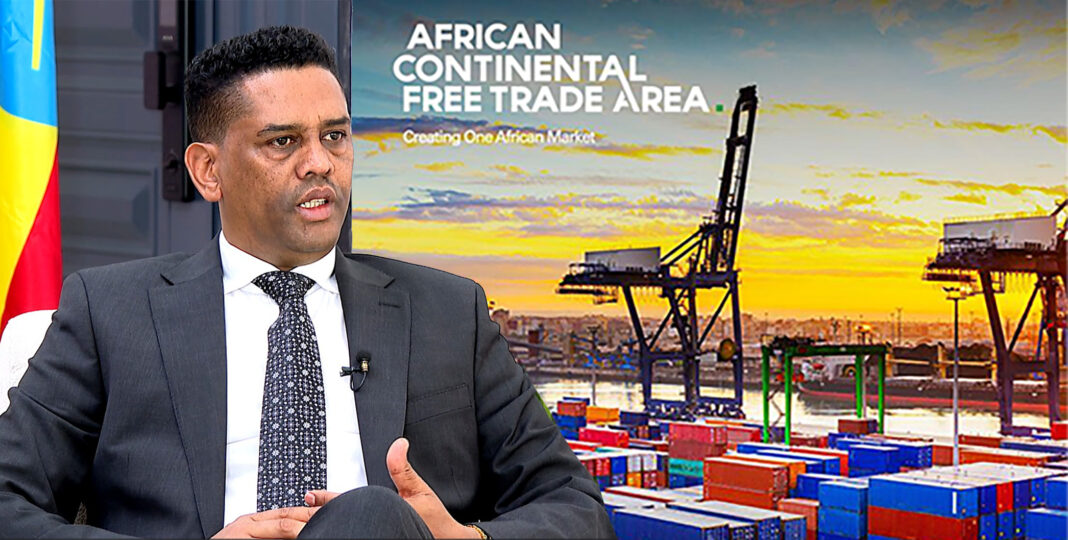
Ethiopia will officially commence trading under the African Continental Free Trade Area (AfCFTA) this Thursday, October 3, a pivotal move that integrates one of Africa’s largest economies into the continental market, the Ministry of Trade and Regional Integration announced today. According to sources who spoke with Ethiopian Business View, Trade Minister Kassahun Gofe informed attendees at a recent exporters’ meeting that the ministry will officially commence trading under the AfCFTA at a ceremony on Thursday, October 3.
The long-awaited launch follows the recent publication of Ethiopia’s tariff regulations in the Negarit Gazette, finalizing a process that had been watched closely by regional economists and policymakers. As an original architect of the landmark trade pact, Ethiopia’s participation is seen as crucial to the bloc’s success. The AfCFTA, designed to create the world’s largest free trade area by population, aims to significantly boost intra-African commerce by eliminating tariffs on most goods. For Ethiopia, a nation experiencing rapid economic growth and holding considerable diplomatic influence, the step marks a decisive turn towards deeper continental integration after years of cautious deliberation.
“The publication of these regulations is the green light we have been waiting for,” said an official within the Ministry, who spoke on condition of anonymity. “This sets the stage for Ethiopian businesses to access markets across the continent under preferential terms.” The newly released 419-page framework outlines the tariff concessions for close to 6,000 products. In compliance with AfCFTA stipulations, 90% of these items—classified as Category A—will immediately be eligible for zero tariffs. However, the government’s publication has also revealed a strategic hesitation. The details for the remaining 10% of goods were withheld from the public gazette.
This portion includes items in Category B, slated for a gradual tariff phase-out over the next decade, and Category C, which will receive permanent protection from liberalization. Analysts suggest this omission points to the government’s intent to shield specific sensitive or nascent domestic industries from sudden foreign competition. The identities of these protected sectors remain a subject of intense speculation as the trade era begins. This official commencement solidifies Ethiopia’s role in a project poised to reshape African trade, even as the fine print of its participation continues to be parsed by the business community. ©SECO