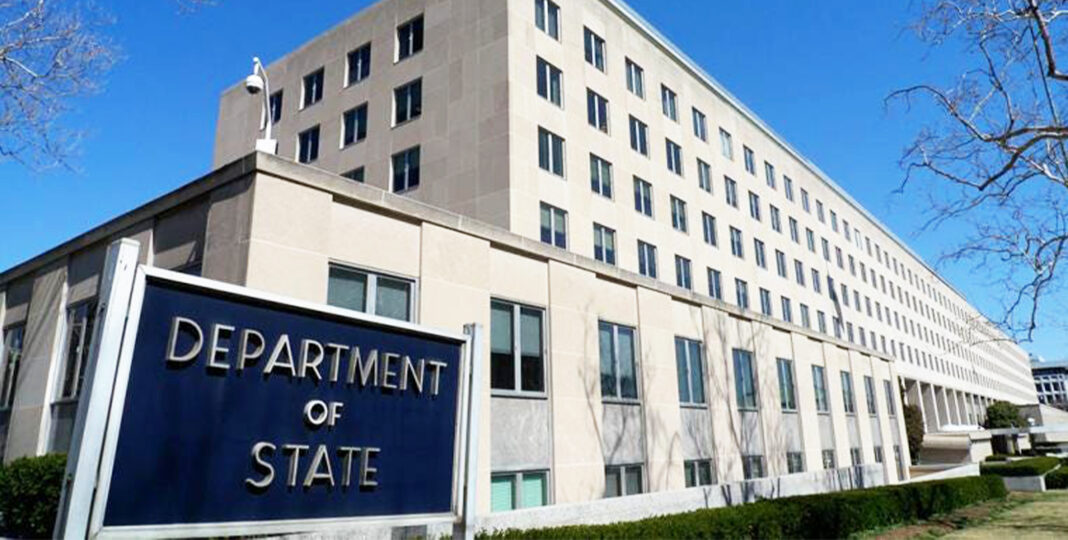
A major U.S. government report has cast doubt on the longevity of Ethiopia’s recent economic reforms, stating that the positive effects of a crucial currency float last year were “short-lived” and that foreign businesses continue to face a challenging environment marked by excessive taxation and a weak rule of law.
The U.S. State Department’s “2025 Investment Climate Statements” outlines that despite initial promise, Ethiopia continues to grapple with significant economic and regulatory hurdles that are stifling foreign investment and broader economic development. A central concern is the rapid return of a gap between the official and parallel market exchange rates.
The government’s move to float the Ethiopian birr on July 29, 2024, was initially praised for easing acute foreign currency shortages and correcting economic distortions. However, the report found that by November of the same year, the disparity had already re-emerged, contributing to persistent hard currency shortages that cripple business operations. The report identifies a “weak tax system” as another critical obstacle.
With a narrow tax base, authorities are increasingly targeting foreign firms with “questionable and excessive tax bills.” This is compounded by a customs commission that makes “frequent, non-transparent, and retroactive regulatory changes,” causing financial losses for companies that had been operating in compliance with previous rules. Further deterring investors is the government’s continued preferential treatment of state-owned enterprises (SOEs). The report claims the system is manipulated to benefit inefficient SOEs, citing examples where foreign companies are required to lease equipment from them.
Corruption is also noted as a “persistent challenge.” While acknowledging Ethiopia’s steps to liberalize key sectors like banking and telecommunications to attract foreign direct investment (FDI), the report deems these reforms “insufficient.” It points to the Banking Proclamation, which still prohibits majority foreign ownership of local banks, and the absence of an effective system for resolving business disputes. The lack of a stronger rule of law was highlighted as a fundamental issue undermining investor confidence.
The State Department recommended establishing this as a key step toward improving the investment climate. China remains the largest source of FDI in Ethiopia, followed by Saudi Arabia and Türkiye, with the United Arab Emirates also emerging as a significant investor. In 2024, FDI inflows accounted for 2.7 percent of the nation’s GDP. The report concludes by summarizing the primary challenges for potential investors:
• Ongoing Conflict: Persistent instability in the Amhara and Oromia regions, and rising political tensions in Tigray that threaten a return to full-scale conflict.
• Economic Weaknesses: The re-emerging exchange rate gap, persistent foreign currency shortages, and poor infrastructure.
• Regulatory and Legal Deficiencies: Weak property rights, unpredictable taxation and customs enforcement, and a system that favors state-owned enterprises. ©SECO