By EBV staff writer
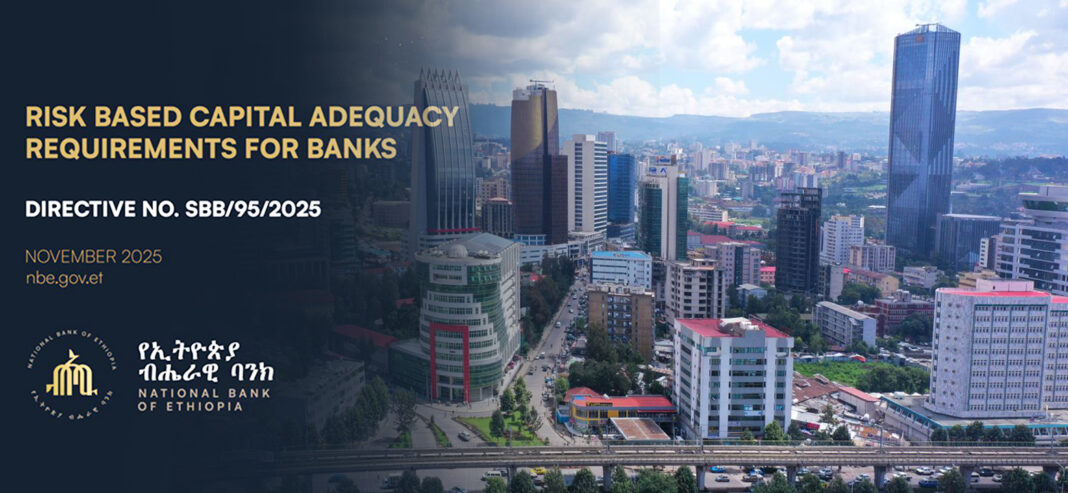
In a powerful move set to redefine the nation’s financial landscape, the National Bank of Ethiopia (NBE) has dropped a landmark directive that radically overhauls how banks handle foreign exchange. This isn’t just an update—it’s a strategic revolution for economic resilience.
The cornerstone of Directive No. SBB/96/2025 is a strict new cap: a bank’s total foreign exchange exposure is now tied directly to its core financial strength, strictly forbidden from exceeding 18% of its Tier 1 Capital. This clever linkage ensures that the largest, most stable banks can support significant forex activity, while shielding the entire system from dangerous over-exposure and catastrophic currency swings.
But the reforms go deeper. For the first time, banks must now vigilantly monitor their risk in individual currencies—not just their overall book—preventing dangerous concentrations in dollars or euros. The rules also cast a wider net, capturing hidden risks from complex off-balance sheet deals like forwards and swaps.
“This is a masterstroke in modern risk management,” said a senior financial analyst. “It simultaneously allows healthy forex activity for trade and investment while building a firewall against the kind of banking crises that cripple economies. This is a direct message to investors: Ethiopia is serious about financial stability.”
The NBE backs this with teeth—sky-high penalties for non-compliance, including daily fines and the potential to suspend a bank’s entire forex operation.
This decisive action promises to steady the birr, boost investor confidence, and ensure that crucial foreign exchange is available to fuel essential imports and economic growth. The future of Ethiopian banking starts now.©SECO