By EBV staff writer
As Ethiopia’s interest in investing in the Damerjog Liquid Bulk Port (DLBP) appears to wane, Djiboutian authorities have initiated discussions on expanding the existing oil terminal at Doraleh in collaboration with the United Arab Emirates-based operator, Horizon Djibouti Terminals Limited (HDTL).
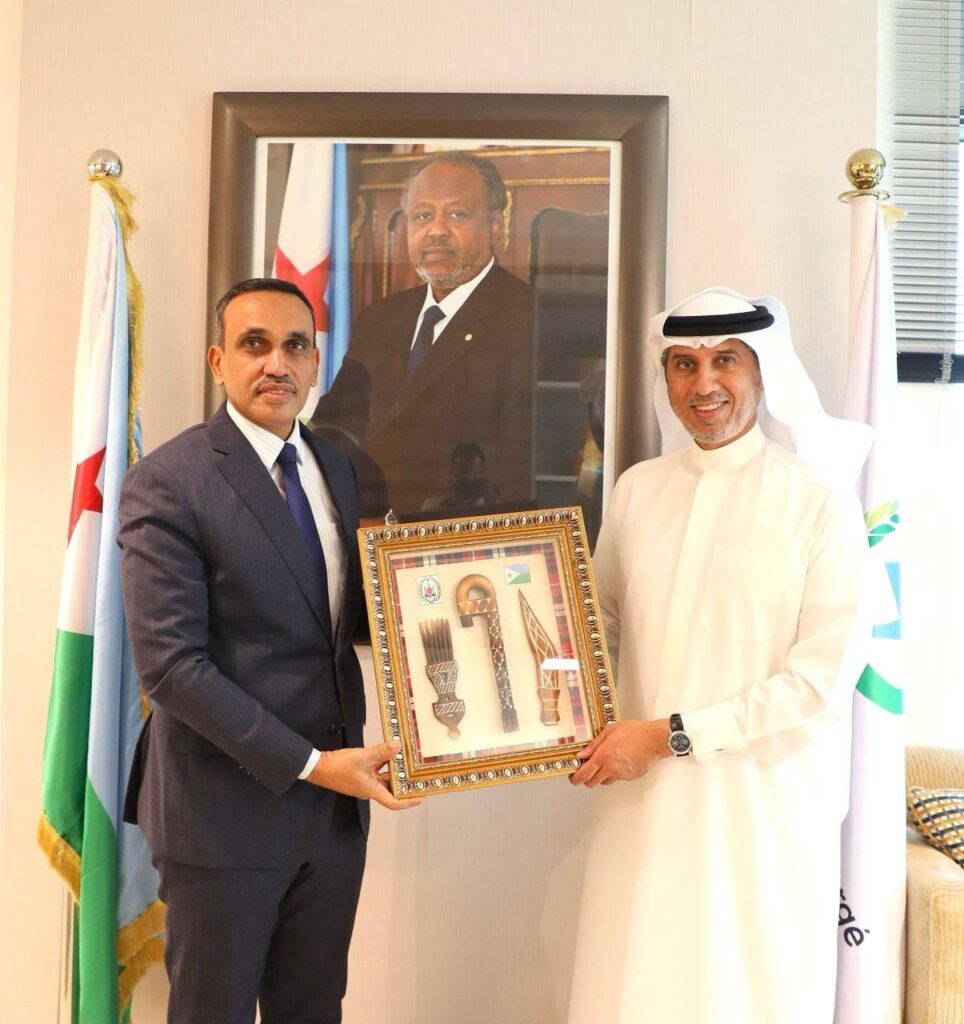
On June 21, Djibouti’s newly appointed Minister of Energy in charge of Natural Resources, Djama Mohamed Hassan, held talks with Hussain Sultan Lootah, Chief Executive Officer of the Emirates National Oil Company (ENOC) and Chairman of HDTL.
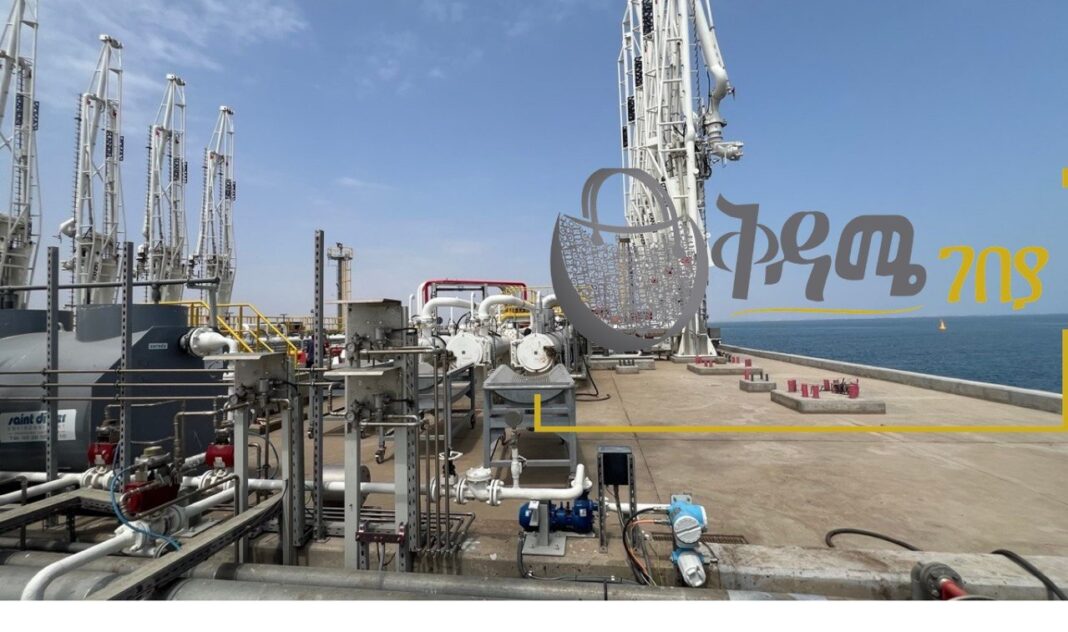
According to Djibouti’s state-owned newspaper La Nation, the discussions focused on extending the existing jetty at Horizon Djibouti Terminals, currently the only operational petroleum port through which Ethiopia imports liquid fuel cargo.
The two sides also examined plans to construct additional fuel storage tanks and liquefied petroleum gas (LPG) facilities at the terminal, located approximately 13 kilometres west of Djibouti City.
Ethiopia has shifted its focus toward an alternative strategy: constructing a fuel pipeline linking Horizon Djibouti Terminals to the Ethiopian border through a public-private partnership model
The development marks a significant policy shift for Djibouti, which had previously resisted expansion proposals from the Emirati operator for more than a decade due to political tensions between Djibouti and the United Arab Emirates dating back to the early 2010s.
HDTL, which began operations in 2005, has long advocated for substantial upgrades to maintain full operational capacity and meet Ethiopia’s rapidly growing fuel demand. However, Djiboutian authorities had consistently opposed such initiatives.
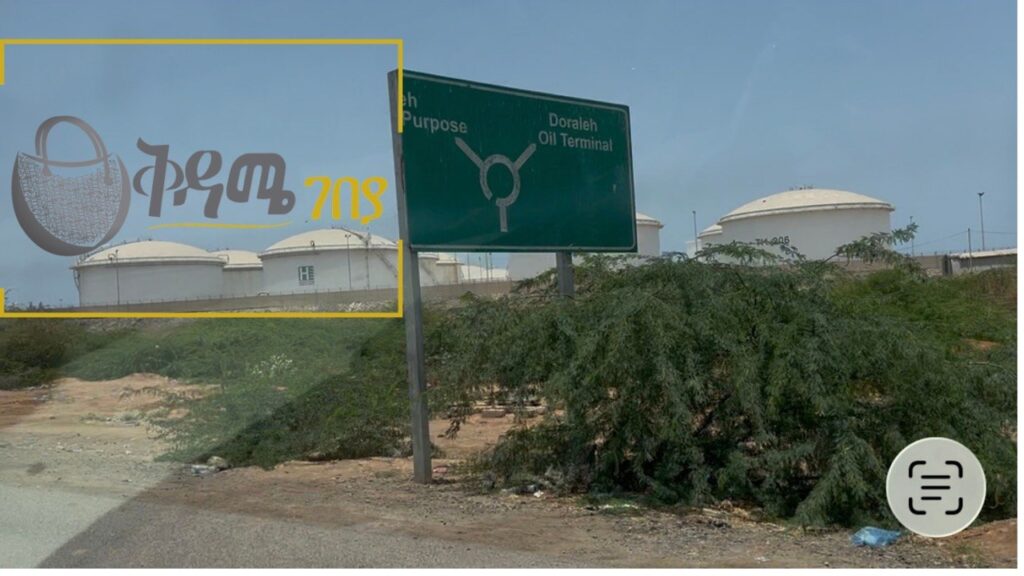
The aging infrastructure and the absence of major renovations have contributed to persistent fuel supply challenges in Ethiopia. The terminal currently handles no more than 350 fuel trucks per day, limiting its ability to satisfy Ethiopia’s increasing energy requirements.
Djibouti’s reluctance to authorize expansion projects was partly influenced by its long-running dispute with Abu Dhabi over the management agreement for the Doraleh Container Terminal aka SGTD.
Instead, Djibouti prioritized the development of the Damerjog Liquid Bulk Port, a strategic project designed to handle up to 13 million tonnes of fuel annually.
Although the project’s marine infrastructure, including its jetty, has been completed, construction of the oil storage depot remains unfinished.
EBV sources indicate that while Ethiopia had previously expressed interest in participating in the investment, Djibouti sought to finance the project independently. Several attempts to secure funding, however, failed to materialize.
As a result, Djibouti has renewed its efforts to engage Ethiopia, the world’s most populous landlocked country, to help finance the remaining components of the project.
Meanwhile, sources suggest Ethiopia has shifted its focus toward an alternative strategy: constructing a fuel pipeline linking Horizon Djibouti Terminals to the Ethiopian border through a public-private partnership model.
The initiative could involve international investors, including Nigerian billionaire Aliko Dangote, who already has stakes in a large-scale fertilizer project in southeastern Ethiopia in partnership with the government.
Analysts believe Ethiopia’s changing priorities have prompted Djibouti to reconsider its longstanding opposition to UAE-led expansion projects at Horizon Terminal.
Located 21 kilometres southeast of Djibouti City, the Damerjog Liquid Bulk Port is designed to eventually handle up to 25 million tonnes of fuel annually and accommodate as many as 12 vessel rotations each year. The facility is also strategically positioned about 13 kilometres from the Ethio-Djibouti Railway network.
During his meeting with Djiboutian officials, Hussain Sultan Lootah also discussed plans to connect the terminal to the Ethio-Djibouti Railway.
The Ethiopian government has repeatedly emphasized its intention to transport fuel by rail. During his visit to Djibouti in January, Prime Minister Abiy Ahmed urged both Djiboutian authorities and HDTL management to accelerate the project, stressing that the three-kilometre railway connection should be completed before the end of the year.
Despite the Ethio-Djibouti Railway (EDR) becoming operational in 2018, fuel transportation has yet to commence due to the lack of infrastructure linking Djibouti’s fuel terminals with Ethiopia’s domestic depots. Consequently, 110 fuel tank wagons procured for this purpose have remained unused.
To address the bottleneck, EDR authorities are prioritizing a rail connection to the Awash Oil Depot that is about 300 meters far from the main line, Ethiopia’s principal national fuel storage facility located approximately 235 kilometres east of Addis Ababa.SECO