The International Monetary Fund (IMF) has warned that worsening security conditions in Ethiopia and escalating regional conflicts pose significant risks to the country’s economic reform agenda and macroeconomic outlook.
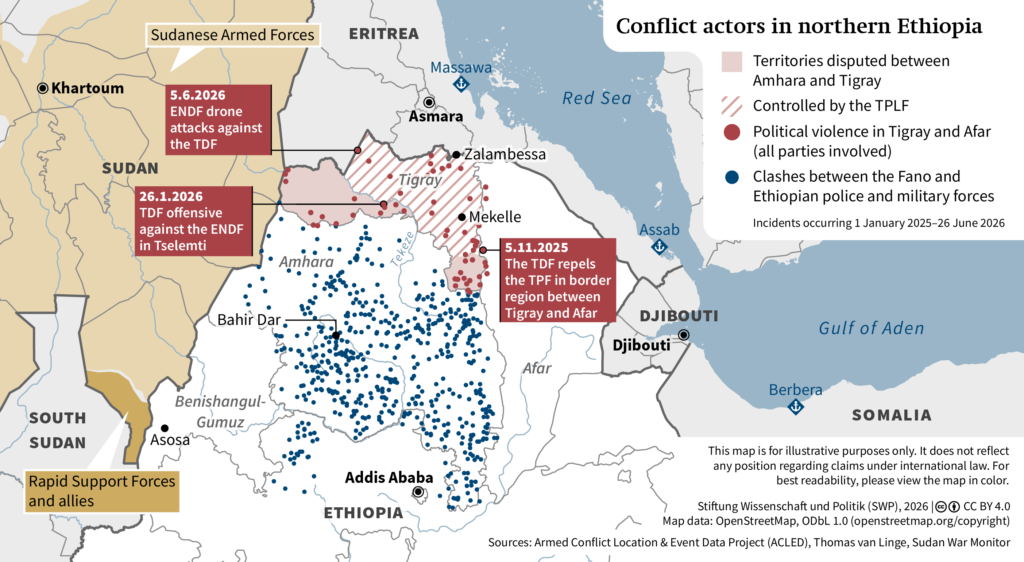
In its latest Fifth Review under the Extended Credit Facility (ECF) that EBV reviewed, the IMF said domestic security risks have increased, citing heightened tensions in Tigray and with Eritrea, while conflicts in the Amhara and Oromia regions continue. The Fund cautioned that the deteriorating security situation could increase population displacement and humanitarian needs, adding pressure to Ethiopia’s economy.
The report also identified the war in the Middle East as a major external shock affecting Ethiopia through higher fuel prices, disrupted trade routes and mounting financing pressures. According to the IMF, Ethiopia’s heavy dependence on imported fuel and Red Sea shipping routes has exposed the country to supply disruptions after one of its fuel suppliers declared force majeure, leading to shortages and higher import costs.
The Fund noted that the conflict has also affected cargo and passenger transport, forced Ethiopian Airlines to suspend some Gulf routes, interrupted small-scale trade with Gulf countries, and created risks for gold exports, although higher international gold prices have partly offset the economic impact.
Despite these challenges, the IMF observed that Ethiopia’s general elections held on June 1 were conducted peacefully, with the ruling Prosperity Party expected to retain its parliamentary majority.
Looking ahead, the IMF warned that a worsening security environment remains one of the principal downside risks to Ethiopia’s economic outlook. It said prolonged domestic unrest, regional instability, or delays in implementing reforms due to social and political pressures could weaken investor confidence, complicate policy implementation, widen financing gaps and reduce support from development partners and creditors.SECO