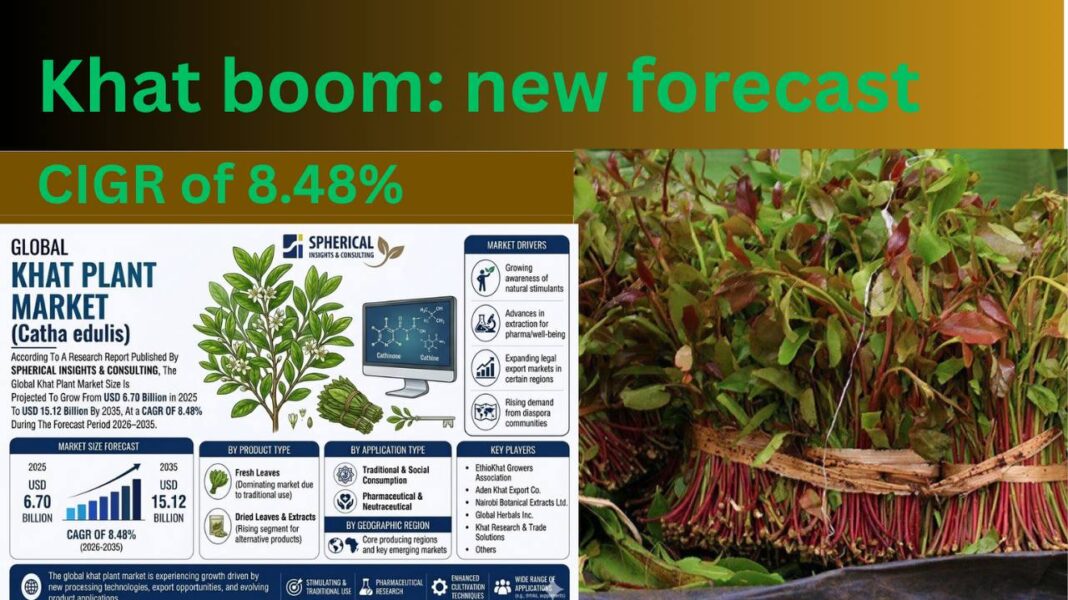
Ethiopia, one of Africa’s largest producers and consumers of khat, is still importing the stimulant leaf from Kenya through informal cross-border trade, highlighting the unusual and largely hidden nature of commerce along the two countries’ border.
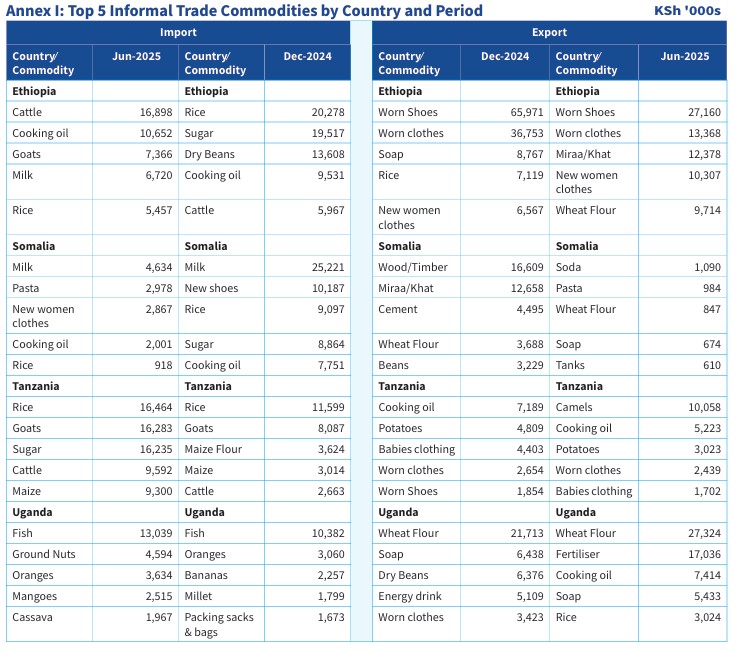
Kenya’s latest Informal Cross Border Trade Survey https://tinyurl.com/uzprwruv shows that Miraa/Khat worth KSh 12.378 million (15.3 million birr) was among the commodities informally imported into Ethiopia in June 2025. The figure puts khat alongside worn shoes, worn clothes, rice and other goods moving into Ethiopia outside formal trade channels.
The finding is particularly striking because Ethiopia is widely known as a major producer, consumer and exporter of khat. Yet the survey indicates that Kenyan miraa — locally known as khat in Ethiopia — is finding its way into the Ethiopian market through informal trade routes.
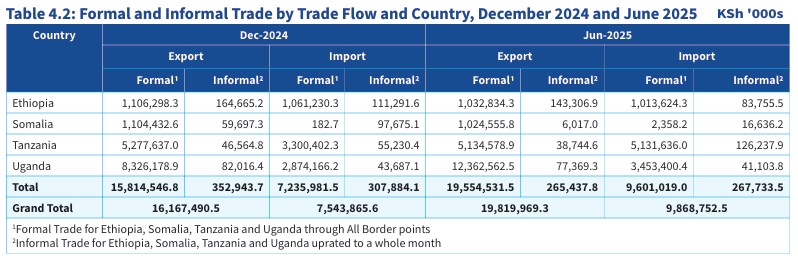
The survey also provides a broader picture of the trade relationship between the two countries. Ethiopia was the largest destination for Kenya’s informal exports in both December 2024 and June 2025. Kenya’s informal exports to Ethiopia were valued at KSh 74.5 million in December 2024 and KSh 67.0 million in June 2025.
The figures point to a decline in Kenya’s informal exports to Ethiopia, even as the neighbouring countries continue to rely heavily on unofficial border commerce.
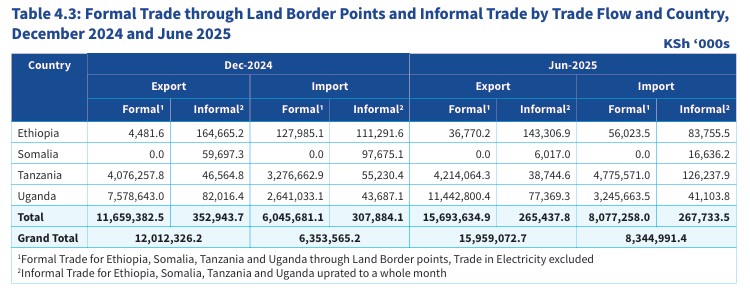
When the survey’s monthly uprated figures are considered, Kenya’s informal exports to Ethiopia stood at KSh 164.7 million in December 2024, before falling to KSh 143.3 million in June 2025. Informal imports from Ethiopia also declined, from KSh 111.3 million to KSh 83.8 million over the same period.
The composition of the trade reveals a striking contrast between what moves in each direction.
Ethiopian agricultural and livestock products form an important part of the informal trade flowing toward Kenya. The survey lists cattle, goats, milk, rice, cooking oil and other commodities among the leading products associated with Ethiopia’s informal trade. On the other side of the border, Kenya’s informal exports to Ethiopia include worn shoes, worn clothes, soap, rice and, notably, miraa/khat.
At the Mandera border point on the Ethiopian side, Kenya’s informal exports to Ethiopia increased slightly from KSh 10.76 million in December 2024 to KSh 11.24 million in June 2025, while imports from Ethiopia rose from KSh 8.78 million to KSh 11.14 million. The result was a sharp narrowing of the informal trade surplus at the crossing, from nearly KSh 2 million to just KSh 104,000.
The decline in informal trade comes after Ethiopia introduced a major macroeconomic reform in July 2024, fundamentally changing its foreign-exchange system. The birr was moved toward a market-determined exchange-rate regime, replacing the heavily regulated system that had prevailed for years.
One of the expectations surrounding the reform was that a more market-oriented foreign-exchange system would reduce incentives for contraband and unofficial currency-linked trade along Ethiopia’s borders.
The latest survey, however, suggests that informal commerce has not disappeared.
Instead, goods continue to move across the Ethiopia-Kenya border outside formal channels, although the scale of the trade declined between the December 2024 and June 2025 survey periods.
For Ethiopia, the trade is particularly significant because informal border commerce provides an alternative channel for agricultural products and livestock to reach the Kenyan market while bringing consumer goods and other products into the Ethiopian market.
The khat trade adds another unusual dimension. https://tinyurl.com/4fj54rvu
Ethiopia is itself a major source of khat for domestic consumption and international markets. Yet the survey’s recording of KSh 12.378 million worth of Kenyan miraa/khat entering Ethiopia informally in June 2025 shows that the cross-border trade in the stimulant leaf is not exclusively a one-way flow from Ethiopia to external markets.
The finding underscores how difficult it can be to capture the full scale and direction of trade along Ethiopia’s long and porous borders, where formal commerce exists alongside a sizeable informal economy.SECO