Ethiopian Electric Power (EEP) expects drought conditions linked to the El Niño weather phenomenon to weigh on hydropower generation, with the Grand Ethiopian Renaissance Dam (GERD) and Gibe III identified as the two facilities most exposed to declining water inflows.
EEP said water inflows into its major hydropower reservoirs during the main rainy season have fallen about 25 percent below expectations, raising concerns over electricity generation in the current budget year.
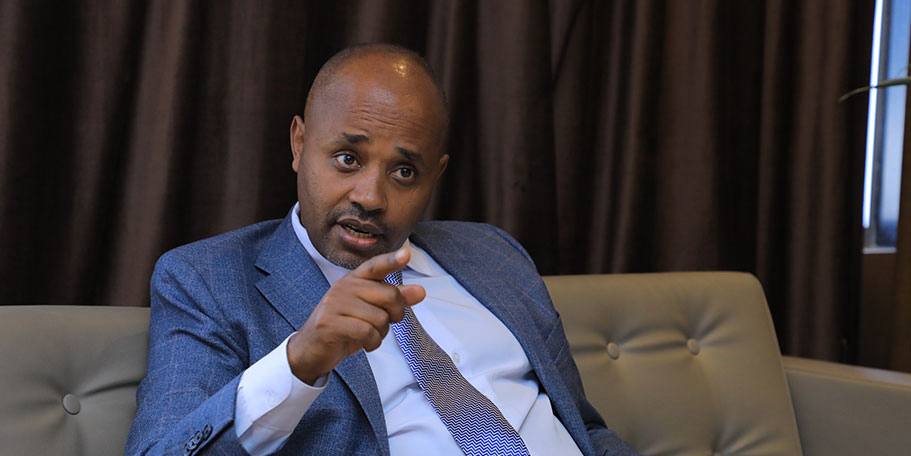
Desta Alem, EEP’s Deputy Chief Executive Officer for Generation and Transmission, said GERD and Gibe III account for about 65 percent of the country’s electricity supply, making them particularly vulnerable to prolonged rainfall shortages.
“The two are the major power sites that would also be affected in terms of production due to the expected drought situation,” Desta said.
According to Desta, EEP began observing below-normal rainfall as early as March, while the country’s main rainy season is now approaching its end. Ethiopia’s principal rainy season generally runs from June to mid-September.
He said a clearer assessment of water availability at the dams would be possible by the end of September, when the impact of the season’s rainfall on reservoir levels can be more accurately measured.
Export Revenue Target Cut
The expected decline in hydropower generation has prompted EEP to lower its performance and revenue targets for the 2026/27 budget year compared with the previous year.
EEP plans to prioritize domestic electricity consumption over exports if power availability comes under pressure, despite electricity exports becoming an increasingly important source of foreign currency and profit for the state-owned power producer.
In the 2025/26 budget year, EEP generated about $475 million from electricity exports, with a significant share coming from data-mining companies operating in Ethiopia.
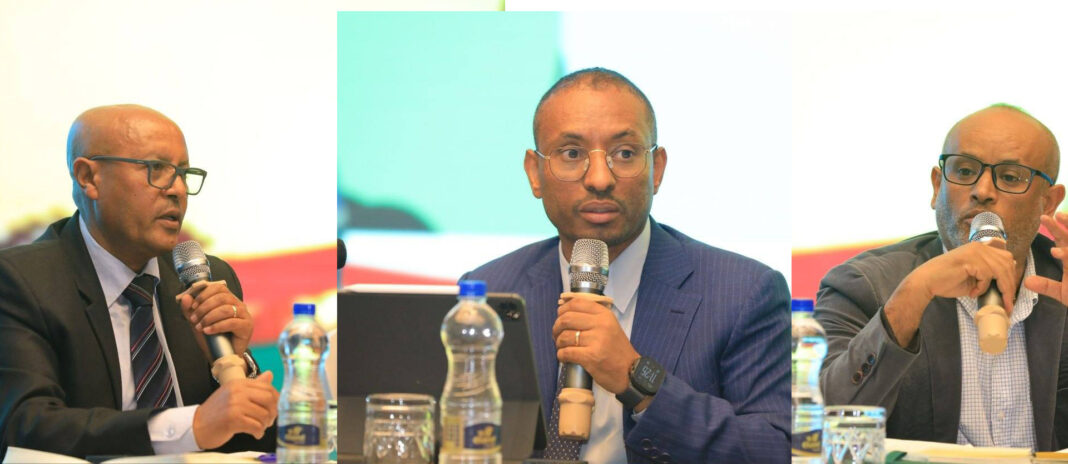
Demere Assefa, EEP’s Deputy CEO for Corporate Finance and Resource Administration, said the company expects export revenue to fall to $278.6 million in the current budget year.
“The revenue and profit target have also declined because of the El Niño impact,” Demere said.
EEP also expects to collect an additional $129.5 million in export-related revenue that was originally expected to be received during the previous budget year.
The growing importance of electricity supplied to data-mining companies is reflected in EEP’s revenue structure. Data-mining operations generated 50.4 billion birr for the company during the previous budget year, making the sector its largest single source of revenue. The Ethiopian Electric Utility contributed 46 billion birr, while electricity exports to Kenya generated 15.6 billion birr and sales to Djibouti brought in 5.5 billion birr. Heavy industries contributed 3.8 billion birr, while railway operations generated 0.4 billion birr.
EEP Targets 121 Billion Birr Revenue
EEP has set a revenue target of 121 billion birr for the current budget year, about 3 billion birr lower than the previous target as the expected decline in hydropower generation is likely to affect electricity sales.
The company recorded its first-ever profit of 39.5 billion birr in the 2025/26 budget year. It achieved 101 percent of its 124.2 billion birr revenue target during the year.
EEP said it achieved 92 percent of its overall performance target during the 2025/26 budget year.
The company’s generation capacity reached 9,730 MW during the year, an increase of 23 percent. The increase followed the completion and full operationalization of the Grand Ethiopian Renaissance Dam, which became fully operational during the budget year.
EEP had targeted generation capacity of 9,770 MW, including an additional 40 MW from the second phase of the Aysha project.
Diversification Becomes More Urgent
The drought risk has also highlighted Ethiopia’s heavy dependence on hydropower. EEP currently relies primarily on hydropower for electricity generation, making its performance highly sensitive to rainfall and reservoir levels.
The company has therefore been seeking to expand the country’s energy mix to reduce its exposure to climate-related disruptions and improve the resilience of electricity generation.
For the current budget year, EEP plans to undertake 56 transmission projects alongside two generation projects. It plans to begin work on the Genale Dawa VI hydropower project and the Gaad I solar project using its own resources.
EEP is also seeking financing from China EXIM Bank for the Genale Dawa VI project, which is expected to generate 246 MW.
Budget Execution Remains a Challenge
EEP has been allocated a budget of 314 billion birr for the current fiscal year, compared with 251 billion birr approved for the previous budget year.
However, the company spent only 153 billion birr, or about 61 percent, of its previous budget.
Demere attributed the lower budget execution to financing constraints, project delays and difficulties in implementing some planned projects.
“The expenditure reduced not only because finance was not secured, but also because some projects were delayed or could not be executed for different reasons,” he said.
Gulf Conflict Disrupts Project Logistics
Alongside drought and financing constraints, EEP said geopolitical tensions and security problems are creating additional challenges for its investment program.
Ashebir Balcha, EEP’s CEO, said the conflict in the Gulf has disrupted logistics and affected the supply of equipment and materials for major projects, including the Koysha Hydroelectric Project.
“The war has impacted the full supply for projects and forced some projects to be delayed briefly,” Ashebir said during the company’s annual performance briefing.
EEP also identified security challenges in the Amhara region and theft as additional factors affecting project implementation.
The combination of climate-related risks, financing constraints, security problems and disruptions to international logistics is putting additional pressure on Ethiopia’s power sector as EEP seeks to expand generation and transmission capacity while maintaining reliable electricity supplies to the domestic market.SECO