Ethiopia has officially inaugurated the expanded and upgraded Modjo Dry Port, marking a major milestone in the country’s efforts to modernize its logistics system and increase the capacity of its main inland gateway for international trade.
Senior government officials attended the inauguration ceremony on September 10, 2026, highlighting the strategic importance of the facility, which handles the overwhelming majority of Ethiopia’s import and export cargo moving through the Ethio-Djibouti corridor.
The expansion was carried out under the Ethiopia Trade Logistics Project (ETLP), with financing from the World Bank. The project was initially approved with US$150 million in financing before an additional US$90 million was approved to address cost overruns and complete the expansion. World Bank communications have subsequently put the financing supporting the Modjo, 73 km south east of Addis Ababa, transformation at about US$230 million.
The government’s contribution includes the provision of the public facility and associated land and infrastructure, while the World Bank financing has supported the major expansion, civil works, equipment, digital systems and institutional improvements. Available project documents, however, do not provide a separately stated percentage share of the total cost financed directly by the Ethiopian government.
The expansion has taken roughly nine years, with the project launched in 2017 and major construction works subsequently undertaken to transform Modjo into a multimodal logistics hub.
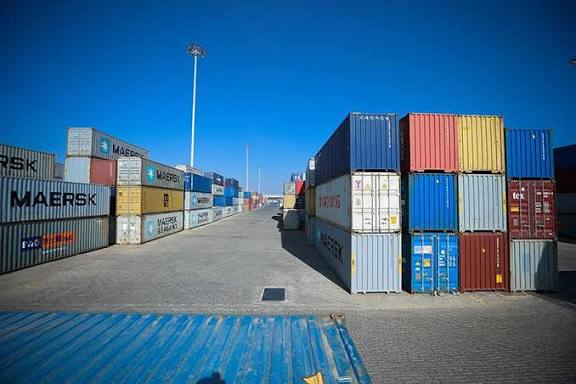
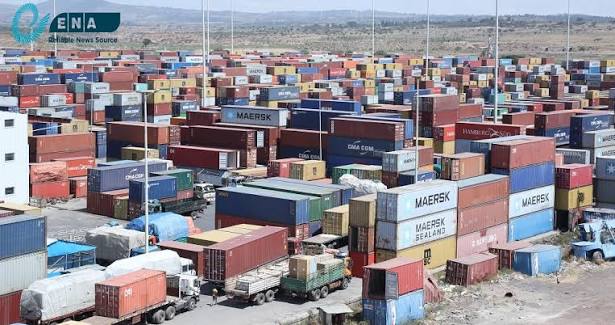
The upgraded facility features expanded container yards, warehouses, truck parking and traffic-management infrastructure, improved road and rail connections, cargo-handling facilities and new digital systems. These include a Terminal Operating System and electronic gate-pass arrangements aimed at improving cargo tracking and reducing delays.
The project also provides facilities for container consolidation and deconsolidation, storage, packaging, bulk cargo handling and other value-added logistics services, allowing Modjo to serve not only as an import-clearance point but also as a broader logistics and distribution center.
The facility is owned and operated by the state-owned Ethiopian Shipping and Logistics (ESL), while the new logistics model opens greater space for private operators to provide specialized services. Private companies can participate in areas including freight forwarding, warehousing, cargo consolidation, packaging, cold-chain logistics and other value-added activities.
Recent progress at the expanded yard has already shown operational improvements. According to the World Bank, processing times in some cases have fallen from 60 days to 15 days, underscoring the potential impact of the new infrastructure and systems.
The total area of the Modjo Dry Port after its expansion project is planned to reach over 162 hectares.
With Modjo handling more than 90 percent of Ethiopia’s imports and exports, the expanded facility is expected to play a central role in reducing logistics costs, improving trade competitiveness and supporting the country’s growing export ambitions.SECO