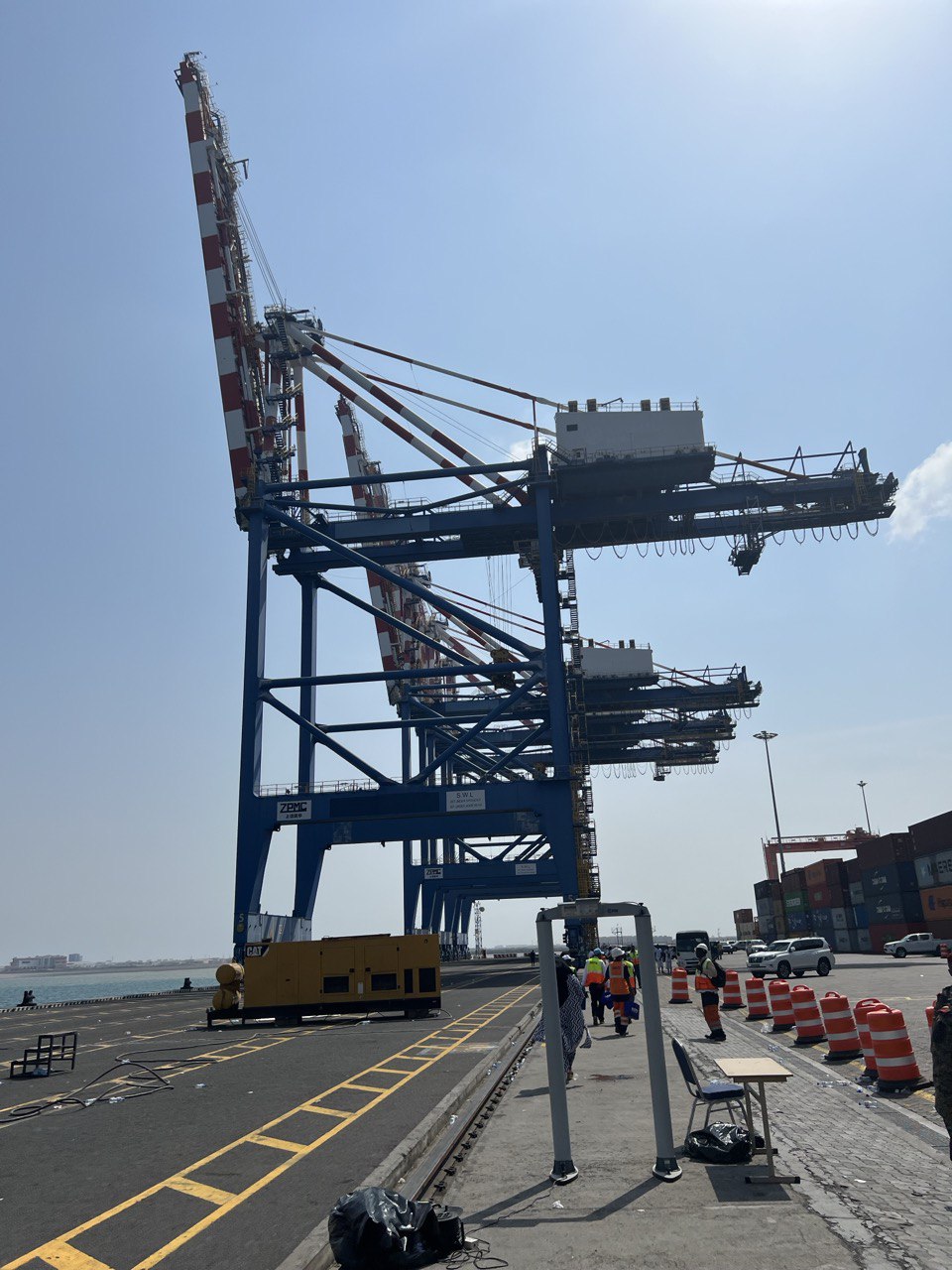
Somalia’s business and trade community is exploring alternative maritime and trade routes amid growing security concerns around key regional shipping lanes, with Djibouti emerging as a potential gateway for Somali products to international markets.
On September 16, Abubeker Omar Hadi, Chairman of the Djibouti Ports and Free Zones Authority (DPFZA), received a Somali delegation led by Hassan Mohamed Hussein, Governor of the Banadir Region and Mayor of Mogadishu, and Yasin Mohamoud Ibar, Chairman of the Somalia Chamber of Commerce. The meeting was also attended by Osman Dubad Sougouleh, Djibouti’s Ambassador to Somalia.
According to DPFZA, the discussions focused on strengthening trade and economic cooperation between the two countries by expanding Somali access to international markets through Djibouti’s port, logistics and free-zone infrastructure.
One of the key areas discussed was the export of Somali-made products through DPFZA’s Sea-Air Cargo initiative, which currently connects Djibouti with 28 cities across 25 countries. The initiative is intended to provide African producers with faster and more efficient access to international markets.

The two sides also discussed international trade and logistics models, including CIF Djibouti and FOB arrangements, to facilitate the movement and distribution of Somali products within the region and to global markets.
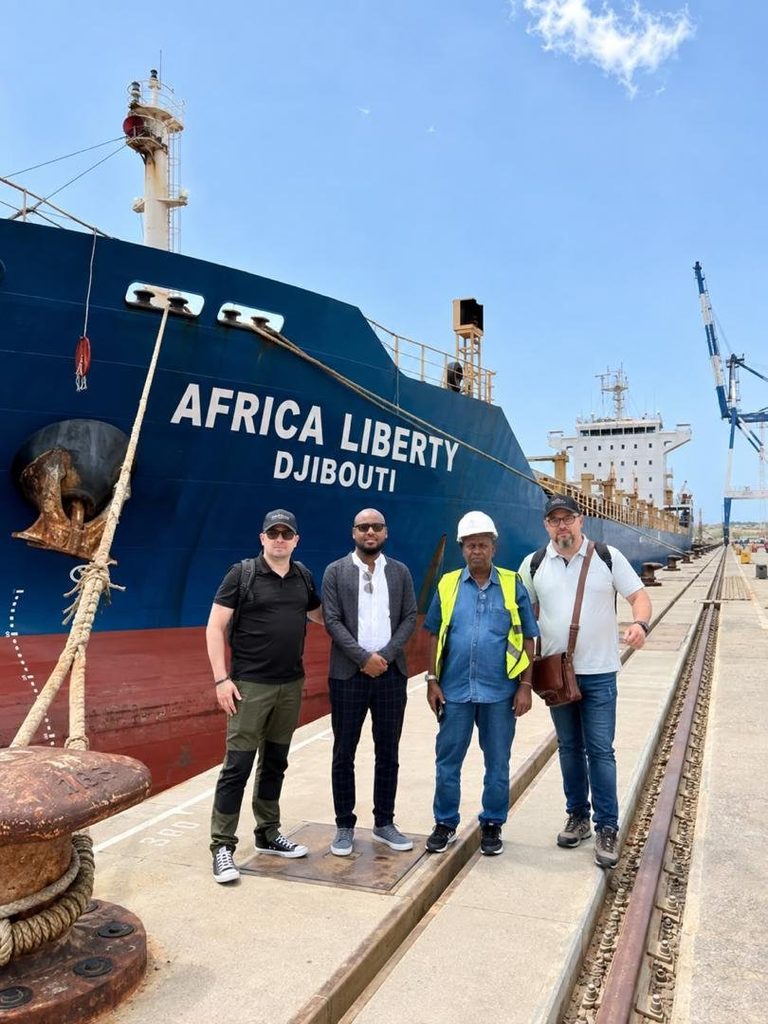
Maritime connectivity was another major area of discussion. The delegation examined the potential use of Djibouti Shipping Company’s newly acquired MV Africa Liberty, a container vessel with a capacity of 1,200 TEUs, to support cargo movement between Somalia, Djibouti and international destinations.
Djibouti Shipping Company has already established a maritime link with Somalia through MV Africa Sun, its first vessel, acquired in 2020. The addition of Africa Liberty expands the company’s fleet as Djibouti seeks to strengthen its position as a regional transshipment and maritime hub.
The discussions also covered opportunities to process and export Somali agricultural commodities through Djibouti. Particular attention was given to processing sesame seeds into sesame oil in Djibouti for international export, as well as storing and distributing rice through Djibouti’s logistics infrastructure. Somali operators could potentially access silo facilities located within Djibouti’s free zones.
The meeting comes as Somalia’s business community raises concerns over disruptions to traditional maritime trade routes linked to heightened security tensions in the Red Sea and surrounding waterways.
EtBusinessView recently reported, citing international media including the Associated Press, that Somali businesses are examining alternative shipping routes as security concerns around the Bab al-Mandab Strait and Strait of Hormuz affect regional maritime trade.
Mohamed Ali Nur, Director of Mogadishu Seaport, said the recent regional tensions have affected maritime trade and that the port is working with exporters to explore alternative routes. In a notable development, a vessel carrying sugar arrived directly from Sri Lanka, bypassing traditional routes through Gulf countries including the United Arab Emirates, Oman and Saudi Arabia.
Somalia relies heavily on maritime trade for food and other essential imports. Prolonged disruption to established shipping routes could increase transportation costs, delay deliveries and put additional pressure on consumer prices.
The AP has also reported significant displacement from Yemen since the beginning of September, including thousands of people reaching neighboring Djibouti, highlighting the wider regional effects of the ongoing instability.
Against this backdrop, the Djibouti-Somalia discussions could open additional avenues for trade, logistics and maritime cooperation, with Djibouti’s ports, free zones and transport infrastructure offering Somali businesses an alternative platform for processing, storing and distributing goods to regional and international markets.SECO