The growing influence of artificial intelligence and social media is challenging the traditional role of editors while mounting financial pressures are threatening the sustainability of conventional media organizations, senior Ethiopian editors said at the third episode of the Editors’ Breakfast Meeting held in Addis Ababa.
The meeting, organized by the Editors’ Guild of Ethiopia (EGE), was held at the Radisson Blu Hotel on Saturday, September 19, bringing together senior editors and media stakeholders to discuss the changing media landscape and the future of professional journalism.
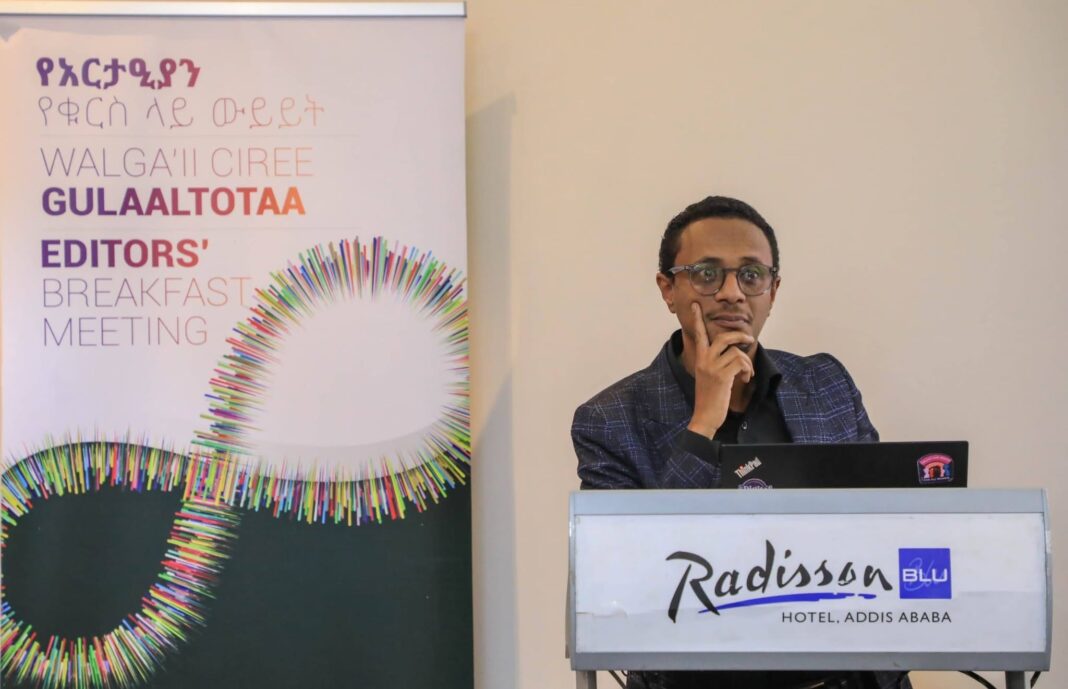
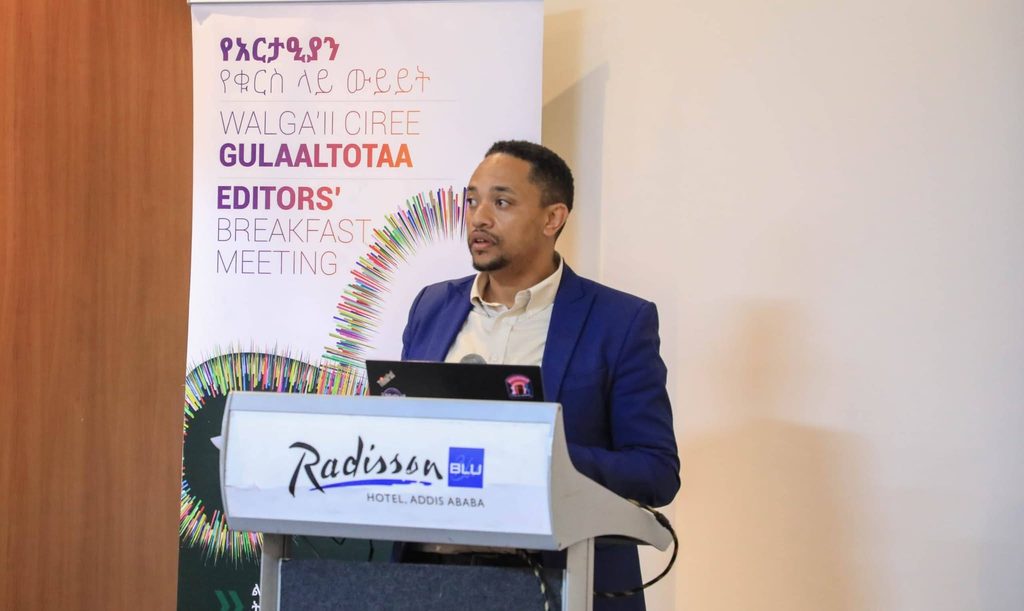
Senior journalist and editor-in-chief Bruh Yihunbelay, who has worked with different newspapers in Ethiopia, presented a paper examining the changing role of editors amid a fragmented information environment. His presentation focused on the pressures facing journalism as digital platforms, artificial intelligence and changing audience behavior increasingly reshape news production and consumption.
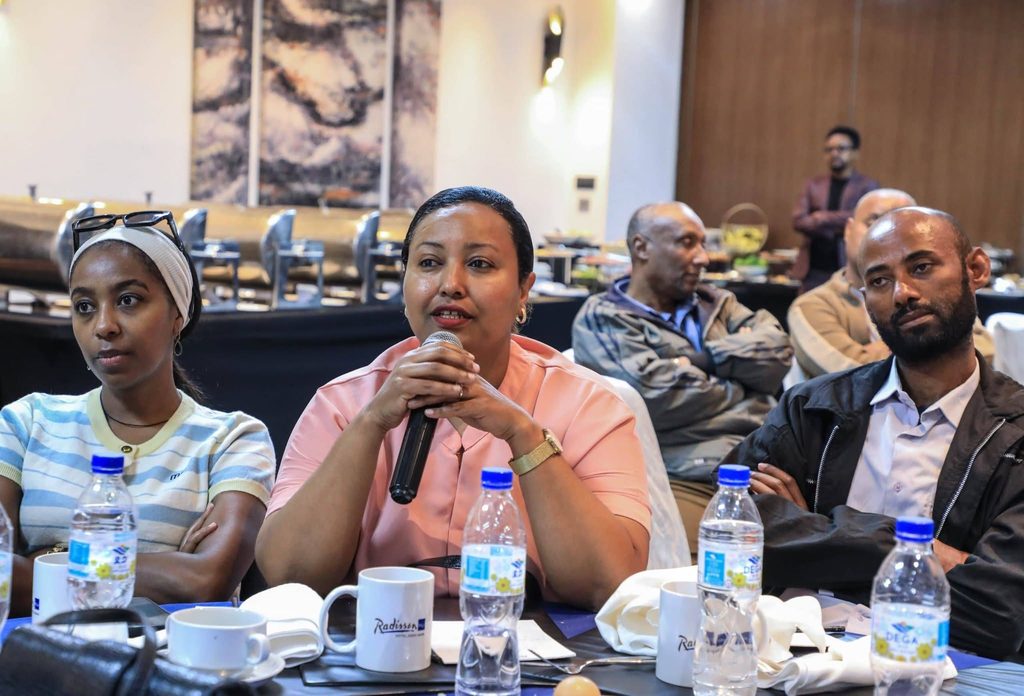
During the discussion that followed, participating senior editors questioned whether the traditional role of editors could retain its previous relevance as artificial intelligence increasingly becomes capable of undertaking a range of tasks traditionally performed in newsrooms.
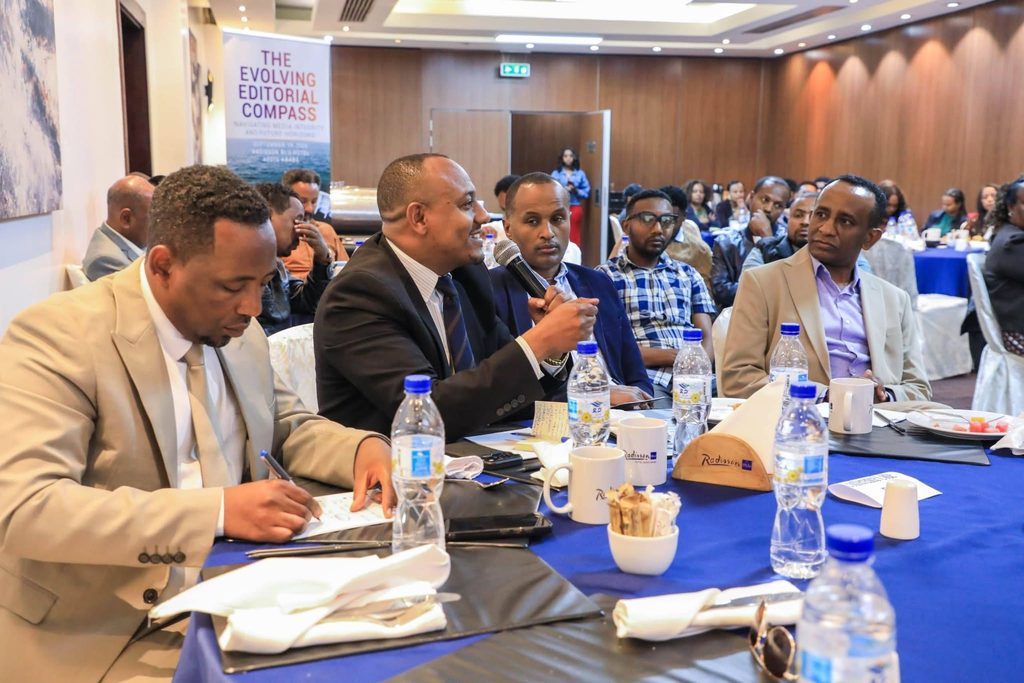
Editors also raised concerns about the growing shift of journalists toward social media platforms. They said journalists can increasingly build their own audiences, gain popularity and generate income through social media, potentially reducing their interest in engaging with traditional mainstream media organizations and following established newsroom policies.
The development, according to participants, is changing the traditional relationship between journalists and editors, with editors historically responsible for assigning stories, maintaining editorial standards, verifying information and determining what is ultimately published.
The financial sustainability of traditional media was another major concern raised during the meeting.
Editors said conventional media organizations are finding it increasingly difficult to generate sufficient revenue from newspaper sales and advertising as audiences and potential advertisers move toward digital and social media platforms. They noted that digital platforms can provide relatively less costly ways of reaching audiences, putting additional pressure on the traditional revenue sources of media organizations.
Participants warned that continued financial pressure could affect the ability of traditional news organizations to maintain professional newsrooms and sustain journalism governed by established editorial standards.
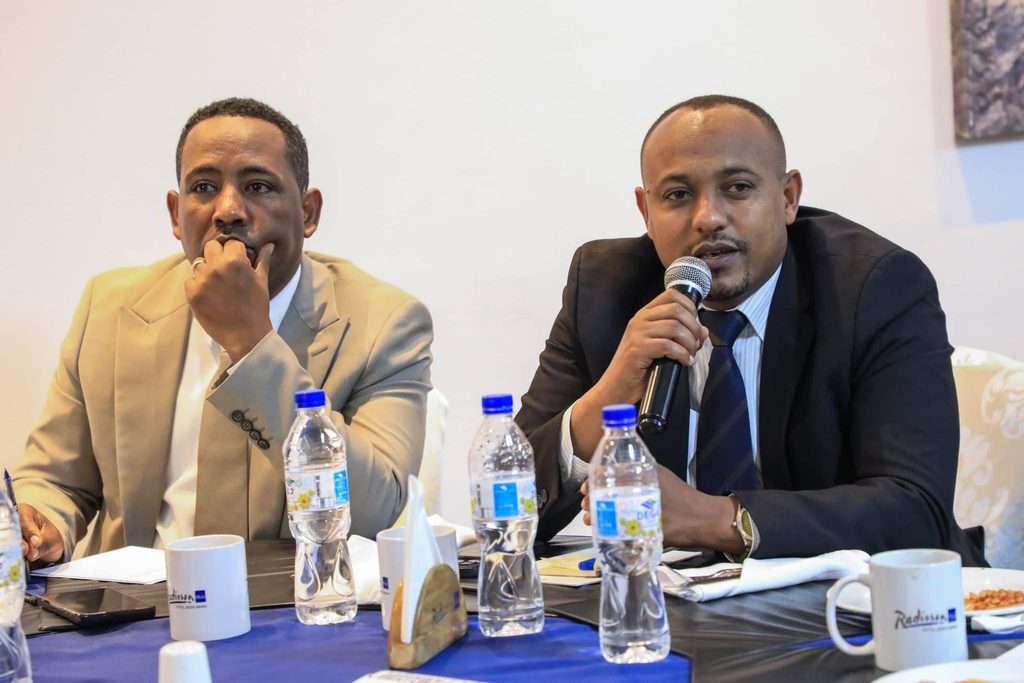
They consequently called for the government to play a role in supporting professional journalism through appropriate support mechanisms. According to the participating editors, professional media have an important role in contributing to national stability because they operate within established professional rules and regulations and provide structured platforms for public information and discussion.
The meeting also emphasized the need for traditional media organizations to adapt to technological changes while maintaining professional journalism, editorial oversight, verification and accountability.
Meanwhile, the third episode of the Editors’ Breakfast Meeting, which began on September 19, is scheduled to continue for the coming 14 months in collaboration with the Civil Society Innovation Fund.
According to a statement issued on the day, Episode III builds on 24 successful sessions delivered through the first two episodes and is designed to provide an inclusive platform for editors to foster dialogue, strengthen professional solidarity, advance self-regulation and promote collective engagement on key issues affecting Ethiopia’s media landscape.
The opening programme featured remarks by Azmeraw Andemo, Deputy Chairperson of the Legal, Justice and Democracy Affairs Standing Committee of the Parliament, and Misrak Getu, representative of the Ethiopian Media Authority.
Azmeraw said the Editors’ Dialogue Forum is important for strengthening self-regulation in the media sector, improving professional standards, facilitating the exchange of experiences among media institutions and building a shared professional position.
He emphasized that these efforts are essential to strengthening Ethiopia’s media sector as it confronts technological, economic and professional challenges.
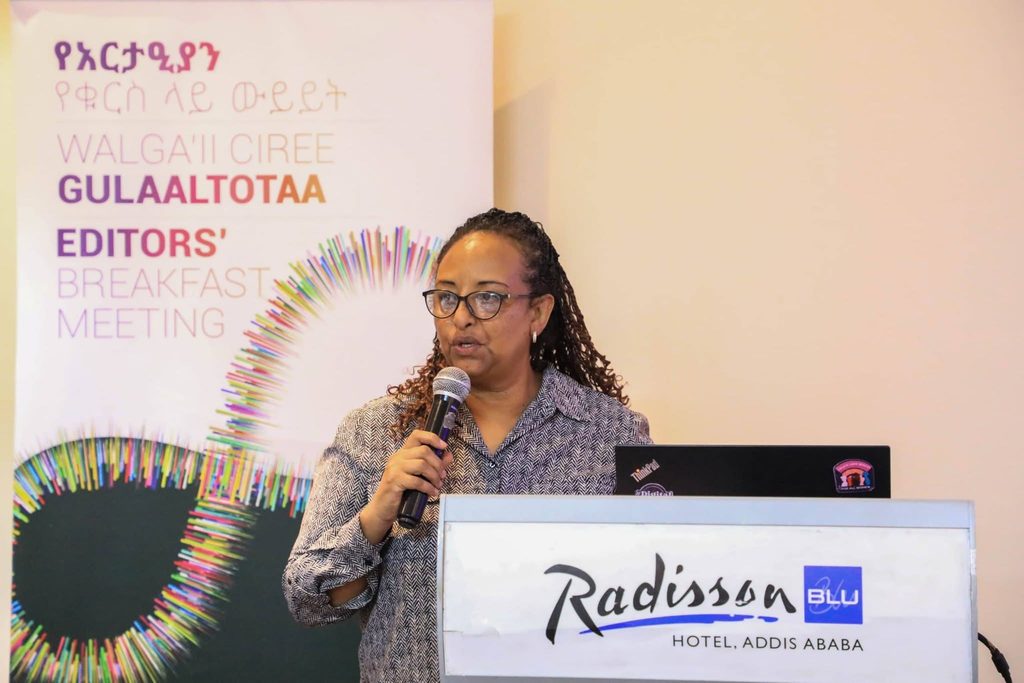
“CSIF’s mission is to build a vibrant civil society that contributes to Ethiopia’s democratic and socio-economic growth, with media actors serving as essential partners,” said Sosena Lemma, Managing Director of AGAR Development Partners Consulting (Fund Manager for CSIF II). Stressing the need for broader representation in her closing remarks, she emphasized, “Such gatherings should give due consideration to inclusion and diversity.”
The discussions at the meeting underscored a broader transition facing Ethiopian journalism, with editors confronting the combined effects of artificial intelligence, social media-driven audience migration and declining traditional revenue sources while seeking to preserve the professional standards and institutional role of newsrooms.SECO