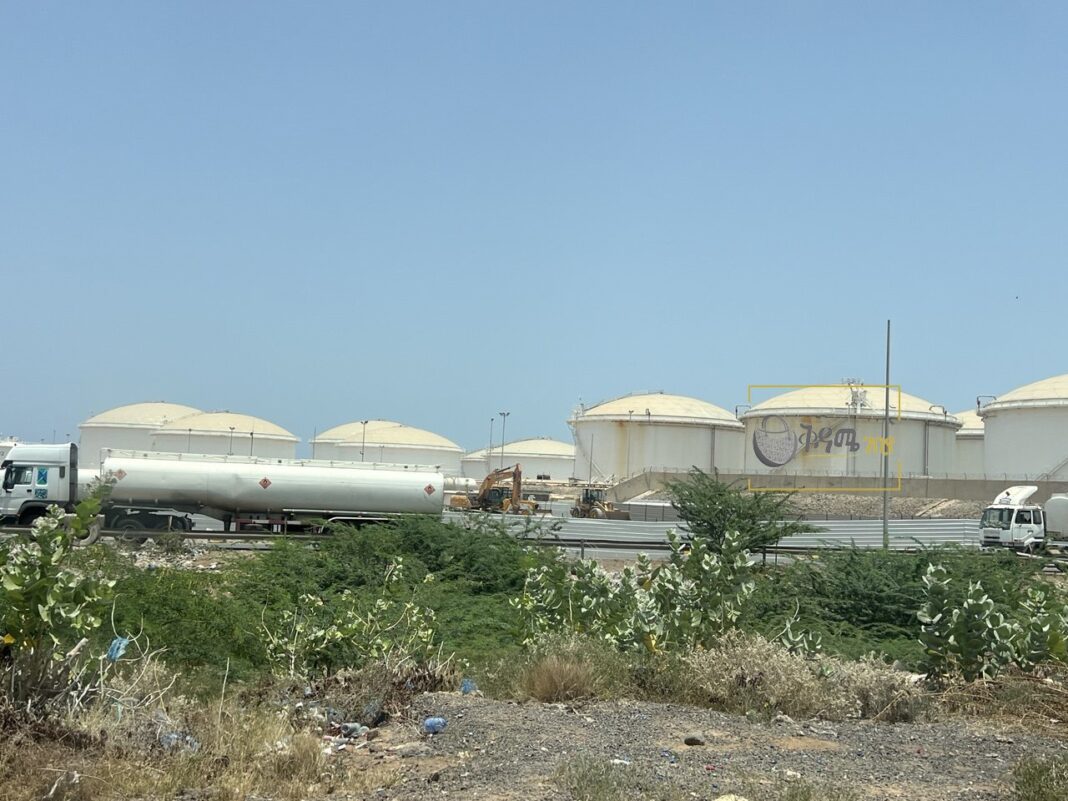
Ethiopian Investment Holding (EIH), the strategic investment arm of the Ethiopian government, is constructing a massive petroleum storage depot in Dewale, a border town in Ethiopia’s Somali Region, with a planned storage capacity of 875,000 cubic metres.
The scale of the planned facility is significant compared with Ethiopia’s existing national strategic petroleum depot at Awash, located about 235 kilometres east of Addis Ababa. The Awash depot has a storage capacity of approximately 130,000 cubic metres, meaning the planned Dewale facility would have more than six times its storage capacity.
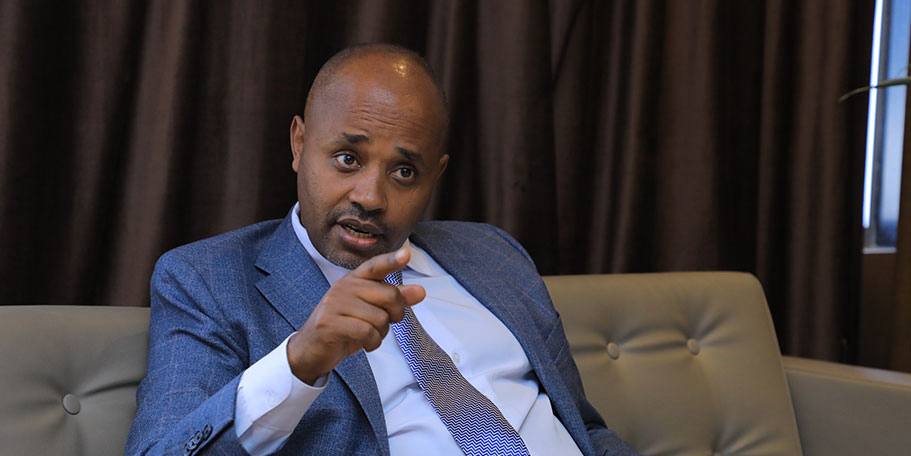
EIH CEO Brook Taye (PhD) disclosed the Dewale project in an interview with state broadcaster EBC, describing the facility as a strategic component of Ethiopia’s emerging fuel logistics network linking Djibouti’s maritime petroleum infrastructure with inland storage and distribution facilities.
The disclosure comes a day after Ethiopia, Djibouti and Dangote Group announced plans to develop a 120-kilometre petroleum pipeline connecting the Damerjog oil facilities in Djibouti with Dewale in Ethiopia. EIH said the pipeline project is expected to cost about USD 660 million and is planned for completion within two years of the project’s commencement.
According to Brook, petroleum imported through the Damerjog facility, which is being developed with the involvement of Nigerian billionaire Aliko Dangote’s Dangote Industries Limited, will be transported through the pipeline and stored at the Dewale depot before being distributed across Ethiopia.
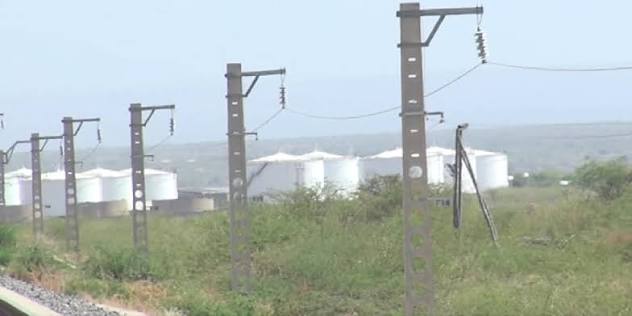
The Dewale depot is also expected to be connected to the Ethio-Djibouti Railway, allowing petroleum products to be transported further inland by rail. The planned system would therefore link the port, pipeline, large-scale storage and railway networks in a single fuel logistics chain.
EIH has not disclosed the estimated cost of the Dewale depot or identified the entity responsible for its construction.
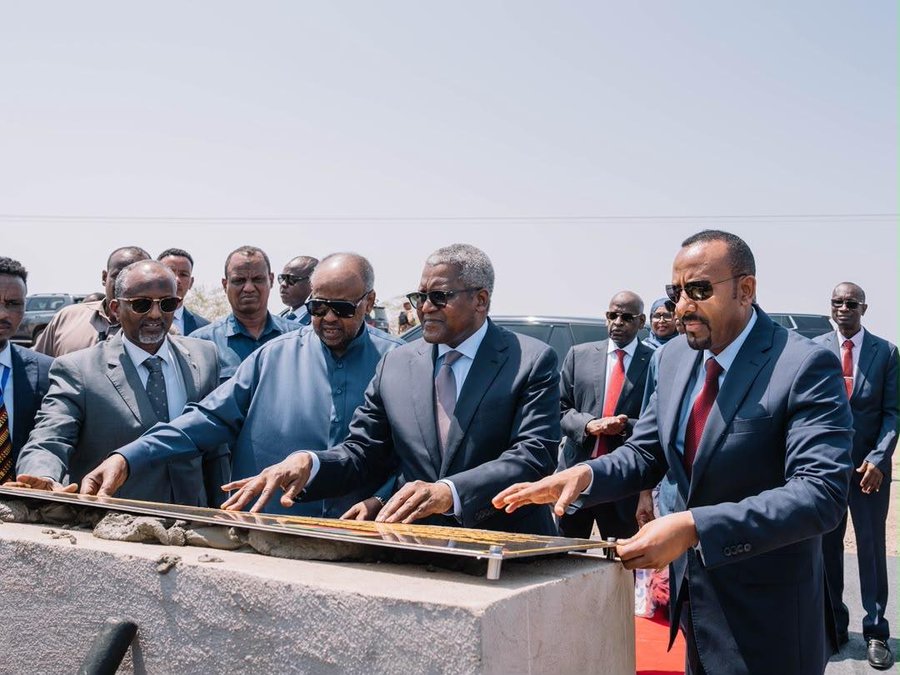
The announcement follows the September 24 launch of a USD 160 million petroleum storage project at Damerjog, attended by Ethiopian Prime Minister Abiy Ahmed, Djibouti President Ismail Omar Guelleh and Aliko Dangote. The facility is planned to have annual storage capacity of five million metric tonnes.
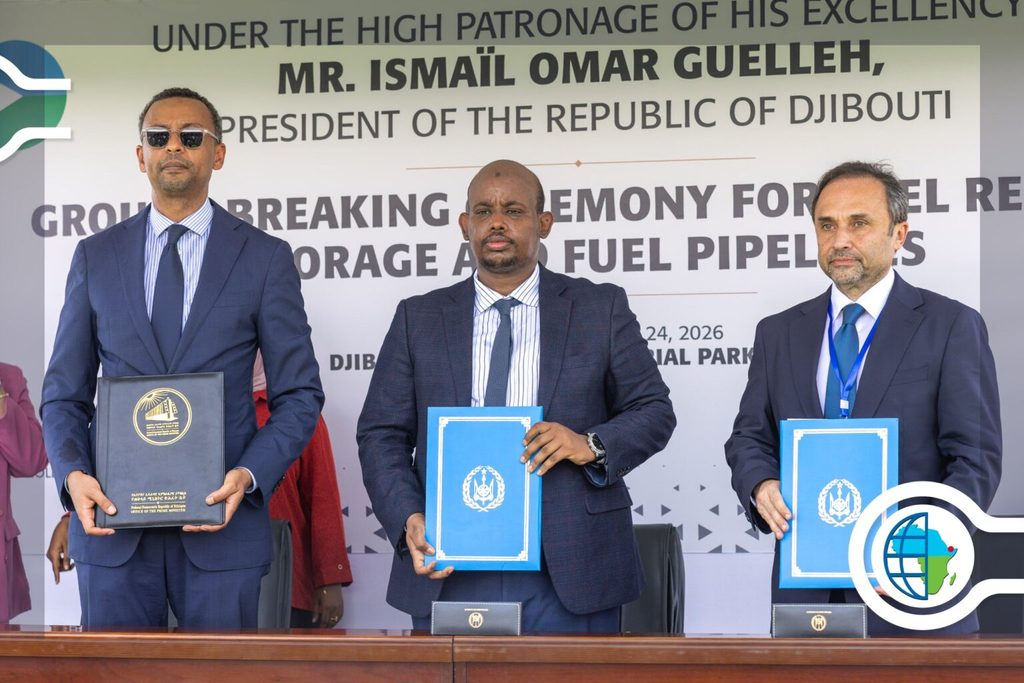
On the same occasion, EIH, Dangote Industries Limited (DIL) and Great Horn Investment Holding S.A. (GHIH) signed a Memorandum of Understanding to develop the pipeline linking Damerjog and Dewale.
The planned infrastructure seeks to address a long-standing bottleneck in Ethiopia’s petroleum logistics. The country has traditionally depended on Djibouti for fuel imports, while its principal national strategic storage facility at Awash provides relatively limited storage compared with the scale of national demand.
Although the USD 4 billion electrified Ethio-Djibouti Railway became operational in 2018, it has not yet transported petroleum products because Djibouti’s coastal fuel terminals have lacked direct railway connections to Ethiopia’s inland depots.
Consequently, EDR’s fleet of 110 specialised fuel tank wagons, acquired for petroleum transportation, has remained idle since 2018.
EDR is now seeking to expand its role beyond conventional railway operations by developing infrastructure capable of integrating ports, pipelines, storage facilities and rail transportation.
One of its major proposals is a 17-kilometre railway connection between the Damerjog Liquid Bulk Port and Nagad railway station in Djibouti. The proposed link would provide a direct railway connection between Damerjog’s petroleum facilities and the wider Ethio-Djibouti Railway network.
A feasibility study conducted by GHIH, a subsidiary of the Djibouti Ports and Free Zones Authority (DPFZA), estimated the capital expenditure for the proposed rail link at USD 90 million, equivalent to about USD 5 million per kilometre.
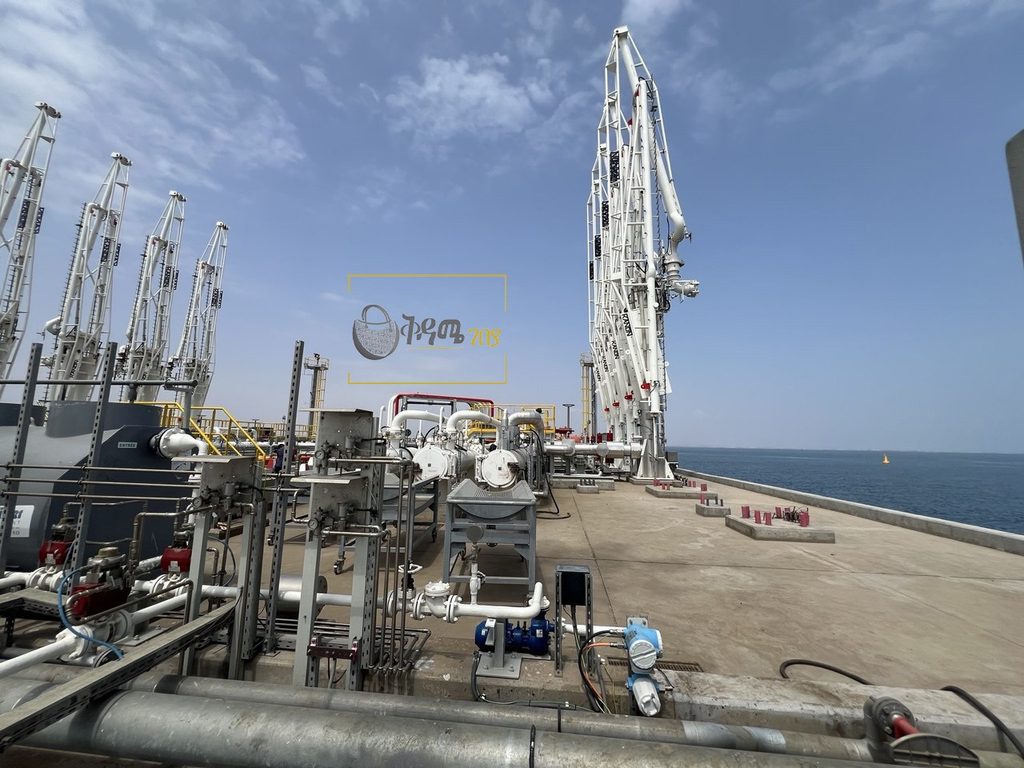
The Damerjog Liquid Bulk Port, located near the Somaliland border and forming part of the Damerjog Industrial Park development, is designed to accommodate large oil tankers and serve as a major liquid-bulk handling facility.
EDR has also previously expressed interest in taking an equity stake of up to 49 percent in Damerjog fuel-storage facilities. During a June 2022 meeting between EDR CEO Takele Uma and DPFZA Chairman Aboubaker Omar Hadi, EDR proposed participating in the investment, including infrastructure for jet-fuel handling.
EDR is simultaneously prioritising a railway connection to the Awash Oil Depot, Ethiopia’s primary inland fuel terminal. Connecting Awash and other strategic depots to the railway would allow imported petroleum to move deeper into the country by rail rather than relying entirely on road transportation.
The railway operator and DPFZA are also exploring joint-venture dry ports at Nagad and Indode stations in collaboration with GHIH and EDR. Nagad has been identified for a 200-hectare dry port, while Indode is located on the southeastern outskirts of Addis Ababa.
During discussions with a delegation from the China Development Bank and the China-Africa Development Fund, DPFZA Chairman Omar Hadi identified a financing requirement of about USD 150 million for the Nagad-Damerjog railway connection and the proposed dry-port developments.