Juba County Caretaker Commissioner Kalisto Lado has renewed a directive restricting foreign nationals from operating small-scale retail businesses in the South Sudanese capital, saying such activities should be reserved for South Sudanese citizens, particularly women and young people.
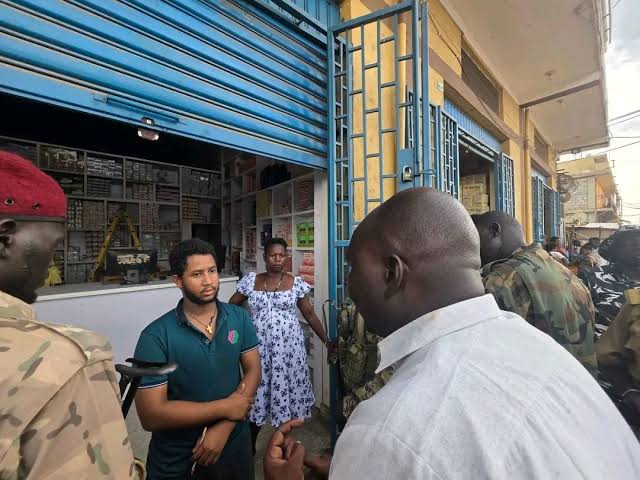
Lado issued the directive during an inspection of Kubri Haboba Market in Juba on October 5, according to reports by Uganda Radio Network (URN), Eye Radio, Radio Tamazuj and Kenyans.co.ke.
The commissioner specifically cited activities such as selling chapati, onions, tomatoes and charcoal, as well as operating boda-boda services, arguing that foreign nationals should not occupy small livelihood opportunities that could be taken up by South Sudanese.
“What will our women sell?” Lado was quoted by URN as asking while defending the policy. He said foreigners interested in doing business in South Sudan should instead concentrate on wholesale trade, importing, manufacturing and larger companies that can create employment for South Sudanese.
Eye Radio reported that Lado told foreign business operators that the county welcomes foreign investment but that retail businesses should be reserved for South Sudanese nationals. He also said foreign investors could establish companies and wholesale operations and employ South Sudanese workers.
The directive reportedly affects traders from several neighboring countries, including Uganda, Kenya, Ethiopia, Eritrea and Burundi, although authorities have not publicly provided detailed enforcement procedures or clarified whether every foreign-owned retail operation will be immediately closed. Kenyans.co.ke reported that roadside and open-stall operators were also given seven days to comply with other market requirements.
The commissioner’s latest position is not entirely new. Lado made a similar call in 2021, when he was Mayor of Juba City Council, saying foreigners should move away from small-scale retail and instead invest in wholesale businesses, factories, industries and import companies. At the time, he argued that local citizens were being pushed out of opportunities by foreign traders.
The renewed directive comes as foreign-owned businesses have become an increasingly visible part of Juba’s commercial economy. A July 2026 Radio Tamazuj report, for example, highlighted the rapid expansion of Chinese-owned supermarkets and retail hubs across Juba, describing their role in supplying affordable goods while also generating employment.
Lado’s latest measures also go beyond nationality. He has ordered traders at Kubri Haboba Market to replace makeshift iron-sheet shops with permanent concrete structures within seven days. Eye Radio reported that he warned, “No concrete, no business,” citing concerns about market development and fire risks.
At the same time, Radio Tamazuj reported that Lado has welcomed foreign communities living in South Sudan, specifically mentioning Somali, Ethiopian, Eritrean, Ugandan and Sudanese communities, while insisting that foreigners should focus on larger-scale commercial activities rather than what he described as marginal retail businesses.
The policy comes shortly after Lado returned to public office as Caretaker Commissioner of Juba County. He was sworn in on October 2 and pledged to focus on security, basic services and ensuring that public resources benefit local communities. South Sudan is preparing for elections scheduled for December 2026.
The renewed restrictions could have significant implications for Juba’s informal economy, where foreign traders play an important role in food retail, small shops, restaurants, transport and other services. It also raises questions about how the government will balance the protection of local livelihoods with the contribution of foreign traders and investors to the capital’s supply chains and employment.SECO