Nine ministers retain their portfolios as four returning officials move to new positions
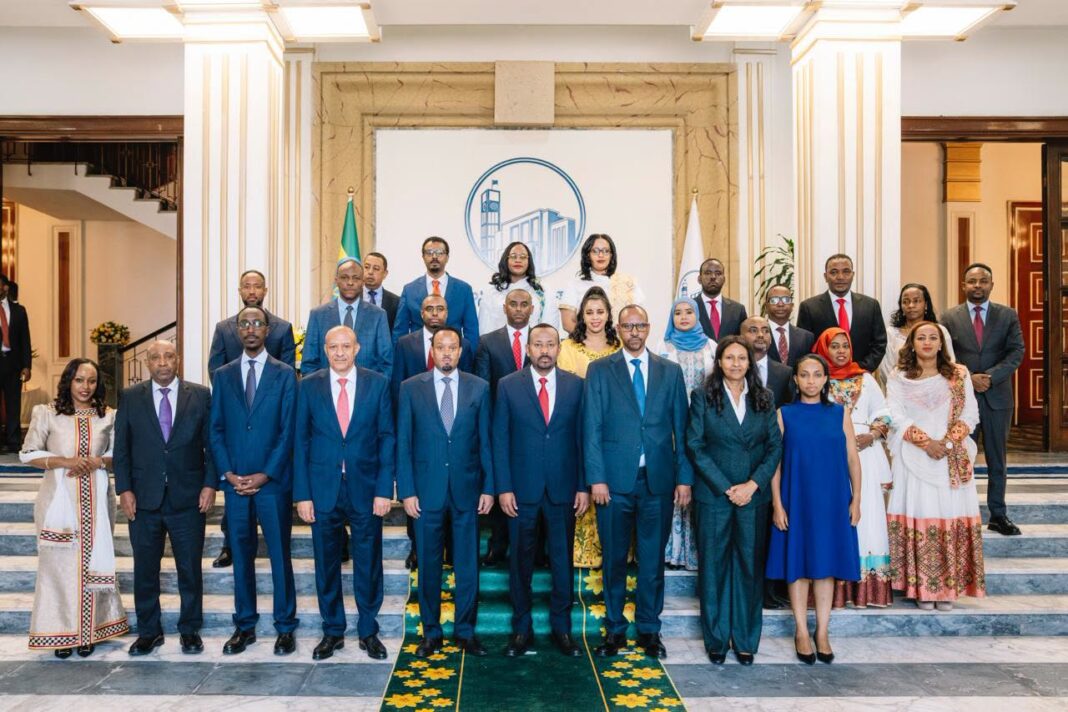
Prime Minister Abiy Ahmed has unveiled a 23-member cabinet as Ethiopia moves to establish its new government following the Seventh General Election, bringing 10 new faces into ministerial positions while retaining 13 members from the previous administration.
Of the 13 returning cabinet members, nine will continue in the same portfolios, while four have been reassigned to different ministries, according to the appointments presented to the House of Peoples’ Representatives.
The appointments come shortly after Abiy was appointed and sworn in for a second five-year term on October 5, formally ushering in the new federal government following the June 1 general election.
Temesgen Tiruneh has been retained as Deputy Prime Minister. He was formally nominated for the position as the new government takes shape.
Nine ministers have also retained their previous portfolios. They are Birhanu Nega (Prof.) at the Ministry of Education, Gedion Timothewos (PhD) at Foreign Affairs, Addisu Arega at Agriculture, Selamawit Kassa at Culture and Tourism, Aynalem Nigussie at Revenue, Habtamu Etefa (PhD-Ing) at Water and Energy, Mekdes Daba (MD) at Health, and Hana Arayaselassie at Justice.
Four returning cabinet members have moved to new assignments. Fitsum Assefa, formerly Minister of Planning and Development, has been appointed Minister of Finance. Shewit Shanka, formerly Minister of Culture and Sport, has been assigned to the Ministry of Women and Social Affairs. Mohammed Edris, formerly Minister of Peace, has been appointed Minister of Defence, while Alemtsehay Pawlos has taken a new cabinet position as Minister of Mines.
The new cabinet also introduces 10 ministers who were not part of the previous ministerial lineup.
Feseha Yitagsu (PhD), former CEO of the Ethiopian Industrial Parks Development Corporation, has been appointed Minister of Industry. Yasmin Wohabrebbi, formerly State Minister of Revenue, has been named Minister of Trade and Regional Integration.
Awelo Abdi, former Vice President of Oromia Regional State, has been appointed Minister of Labour and Skills, while Bereket Fesehatsion, formerly State Minister of Planning and Development, has been named Minister of National Strategy.
Frehiwot Tamiru, former CEO of Ethio Telecom, takes charge of the Ministry of Innovation and Technology. Sadat Nesha, former vice president of Oromia Regional State, has been appointed Minister of Logistics.
Mohammed Abdurahiman, former head of the Ethiopian Roads Administration, will lead the Ministry of Urban and Infrastructure, while Sultan Wole (PhD-Ing), formerly State Minister of Water and Energy, has been appointed Minister of Irrigation and Lowlands.
Aklilu Tadesse (PhD), formerly a State Minister at the Office of the Prime Minister, has been named Minister of Youth and Sport. Musa Adem, former head of the Afar Regional Education Bureau and opposition party leader, has been appointed Minister of Peace.
The appointments come as Ethiopia is also restructuring its federal executive institutions. The House of Peoples’ Representatives is considering changes affecting four ministries while keeping the total number of ministry-level executive institutions at 22. The changes include renaming the Ministry of Planning and Development as the Ministry of National Strategy and the Ministry of Transport and Logistics as the Ministry of Logistics.
The new cabinet therefore combines continuity in key portfolios with significant changes in leadership across economic, infrastructure, social and strategic institutions as the government begins its new five-year term.SECO