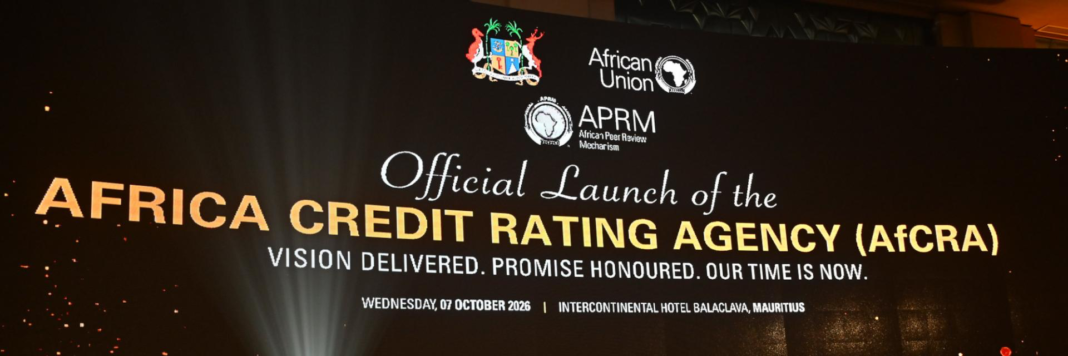
Africa has launched its own credit rating agency in Mauritius, marking a major step in efforts to improve how African economies are assessed and address concerns over high borrowing costs.
The Africa Credit Rating Agency (AfCRA) was officially launched in Port Louis on October 7, 2026, as an independent, private sector-driven institution. The agency is intended to complement, rather than replace, international credit rating agencies by bringing additional data, expertise and perspectives to the assessment of African economies.
The initiative follows years of work by the African Union (AU) and African Peer Review Mechanism (APRM), with support from the UN Economic Commission for Africa (ECA), African financial institutions and other partners.
ECA Deputy Executive Secretary Hanan Morsy said persistent risk premiums are estimated to cost Africa about $75 billion annually in excess interest payments. She said AfCRA could help address the imbalance by providing investors with deeper analysis of African economies, including their reform trajectories and economic data.
However, African leaders stressed that the new agency alone will not solve the continent’s financing challenges. AU Commission Chairperson Mahmoud Ali Youssouf said its independence will be critical to building investor confidence.
Mauritius Minister of Financial Services and Economic Planning Jyoti Jeetun said AfCRA is not intended to secure more favorable ratings for African countries, but to ensure African economies are assessed more accurately.
APRM CEO Ambassador Marie-Antoinette Rose-Quatre also warned against political interference, saying independence must underpin the agency’s operations.
UN Special Adviser on Africa Ahunna Eziakonwa urged African financial institutions, pension funds, development banks and central banks to use AfCRA ratings and help establish its credibility.
AfCRA will be headquartered in Mauritius and is led by Chief Executive Officer Sifiso Falala. Beyond sovereign ratings, the agency is expected to assess subnational entities and African companies, potentially strengthening domestic capital markets and expanding investment opportunities across the continent.SECO