Three-year agreement seeks to revive commercial ties as direct flights open new opportunities and Pakistan looks to expand its business footprint across Sub-Saharan Africa
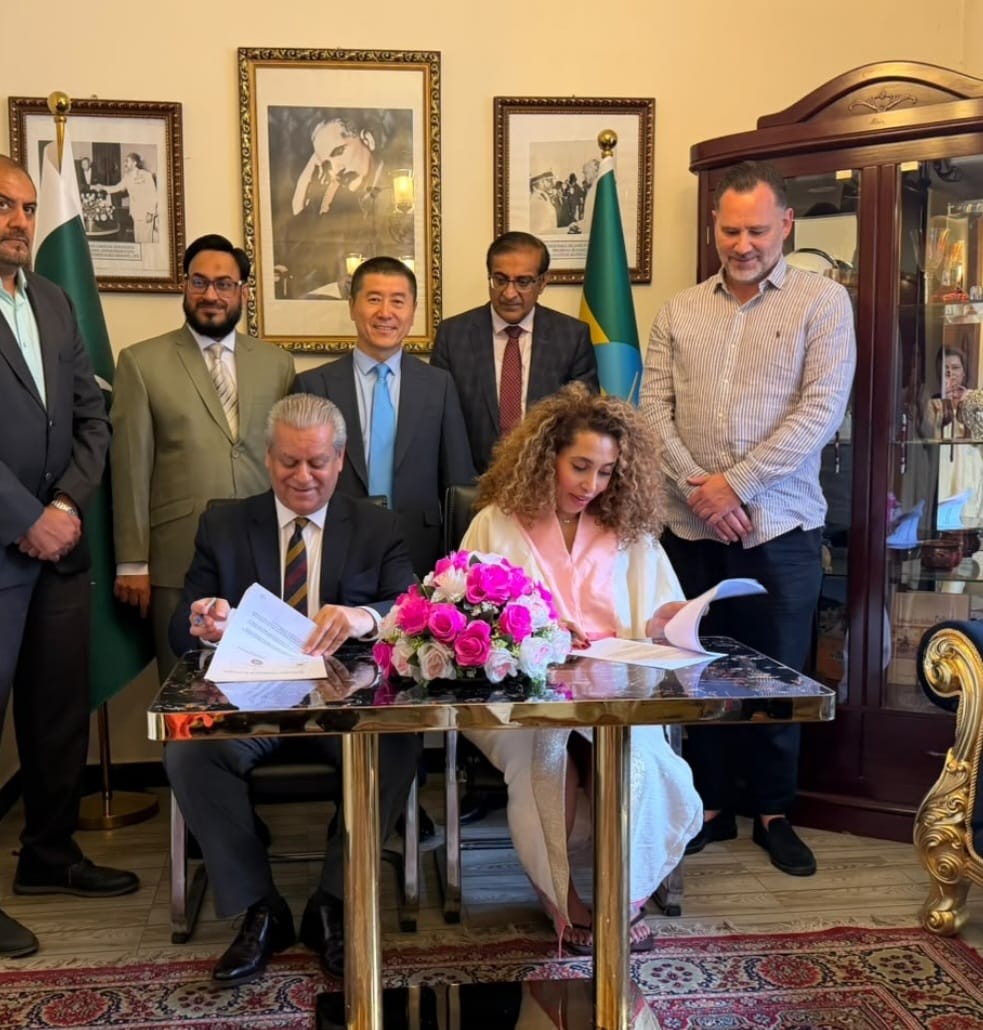
An Africa-focused business development and market facilitation company, Nyle Group, has entered into a strategic partnership with Pakistan-based Affinity Global and UAE-based Epic Edges Group to develop trade and investment opportunities between Pakistan and African markets, initially focusing on Ethiopia.

The partnership comes amid renewed efforts to deepen economic ties between Ethiopia and Pakistan, supported by the resumption of direct Ethiopian Airlines flights between Addis Ababa and Karachi and growing interest in expanding commercial engagement across Africa.
The initiative also comes against the backdrop of a historical investment relationship. Pakistan was among the early foreign investors in Ethiopia during the late 1990s and early 2000s, according to accounts cited in connection with the renewed engagement, but Pakistani investment activity is reported to have declined in subsequent years. Reviving that presence could provide a new dimension to the two countries’ expanding trade relationship.
Under the agreement, the three companies will work to connect Pakistani businesses seeking export markets, investment opportunities and local commercial partners with opportunities in Ethiopia and other African countries. They will also identify and assess projects that could attract investment.

The Pakistan Africa Economic Council is also a signatory to the agreement, according to a statement issued by the companies.
Nyle Group, based in Addis Ababa, will lead business development across African markets, identifying projects, building relationships with local businesses and public institutions, introducing commercial partners and supporting implementation.
Affinity Global will identify Pakistani companies interested in exporting to Africa, establishing operations or entering business partnerships, while Epic Edges Group will lead project assessment, investment structuring, fundraising support and transaction coordination.
“Our role is to connect the right businesses with the right markets, but also to make sure those partnerships are structured properly and can actually be executed,” said Kanessa Muluneh of Nyle Group.

Direct flights seen supporting business expansion
The resumption of direct flights between Karachi and Addis Ababa is expected to provide an important link for companies seeking to expand trade and investment between the two countries.
Ethiopian Airlines’ service offers a direct connection between Ethiopia and Pakistan, potentially making business travel, commercial negotiations, delegation visits and the development of business relationships easier. The route also strengthens Ethiopia’s potential role as a meeting point for Pakistani companies seeking opportunities in East Africa and other African markets.
Pakistani and Ethiopian officials have previously identified the direct air connection as an important milestone in strengthening bilateral relations. In January 2025, Ethiopia and Pakistan signed a memorandum of understanding to hold political consultations and advance cooperation in areas including trade, investment, aviation, agriculture, industry and technology. Ethiopian officials highlighted the role of the direct Karachi service in strengthening ties between the countries.
Pakistan’s leadership has also pointed to the flights as an opportunity to deepen economic engagement and expand business contacts.
For investors and exporters, improved air connectivity can reduce some of the practical barriers to entering unfamiliar markets. It can facilitate meetings with prospective distributors, suppliers, investors and government institutions while supporting the movement of business travellers and other time-sensitive commercial activity.
However, the wider economic impact will depend on whether improved connectivity is accompanied by stronger trade links, viable investment projects and sustained engagement between companies.
For Nyle Group and its partners, the route could help support the process of identifying opportunities and bringing potential commercial partners together.

Ethiopia Seeks to Turn Trade Ties into Investment
Ethiopia is the partnership’s initial focus as the two countries seek to expand commercial relations through trade agreements, diplomatic engagement and improved connectivity.
The opportunity lies in moving beyond imports and exports towards investment in local production, supply chains and employment. Potential areas include pharmaceuticals, agricultural processing, textiles, manufacturing and logistics, where Pakistani companies could explore distribution agreements, joint ventures and local operations.
Reviving Pakistan’s Investment Presence
Pakistan’s reported early investment presence in Ethiopia during the late 1990s and early 2000s provides a historical dimension to the initiative. However, Pakistani investment activity is said to have declined since then, creating an opportunity to rebuild commercial ties.
The scale of that decline remains to be established through historical investment records. The new partnership could help Pakistani companies move beyond exporting goods towards establishing local businesses, although actual investment will depend on financing, market demand and regulatory conditions.
Expanding Across Sub-Saharan Africa
Beyond Ethiopia, the partners intend to pursue opportunities across Sub-Saharan Africa in agriculture, healthcare, manufacturing, renewable energy, infrastructure and logistics.
The African Continental Free Trade Area could support wider regional expansion, although access to individual markets will depend on trade rules, customs arrangements and regulatory requirements. Ethiopia’s direct air link with Pakistan could facilitate business travel and commercial engagement, while the partners’ local networks could help companies identify opportunities in other African markets.
Execution Will Determine the Outcome
Under the agreement, Nyle Group will lead African market development, Affinity Global will identify prospective Pakistani businesses, and Epic Edges Group will assess projects and support investment structuring and fundraising.
The partnership has an initial three-year term, with the possibility of annual renewal. The companies have not disclosed a specific investment commitment or a timetable for the first projects.
Its success will depend on converting business introductions into funded investments, operational enterprises and sustained trade.
Pakistan’s Africa trade reaches $4.85 billion
The initiative aligns with Pakistan’s broader effort to diversify its export markets and expand its economic presence across Africa.
Pakistan’s Ministry of Commerce reported total merchandise trade with African countries of US$4.85 billion in the 2024/25 fiscal year, compared with US$5.45 billion in 2023/24 and US$4.18 billion in 2019/20. The figures indicate that trade has expanded over the longer term despite a decline in the latest reported year.
The ministry’s trade table recorded Pakistani exports to Africa of US$2.24 billion and imports from the continent of US$2.61 billion in 2024/25.
Pakistan has pursued greater commercial engagement through its Look Africa Policy Initiative, which seeks to diversify exports, strengthen commercial representation and increase participation in trade exhibitions and business delegations.
In October 2025, Pakistan organized its Pakistan-Africa Trade Development Conference and Single Country Exhibition in Addis Ababa, bringing more than 110 Pakistani companies from sectors including textiles, pharmaceuticals, engineering, information technology, agriculture and food processing. The event was intended to expand commercial engagement with Ethiopia and other African markets.
The latest partnership seeks to build on such trade-promotion activities by connecting businesses with local partners and supporting the development of investment projects.
Pakistan’s existing export capabilities in textiles, pharmaceuticals, agricultural products, engineering and manufactured goods could provide a starting point for commercial expansion. Over time, the partners could also explore opportunities involving local production, distribution, joint ventures and technology transfer.SECO