The World Meteorological Organization (WMO) has forecast above-average rainfall across the Greater Horn of Africa during October–December 2026 as a strengthening El Niño event threatens to reshape weather patterns and increase climate risks worldwide.
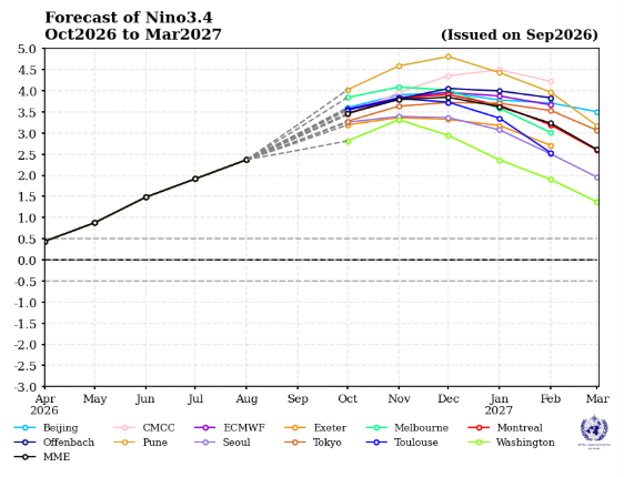
In its Global Seasonal Climate Update issued on October 8, WMO said sea-surface temperatures in the central and eastern tropical Pacific are expected to reach unprecedented levels, with the El Niño phenomenon forecast to peak around December.
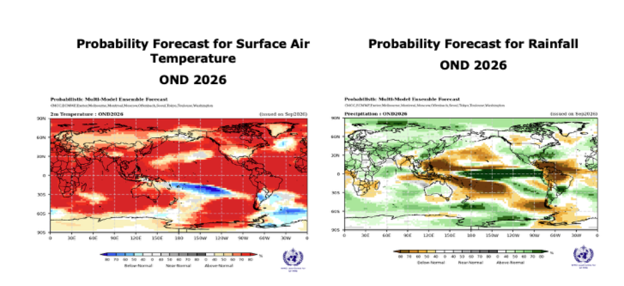
The outlook identifies the Greater Horn of Africa among the regions more likely to experience wetter-than-normal conditions during the October–December period. However, the forecast describes seasonal probabilities rather than guaranteeing above-average rainfall in every location.
The developing El Niño event could have significant implications for Ethiopia, Somalia, Kenya, Djibouti, Eritrea and other countries across the region, where rainfall variability affects agriculture, water availability, livelihoods and food security.
WMO’s forecast indicates that El Niño will likely persist through February 2027, with a near-100% likelihood of continuation over that period. The organization warned that the event could become one of the strongest recorded since at least 1950.
The Niño 3.4 index, which measures sea-surface temperature anomalies in the central-eastern equatorial Pacific, rose from 1.6°C above normal in June to 2.5°C in August. The seasonal average is forecast to reach approximately 3.7°C during October–December, potentially exceeding previous records.
Alongside the El Niño event, a positive Indian Ocean Dipole is expected to peak in October before weakening. These interacting climate patterns can influence rainfall distribution across the Horn of Africa, although their effects vary by location and season.
While increased rainfall could improve water availability and support agricultural production in areas affected by drought, excessive precipitation may also raise the risk of flooding, infrastructure damage, displacement and disruptions to farming and transport.
WMO also forecasts above-average temperatures across large parts of the world during October–December, increasing the likelihood of heat extremes even in regions expected to receive above-normal rainfall.
The organization said its seasonal outlooks are intended to help governments, humanitarian agencies and other decision-makers prepare for potential climate impacts. National meteorological agencies and regional climate outlook forums are providing updates to support preparedness and risk management.
For the Horn of Africa, the forecast underscores the importance of monitoring local weather updates, strengthening flood preparedness and ensuring that communities, farmers and public authorities are ready to respond to changing rainfall conditions.