Akobo Minerals, the Scandinavian-based gold producer operating Ethiopia’s Segele underground mine, reported approximately 12kg of doré gold production in October 2026, bringing cumulative output since the mine started operations to approximately 181kg.
The company said the October production was achieved at an average processed grade of 11 grams per tonne (g/t), while its average processed grade since start-up stands at approximately 22 g/t.
The lower October grade was primarily attributed to a higher proportion of lower-grade development material from underground cross-drives and previously accumulated tailings. However, the company said gold mineralisation continues to be observed in material extracted from the vertical shaft.
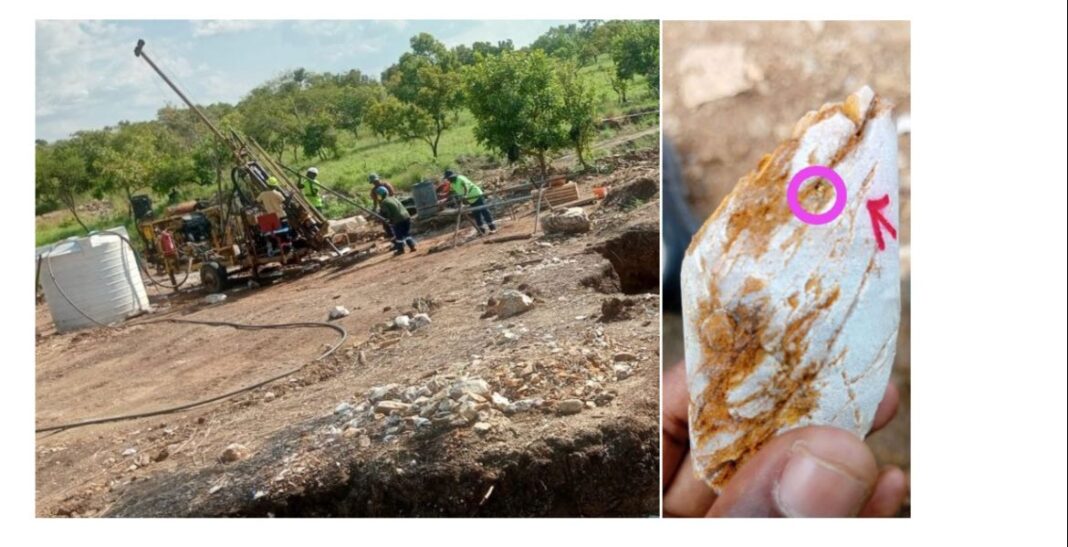
Meanwhile, exploration activities at the nearby Gingibil prospect have delivered encouraging initial results. Drilling resumed towards the end of October, with the targeted quartz vein intersected in the first two holes and visible gold observed in both.
The first hole intersected approximately 2.5 metres of quartz vein, while the second recorded two intersections totalling approximately 1.3 metres. Further drilling is planned to establish the continuity and extent of the mineralised structure, with laboratory assays still required to determine its gold grade and economic potential.
At Segele, development of the vertical shaft continued despite challenging ground conditions. Akobo said recent observations suggest the shaft may be entering harder and more competent rock.
The company expects to present an updated mine development plan in December 2026, which will determine the optimal shaft depth and underground infrastructure required to access additional ore. Subject to the final design, the underground operation could extend to approximately 200 metres depth.
Akobo also began assessing a potentially mineralised area west of the existing Segele orebody, although the work remains at an early stage.
The company holds a 182-square-kilometre exploration licence and a 16-square-kilometre mining licence in Ethiopia’s Gambela Region, where the Segele mine hosts an estimated 69,000 ounces of indicated and inferred gold resources at an average grade of 22.7 g/t.
Further exploration and deeper underground development are expected to support the company’s efforts to expand its mineral resource base and extend the operational life of the Segele mine.SECO