-Health-related taxes and the exploration of debt-swaps for health are tabled
By EBV staff writer
Ethiopia’s health expenditure is projected to grow by more than 72 percent to $8.3 billion by 2030, according to a new World Bank report, with government spending becoming the dominant and fastest-growing source of funding.
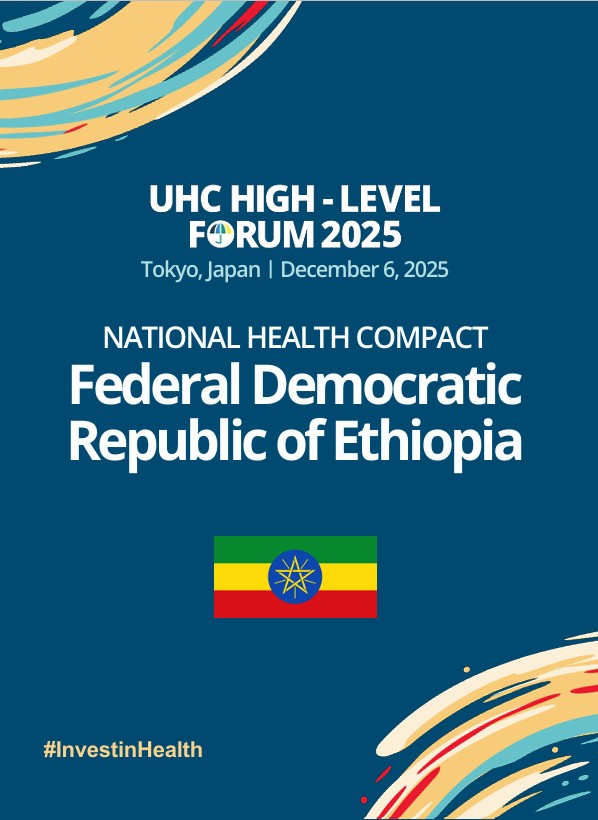
The latest ‘National Health Compact’ report, published by the World Bank on December 6, details a sharp increase from $4.8 billion in 2024. Spending is forecast to reach $5.6 billion next year and US$6.9 billion by 2028.
This expansion will be fueled primarily by increased government expenditure, supported by the expansion of health-related taxes and the exploration of debt-swaps for health. The government’s share of health financing is expected to rise dramatically to 53% in 2030, up from 27% last year.
Concurrently, the financial burden on individuals is set to decrease. The report indicates that Out-of-Pocket (OOP) expenditure will fall to 20% of total health spending by 2030, down from 39% in 2024. External funding is also expected to decline, from 31% in 2024 to 15% by the end of the decade. “OOP and external funding remain relatively flat, while health insurance contributions gradually increase,” the report notes.
The Compact is designed to accelerate the implementation of Ethiopia’s Health Care Financing Strategy 2022-2031. Key pillars include increasing domestic resource mobilization through measures like health taxes, and enhancing equity and efficiency via public financial management (PFM) reforms and digitalization.
Specific targets include raising the health sector’s share of total government spending to 10% and increasing per-capita health expenditure by 50% by 2030. The strategy also aims to digitalize 83% of district-level primary healthcare service delivery to achieve at least 20% efficiency gains.
Further measures involve expanding targeted health taxes on tobacco, alcohol, and sugar-sweetened beverages, with a defined share earmarked to subsidize Community-Based Health Insurance for the poor. The goal is to scale up CBHI coverage among the poor from 50% to 75% by 2030, thereby reducing OOP expenditure to 20% or less.
A major domestic production goal is also highlighted. Local manufacturing of essential medicines and health commodities is expected to meet 50% of national demand by 2030, a significant jump from the current 15%, aimed at reducing import dependence and creating skilled jobs.
By 2030, Ethiopia aims to reach an additional 47 million people with quality primary healthcare and mobilize at least $250 million in private sector investment for the health sector.©SECO