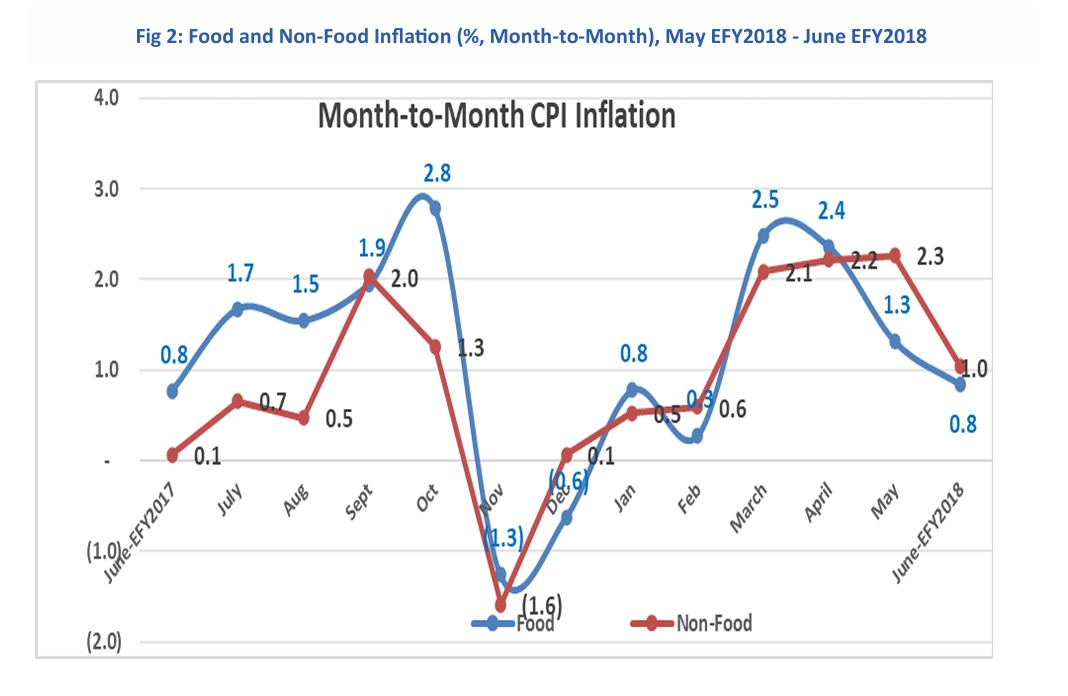
Rising prices for vegetables, meat, cereals and transport continued to fuel inflation in Ethiopia in June, with the country’s headline inflation extending its upward trend despite earlier signs of easing, according to the latest Consumer Price Index (CPI) released by the Central Statistical Service (CSS).
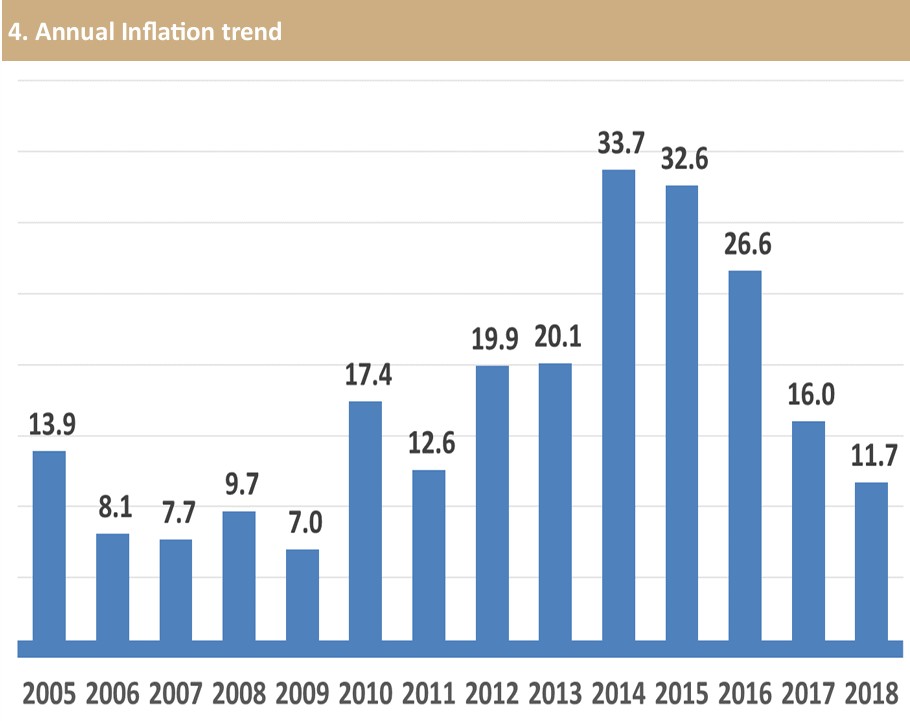
The CSS reported that annual inflation reached 13.9 percent in June (EFY 2018), reflecting higher consumer prices compared with the same month a year earlier. The increase marks the continuation of an upward trend that has emerged in recent months after inflation had steadily moderated since late 2024.
Food prices remained the primary driver of inflation, with vegetables, meat and bread and cereals among the largest contributors. According to the report, vegetable prices rose 12.8 percent year-on-year, while meat prices increased by 19.2 percent compared with June of the previous fiscal year. Bread and cereals recorded a 7.3 percent annual increase.
Other food categories also registered significant annual price increases. Sugar, jam, honey and chocolate surged by 35.9 percent, while non-alcoholic beverages and coffee climbed 37.6 percent, making them among the fastest-rising food items. Prices for milk, cheese and eggs increased by 20.3 percent, fruit by 21.3 percent, oils and fats by 18.8 percent, and food products not elsewhere classified (n.e.c.) by 17.1 percent.
On a month-to-month basis, food prices also continued to edge upward. Meat prices rose 0.5 percent in June compared with May, while fish and seafood increased by 1.2 percent, milk, cheese and eggs by 2.0 percent, oils and fats by 1.4 percent, and food products n.e.c. by 0.7 percent. Vegetable prices increased 1.2 percent over the month, maintaining the upward momentum recorded in previous months.
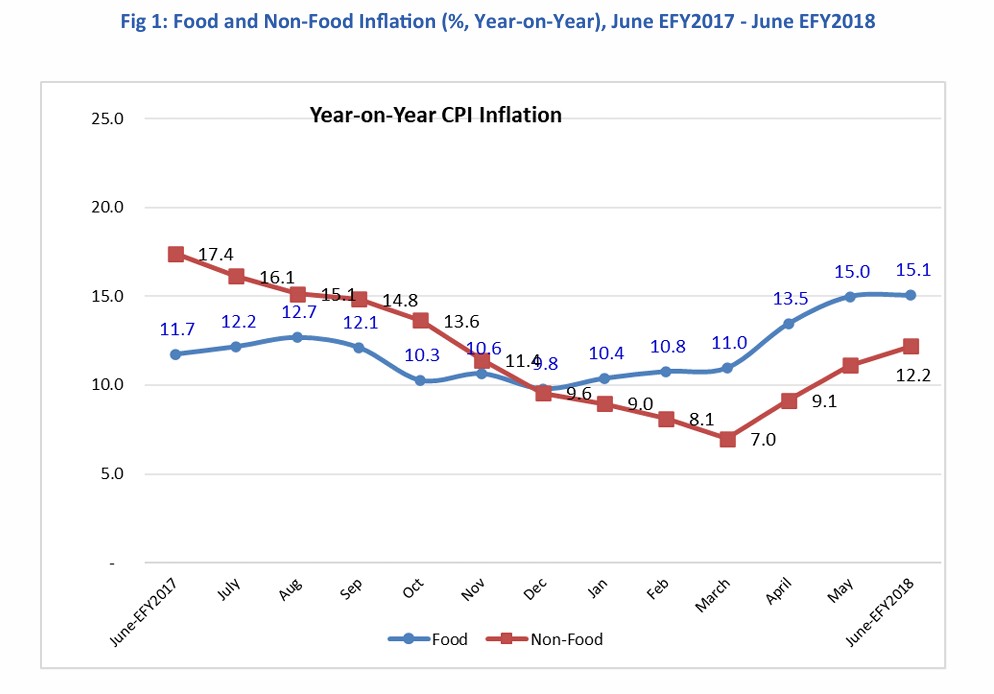
The report showed that food inflation reached 15.1 percent year-on-year, outpacing non-food inflation, which stood at 12.2 percent.
Outside the food category, transport remained one of the strongest contributors to overall inflation. Transport costs increased by 14.3 percent compared with the same period last year, while restaurant and hotel prices rose by 12 percent, reflecting continued cost pressures across the service sector.
Although inflation has accelerated in recent months, the CSS noted that the broader trend since December 2024 (EFY 2017) had been one of gradual moderation before the recent rebound. The renewed rise in prices comes amid heightened global uncertainty and supply-side pressures following geopolitical tensions in the Middle East, which have affected international commodity and energy markets.
The latest figures indicate that while Ethiopia has made progress in bringing inflation down from the multi-year highs recorded in recent years, persistent increases in food and transport costs continue to weigh on household purchasing power and remain a key challenge for policymakers, according to experts. SECO