Government projects the birr will strengthen this fiscal year as tight monetary policy and ongoing reforms aim to stabilize the foreign exchange market.
The Ethiopian birr has lost nearly one-fifth of its value against the U.S. dollar over the past year, marking the second year since the government launched its sweeping macroeconomic reform that introduced a market-based foreign exchange regime.

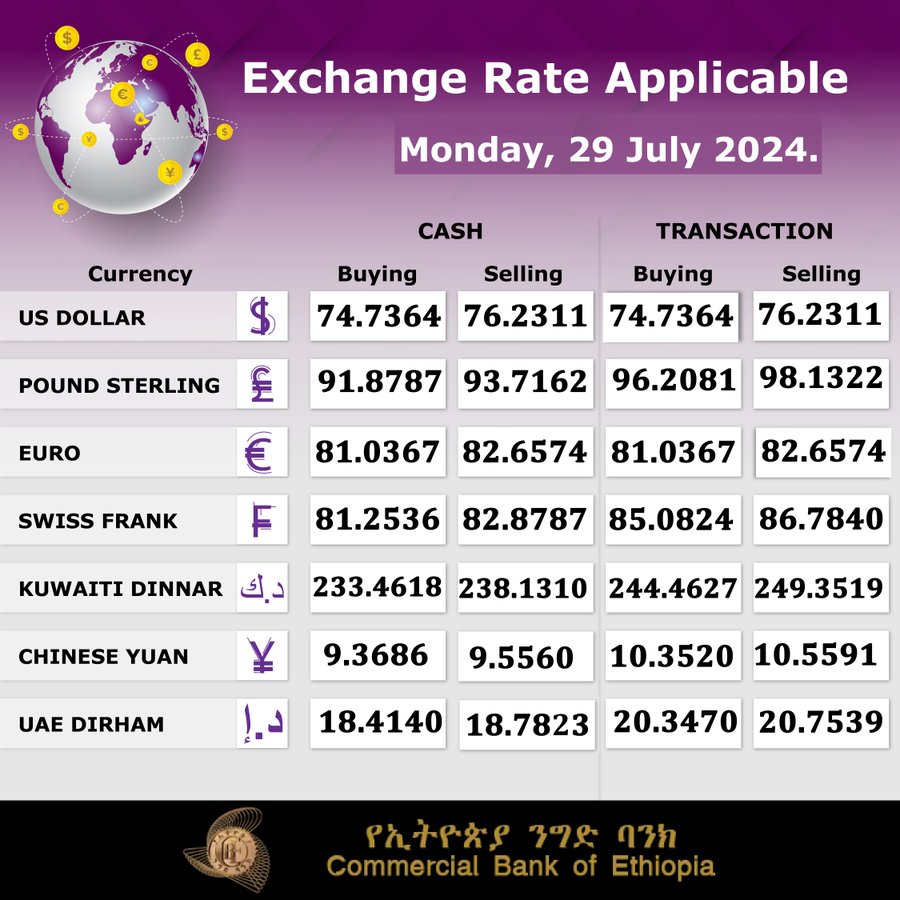
The reform, unveiled on July 29, 2024, represented one of the most significant shifts in Ethiopia’s economic policy in decades. It replaced the tightly controlled foreign exchange system with a market-driven mechanism, fundamentally changing how the country’s currency is priced.
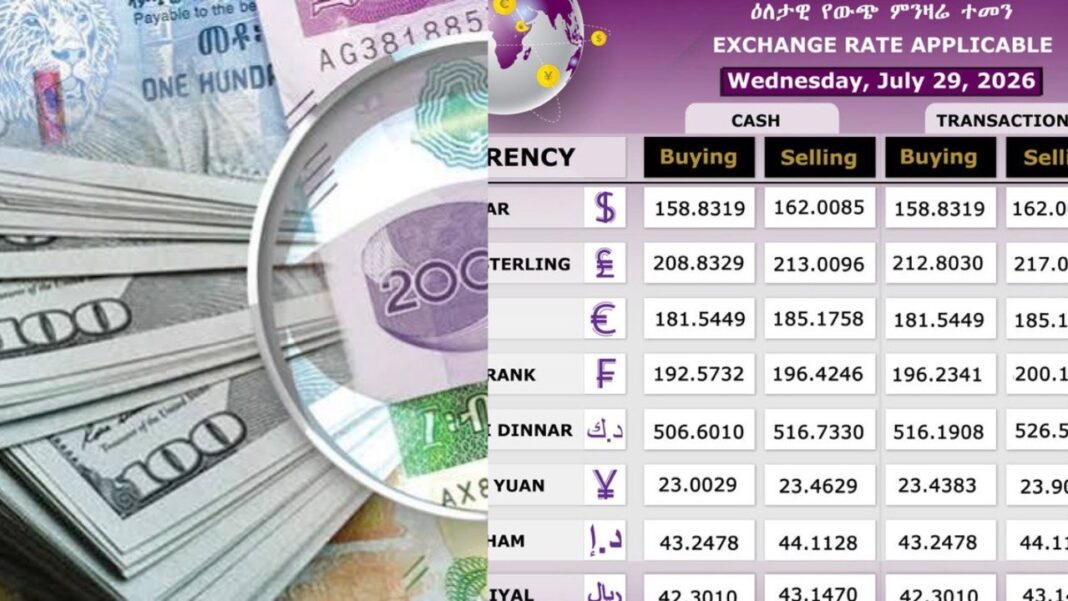
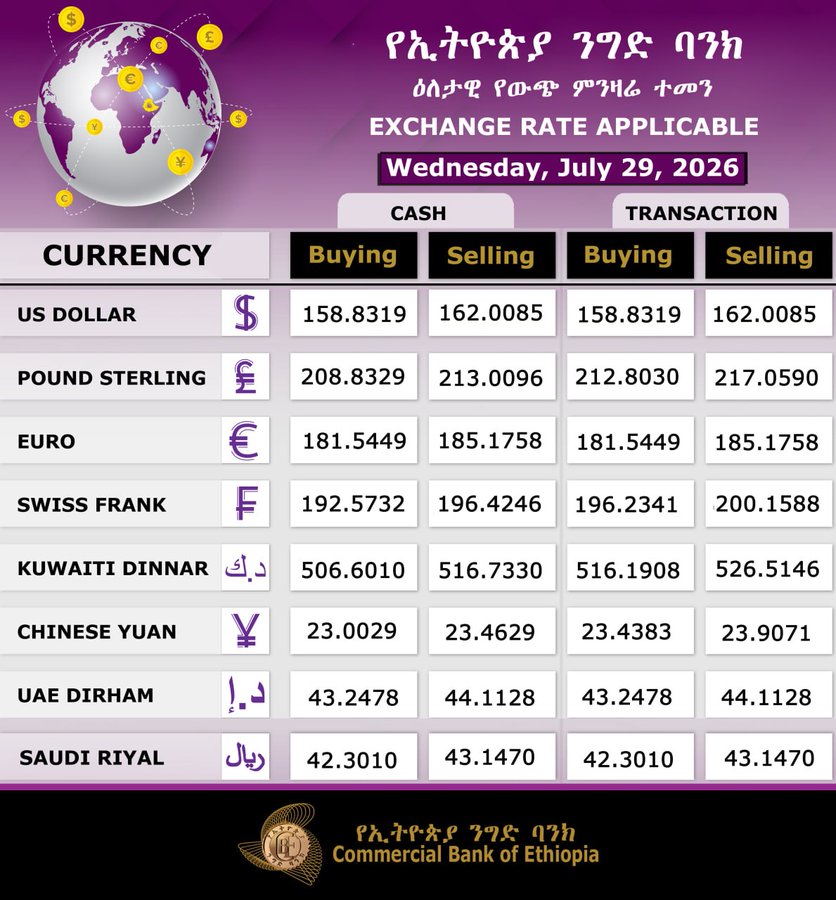
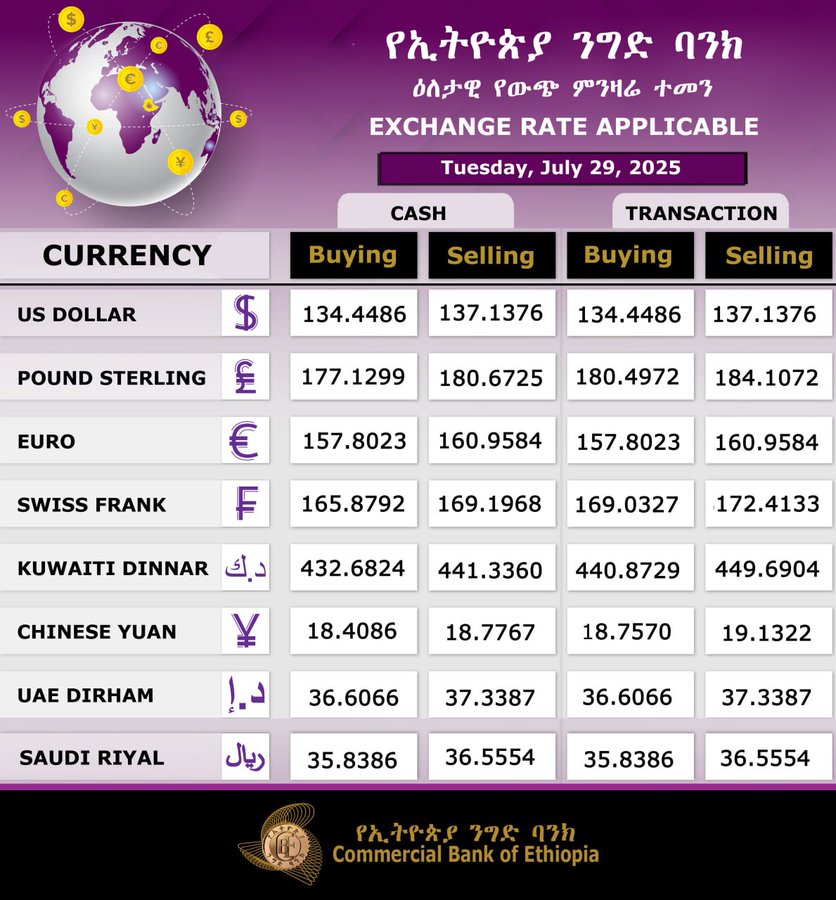
Figures from the Commercial Bank of Ethiopia (CBE), the country’s largest state-owned lender and EBV used as a benchmark for the foreign exchange market, show the birr has continued to weaken, though at a pace many analysts say is more measured than initially expected.
A year ago, CBE’s selling rate for the U.S. dollar stood at 137.13 birr. On the second anniversary of the reform, that rate had climbed to 162.21 birr per dollar, meaning the birr has depreciated by about 18.3 percent over the past 12 months.
The decline is even more pronounced when measured from the day the reform was introduced. Since July 2024, the birr has depreciated by roughly 112.8 percent against the dollar.
Despite the continued slide, economists argue that the pace of depreciation has been relatively orderly. Before the reform, the birr was routinely devalued by around 20 percent each year through administrative adjustments. Against that backdrop, they say the current trend reflects a healthier adjustment, even as the market continues to face both domestic and external pressures.
Another sign of improvement, they note, is the narrowing gap between the official exchange rate and the parallel market. The difference has fallen to around 11 percent, down from more than 15 percent at the start of the second year of the reform and in the months leading up to it.
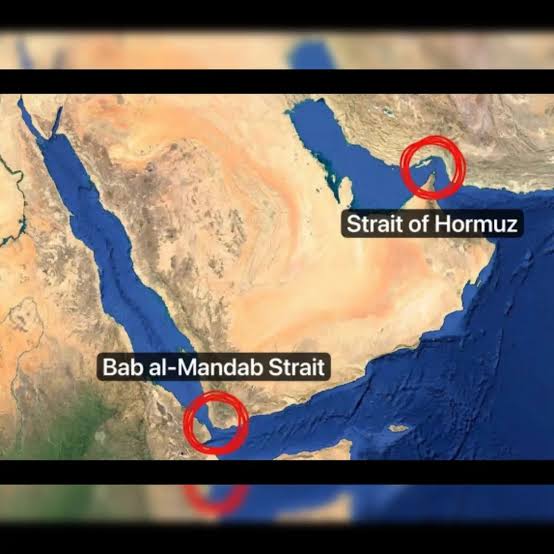
Analysts also point to regional developments as a factor influencing the exchange rate. Tensions in the Middle East, particularly the Gulf conflict, have added pressure to global currency markets. At the same time, foreign exchange auctions conducted by the National Bank of Ethiopia have helped ease supply shortages, allowing commercial banks to access more hard currency and reducing pressure on the parallel market.
Still, they stress that lasting exchange rate stability will depend less on intervention and more on Ethiopia’s ability to generate foreign exchange through exports, tourism, remittances, and investment. They also believe the central bank should maintain its tight monetary policy to prevent excess liquidity from fueling further depreciation.
“If the market is flooded with excessive liquidity, the impact will quickly be reflected in the foreign exchange market,” one expert said, noting that the central bank’s credit cap has played an important role in containing pressure on the birr.
Ethiopia’s heavy reliance on imported goods, including fuel, industrial inputs, and essential agricultural commodities, also leaves the currency vulnerable to external price shocks and global market volatility.
During his budget speech about six weeks ago, Finance Minister Ahmed Shide said the government expects the birr to strengthen during the 2026/27 fiscal year, which began on July 8.
The government projects Ethiopia’s import bill will reach USD 25.8 billion this fiscal year, with fuel imports alone expected to cost around USD 6 billion. Ahmed attributed the higher fuel bill to rising global energy prices linked to tensions in the Middle East.
He said the government would continue implementing measures aimed at stabilizing the foreign exchange market, expressing confidence that the ongoing reform program would strengthen market fundamentals and support greater stability in the birr’s exchange rate.
During the first ten months of the fiscal year that recently ended, Ethiopia spent USD 18.4 billion on imports, an 18 percent increase compared with the same period a year earlier.SECO