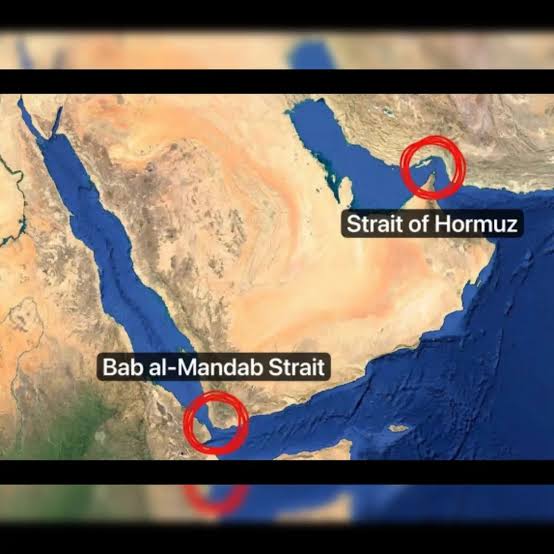
Djibouti has warned that any unilateral attempt to impose transit fees on vessels passing through the Bab el Mandeb Strait would violate international law, threaten global shipping and undermine the stability of one of the world’s busiest maritime corridors.
The warning came after reports that Yemen’s Houthi movement was considering charging ships transiting the strategic waterway, which links the Red Sea with the Gulf of Aden and the Indian Ocean.
In a statement released Wednesday evening, the Djiboutian government said the Bab el Mandeb is an international strait shared between the African and Asian coasts and cannot be subjected to unilateral taxation by any single party.

“The Bab el Mandeb Strait is a maritime passage of global interest, shared between the African and Asian shores. Any initiative seeking to impose, from a single shore, a toll or taxation system on ships transiting through this strait would be contrary to international law, would undermine the sovereignty of the riparian States, and would threaten the security of maritime routes essential to global trade and energy supply,” the government said.
Djibouti stressed that freedom of navigation through the strait is protected under international maritime law and reaffirmed its commitment to preserving the existing legal regime governing international waterways.
The government warned that introducing transit charges would not only challenge the internationally recognized status of the strait but could also escalate tensions in the Red Sea, where shipping has already faced repeated security disruptions over the past two years.
As a coastal state bordering the Bab el Mandeb, Djibouti said it would use diplomatic, legal and security measures, independently or alongside regional and international partners, to safeguard its sovereign rights and ensure safe navigation.
The government also urged the international community, maritime organizations and countries that rely on the waterway to ensure the Bab el Mandeb remains open to international shipping and governed by international law rather than unilateral actions.
The Bab el Mandeb is among the world’s most strategically important maritime chokepoints, carrying a significant share of global container traffic, oil exports and other commodities moving between Europe and Asia.SECO