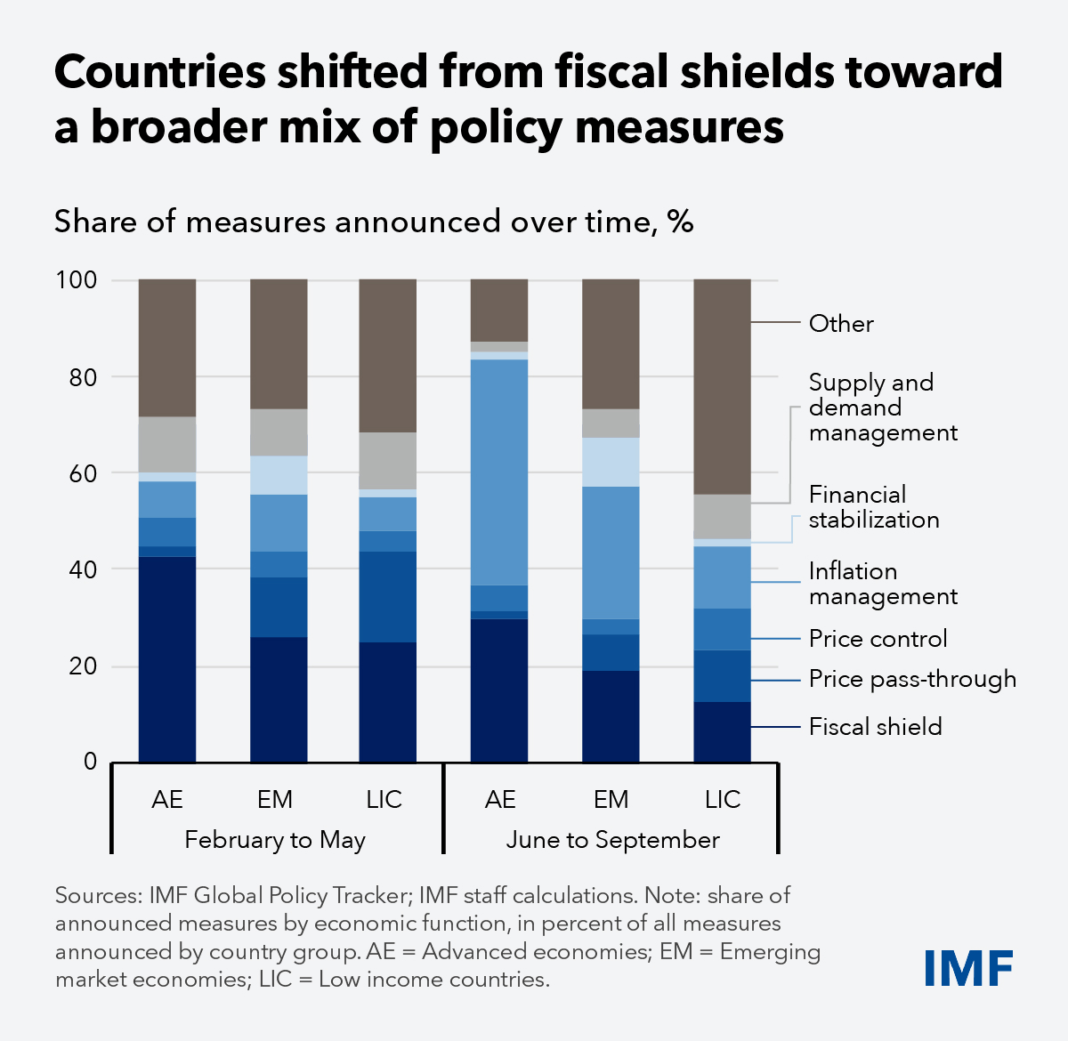
Countries are shifting their policy responses as the global energy shock linked to the Middle East war persists, with governments moving from broad fiscal support toward greater price adjustment and demand-management measures, according to new IMF research.
In an analysis published October 1, Era Dabla-Norris, Antonio C. David, Daria Zakharova and Aleksandra Zdzienicka said governments initially relied heavily on tax cuts, subsidies and household transfers to cushion consumers and businesses from rising energy costs.
As the shock continued and pressure on public finances increased, countries increasingly allowed higher global energy costs to pass through to domestic prices. Monetary policy also gained importance, particularly in economies where inflation was already elevated.
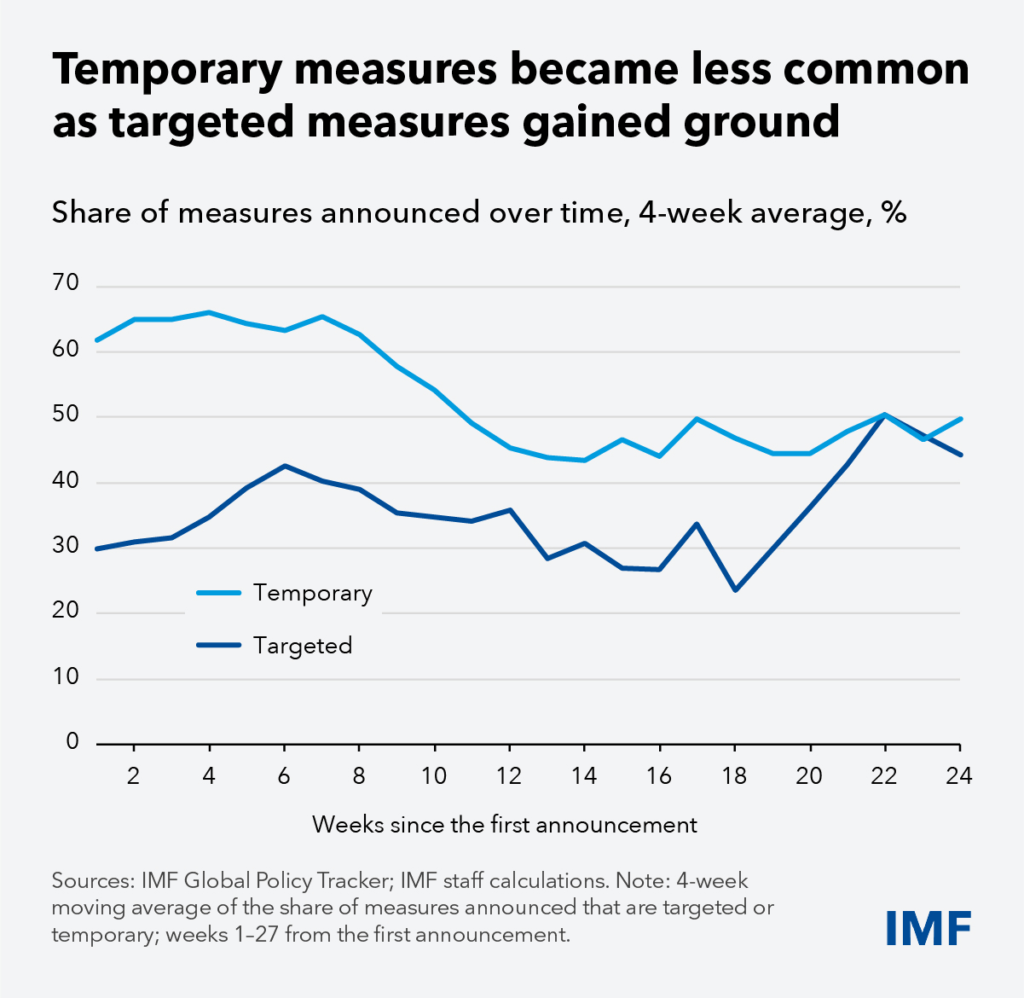
The IMF’s Global Policy Tracker recorded more than 1,200 announced measures across 175 economies between late February and mid-September. About half of the more recent measures identified a specific beneficiary group, compared with around 30 percent during the first phase of the shock, suggesting improved targeting.
The authors said countries’ responses were shaped not only by exposure to energy-price increases but also by public debt, financing conditions, inflation, foreign-exchange reserves, pricing systems and institutional capacity.
Economies facing higher debt and wider sovereign spreads tended to rely more on price pass-through and less on subsidies, tax cuts and direct transfers. Countries with stronger reserves made greater use of foreign-exchange intervention and financial stabilization measures.
Demand-management policies, including rationing, conservation requirements, shorter workweeks and remote work, also became more prominent.
The authors emphasized that targeted and flexible support remains essential, particularly for countries with limited fiscal space, while stronger social registries and payment systems can improve the efficiency of future responses.