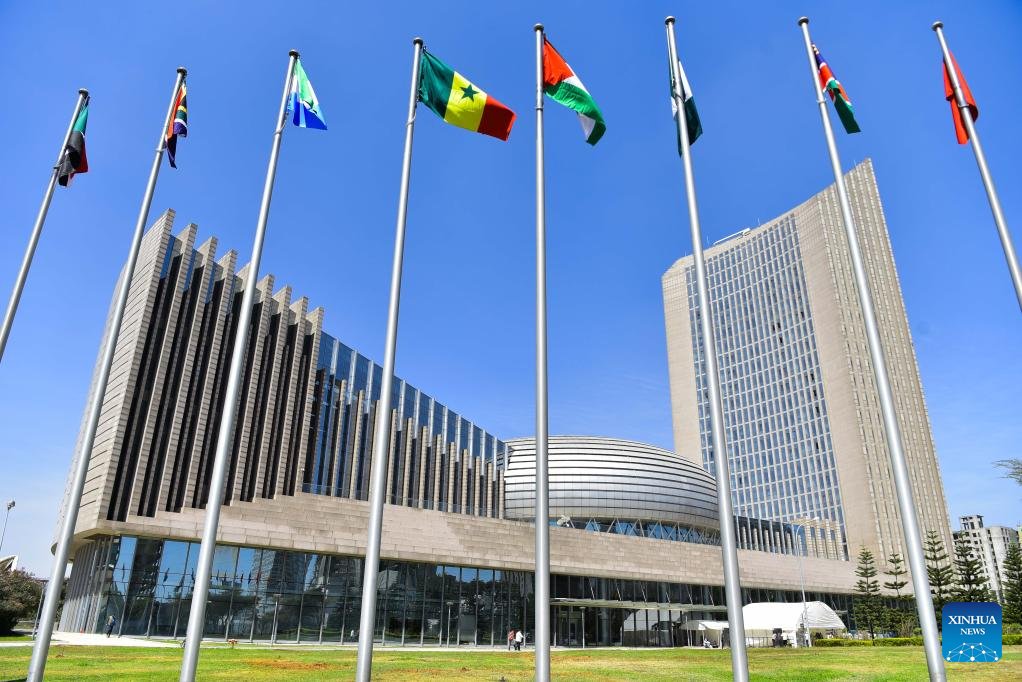
The African Union Commission has clarified that its recent call for restraint amid rising tensions involving Ethiopia, Eritrea and Egypt was intended solely to support de-escalation and regional stability, and was not meant to assign responsibility for developments in any member state.
In a clarification issued following observations by the Arab Republic of Egypt regarding the Commission’s October 1, 2026 statement, the AU Commission reaffirmed its commitment to the principles of sovereignty, national unity and territorial integrity of member states, as well as non-interference in their internal affairs.
The Commission said its statements and positions are strictly guided by its institutional mandate to promote peace, security and stability across Africa. It stressed that the October 1 statement was not intended to comment on the internal affairs of any member state or attribute responsibility for ongoing developments to a neighboring country.
Instead, the Commission said, the statement was a call for de-escalation following diplomatic expulsions involving the three capitals.
The AU Commission reiterated its appeal for the parties to exercise restraint, maintain open channels of communication and rely on diplomatic mechanisms to address differences.
According to the Commission, these measures are consistent with its responsibilities under the African Union’s Constitutive Act and relevant institutional frameworks, particularly its role in preventing misunderstandings, escalation and the widening of tensions that could threaten regional stability.
The clarification comes amid heightened diplomatic tensions in the Horn of Africa and between Ethiopia, Eritrea and Egypt, following a series of diplomatic measures and increasingly strong political statements.
The Commission also emphasized the importance it places on its relationship with Egypt, describing the country as a founding member of the African Union and an important partner in advancing peace, security, continental integration and development.
The AU’s latest clarification underscores its effort to maintain diplomatic engagement with all sides while avoiding positions that could be interpreted as taking sides in the growing regional tensions.