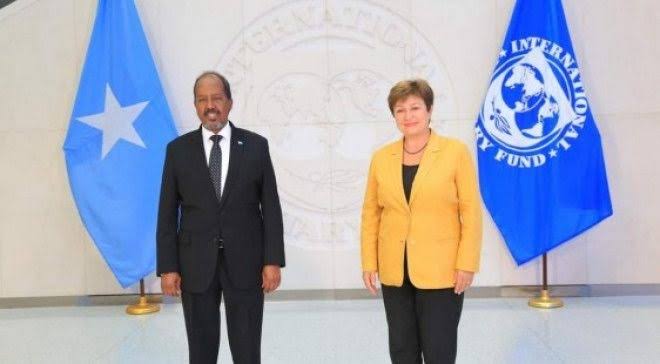
Somalia is facing a convergence of global and domestic challenges that are weighing on economic activity, raising inflation and food insecurity, and putting pressure on public finances, the International Monetary Fund (IMF) said Monday.
The IMF said sharp cuts in foreign aid since 2025, severe and recurring climate shocks, spillovers from the Middle East war and evolving electoral dynamics have significantly complicated Somalia’s economic outlook.
The Fund expects Somalia’s real GDP growth to slow to 2.3% in 2026, before gradually recovering to 2.7% in 2027 and reaching 4% over the medium term. Inflation is projected to rise to 6.5% this year, driven partly by prolonged drought and disruptions to global trade.
The IMF also warned that Somalia remains exposed to significant downside risks, including more severe climate shocks, renewed regional conflict, further reductions in foreign aid and domestic political challenges.
“Near-term risks are high,” the IMF said, stressing that sustained donor support remains critical, particularly if the country is hit by additional economic shocks.
Despite the difficult environment, resilient remittance inflows continue to provide an important source of household income and foreign exchange, helping cushion some of the impact of external pressures.
The IMF urged Somalia to focus in the near term on preserving macroeconomic stability by accelerating domestic revenue mobilization, maintaining spending discipline and strengthening public financial and debt management.
The Fund projects Somalia’s overall fiscal deficit at 0.9% of GDP in 2026 and 0.5% in 2027, while calling for stronger tax and customs enforcement, harmonization of sales taxes and increased non-tax revenues.
The IMF also said the Central Bank of Somalia is making progress in strengthening financial supervision and inclusion, but urged further action on financial stability, payment systems, anti-money laundering and combating the financing of terrorism.
Currency reform remains a national priority, but the IMF advised the authorities to proceed cautiously once key prerequisites are in place.
Over the medium term, the Fund said stronger governance, a better business environment, improved access to finance, human-capital investment, trade diversification and climate resilience will be essential for Somalia to achieve more inclusive and sustainable growth.
An IMF staff team led by Ran Bi held discussions with Somali authorities in Nairobi from September 21 to October 1 as part of the 2026 Article IV consultation.SECO