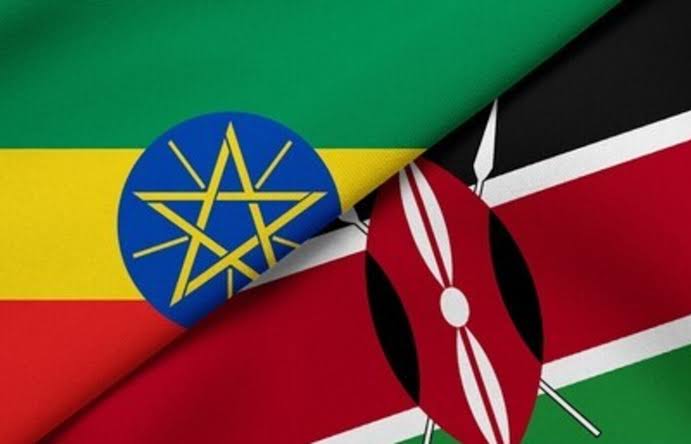
Kenya has widened its lead over Ethiopia to become East Africa’s largest economy, despite Ethiopia recording nearly twice the real economic growth rate of its neighbour, according to the latest figures cited from the International Monetary Fund (IMF).
Kenya’s nominal gross domestic product (GDP) reached an estimated $136 billion in 2025, surpassing Ethiopia’s $126 billion. The gap is projected to widen further in 2026, with Kenya’s economy estimated at $151 billion by October, compared with Ethiopia’s $127 billion.
The growing disparity comes despite Ethiopia’s economy expanding by 9.2%, compared with Kenya’s 4.6%, highlighting the significant influence of exchange-rate movements on the dollar-denominated size of national economies.
Ethiopia’s shift towards a market-based foreign-exchange system in July 2024, introduced as part of its broader economic reform programme and supported by an IMF financing package, triggered a sharp depreciation of the birr. The currency adjustment reduced the dollar value of Ethiopia’s economic output, contributing to its loss of the regional top spot despite stronger real growth.
The contrast illustrates how exchange-rate changes can reshape economic rankings without necessarily reflecting differences in underlying production growth. Economist Charlie Robertson attributed the shift largely to currency movements, saying, “That was just the currency effect.”
Kenya’s rise strengthens its position among Africa’s major economies, with projections suggesting it could overtake Angola by 2028. Ethiopia, meanwhile, retains a substantially larger population and a faster-growing economy in real terms.
The widening gap in nominal GDP therefore reflects two different economic measures: Kenya’s larger output when converted into US dollars, and Ethiopia’s stronger expansion in inflation-adjusted domestic production. Whether Ethiopia can regain the regional lead will depend not only on sustaining growth but also on exchange-rate stability and the evolution of its economy in dollar terms. (wires)