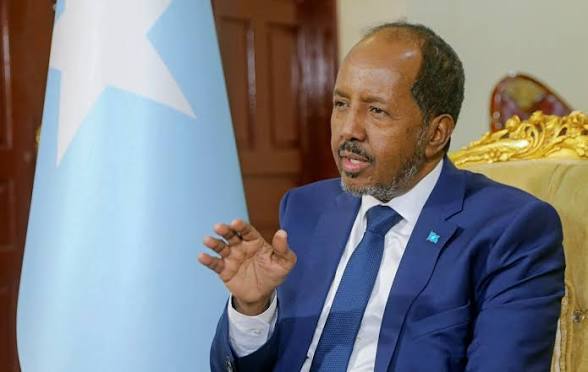
Somali President Hassan Sheikh Mohamud has accused the United Arab Emirates (UAE) of interfering in Somalia’s internal affairs and seeking to weaken its national unity, warning that the country could face a situation similar to conflicts in Sudan, Libya and Yemen.
In a televised address on Tuesday, November 17, Mohamud called on Somalis to unite against foreign interference and defend the country’s sovereignty, territorial integrity and national institutions.
“The UAE went to Libya and returned from Libya divided. It went to Yemen and returned from Yemen divided. It now seeks to do the same to Somalia and Sudan,” the President said, according to a report by the Somali National News Agency (SONNA).
Mohamud accused Abu Dhabi of supporting parallel security structures, establishing military facilities outside the federal government’s authority and backing political administrations in ways he said undermine the country’s central institutions.
He also questioned UAE agreements involving the ports of Berbera, Bosaso and Kismayo, arguing that strategic national assets should not be managed outside Somalia’s constitutional and legal framework.
The President’s remarks come as his administration faces a growing domestic political dispute over the country’s electoral process and the extension of government mandates.
On November 5, Somalia’s Supreme Court ruled that Mohamud’s presidential term had expired on May 15, 2026, rejecting constitutional amendments that extended the mandates of the president and parliament. The court called on political leaders to agree on an electoral framework within 30 days and hold elections within 90 days.
The political uncertainty has also raised concerns over international financing. Africa Intelligence reported on November 16 that the World Bank is weighing a temporary suspension of budget support to Mogadishu following the court ruling.
Neither the World Bank nor the Somali government has publicly confirmed a decision to suspend the funding.
Somalia’s dependence on external financial assistance makes the prospect particularly significant, as any interruption in direct budget support could add pressure on government spending and public administration.
Mohamud, meanwhile, maintained that Somalia remains open to relations with the UAE based on equality, mutual respect and recognition of its sovereignty.
The developments place Somalia’s diplomatic relations, political transition and international financing under renewed scrutiny as the country confronts overlapping domestic and regional challenges.