Banks extend 426 billion birr in fresh loans as central bank shifts from direct credit restrictions to tighter bank-by-bank controls
Credit extended by the financial sector surged by 62 percent in the first quarter of the 2026/27 fiscal year, marking a sharp acceleration in lending following the National Bank of Ethiopia’s (NBE) decision to lift its longstanding credit growth cap.
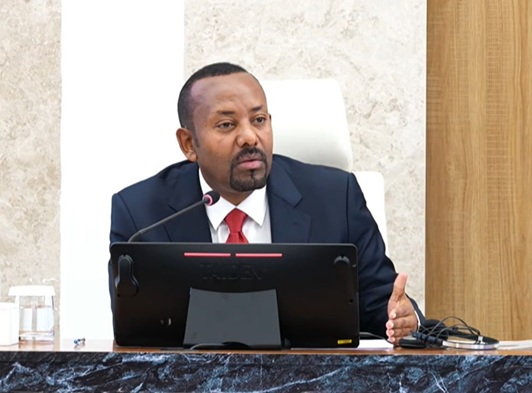
Prime Minister Abiy Ahmed told parliament that the financial sector provided 426 billion birr in new credit during the first three months of the fiscal year, representing a 62 percent increase compared with the same period last year. Nearly 98 percent of the fresh lending went to the private sector, highlighting the growing role of banks in financing private economic activity.
The sharp increase comes after the central bank scrapped its 24 percent credit growth ceiling, which had been in place since August 2023 as part of efforts to contain inflationary pressure and moderate credit expansion.
At the beginning of July, coinciding with the start of the new fiscal year, the NBE announced the removal of the cap, signalling a shift away from direct restrictions on banks’ lending volumes. However, the decision did not mark a complete relaxation of monetary policy.
“We will continue with a tight monetary policy stance,” NBE Governor Eyob Tekalign said in July, making clear that the central bank would maintain close oversight of credit expansion.
Under the revised approach, the NBE intends to rely more heavily on bank-specific loan-to-deposit ratio requirements and reserve requirements to regulate lending, rather than imposing a uniform credit growth ceiling across the banking industry.
The latest lending figures provide an early indication of how banks are responding to the new policy environment, although the extent to which the acceleration will be sustained remains to be seen.
Meanwhile, bank deposit mobilisation reached 5.3 trillion birr during the reporting period, according to the Prime Minister. Digital financial transactions also recorded significant growth, reflecting the continued expansion of electronic payment services and financial sector activity.
Beyond the banking sector, Abiy presented a mixed picture of the economy’s performance during the first quarter, with export earnings improving but import costs and inflation continuing to pose challenges.
The country generated 3.1 billion dollars in export earnings during the quarter, representing a 25 percent increase from the corresponding period of the previous fiscal year. Service exports contributed 2.9 billion dollars, registering 27 percent growth year-on-year.
Imports, meanwhile, reached 6.5 billion dollars during the same period. The Prime Minister said fuel import costs had increased by 70 percent compared with the same period last year, largely due to the conflict in the region and its impact on international energy prices.
On the fiscal front, government expenditure reached 458 billion birr, slightly exceeding revenue collection of 454 billion birr. Of the total expenditure, 88 billion birr went towards debt servicing, although the Prime Minister did not provide a breakdown of payments to domestic and external creditors.
Abiy also said the country’s credit risk had declined to a medium level, a target the government had initially expected to achieve by 2028.
Despite the progress recorded across several macroeconomic indicators since the launch of the Homegrown Economic Reform Programme, the Prime Minister acknowledged that inflation remains one of the biggest challenges facing the economy.
The reform programme, launched in July 2024, has sought to address structural economic imbalances through foreign exchange liberalisation, monetary tightening, fiscal adjustments and greater private sector participation.
The latest figures suggest that the removal of direct lending restrictions is already translating into stronger credit expansion, while the central bank faces the challenge of ensuring that increased financing supports productive economic activity without undermining its efforts to contain inflation.
Prime Minister Abiy said the gap between the official and parallel foreign exchange market rates had stood to 13 percent.SECO