By EBV staff writer
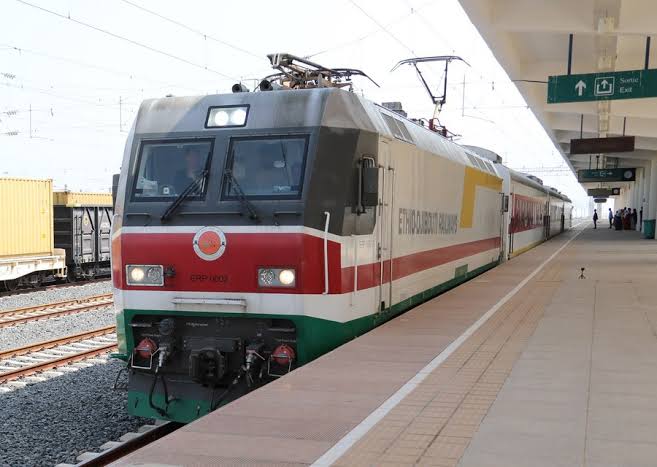
The Ethio-Djibouti Railway SC (EDR) is launching a transformative expansion of its core assets and strategic direction, according to a detailed report by Capital newspaper. The company plans to double its fleet of freight wagons and electric locomotives by the end of this year, a move central to its evolution from a rail operator into a diversified industrial holding group.
Currently operating with 1,100 freight wagons and 35 electric locomotives on the critical 756-kilometer corridor linking Addis Ababa to the Port of Djibouti, the fleet enhancement is designed to drastically increase cargo throughput and reliability. This physical expansion supports a broader corporate strategy to diversify into multimodal logistics, construction, and large-scale civil engineering.
Parallel to the fleet upgrade, EDR is advancing key infrastructure projects to extend its network’s reach and functionality. As reported by Capital, ongoing work includes a three-kilometer spur line connecting the AMG Industrial Park to Gelan station. Furthermore, civil works are underway to link the Horizon Djibouti Terminals Limited (HDTL) oil terminal in Doraleh to the main rail line, a integration poised to streamline bulk fuel transportation via rail.
The company’s ambitious vision also encompasses a prospective 47-kilometer dual-line project to connect Bole International Airport in Addis Ababa to the planned new airport city in Bishoftu.
To underpin this aggressive growth, EDR is forging strategic international partnerships. The company has entered a technical consultation agreement with China Civil Engineering Construction Corporation (CCECC), leveraging the latter’s regional expertise. Additionally, a recent high-level visit by a delegation from Dubai’s ENOC Group, led by Acting CEO Hussain Sultan Lootah, underscored deepening collaboration. The delegation toured EDR’s AMG plant and held discussions with top officials in Djibouti and Ethiopia, culminating in an agreement to establish a dedicated task force for project coordination and rate determination.
Guiding this transformation is the strategic vision of CEO Takele Uma, who is restructuring EDR around three core pillars: railway operations, global logistics (under EDR Global Logistics), and a dedicated engineering division. This restructuring aims to position the state-owned enterprise as a central driver of sustainable development and regional economic integration, far beyond its original mandate.