Researchers at Chonnam National University (CNU) in South Korea have identified a rice gene that significantly improves both drought tolerance and crop productivity, offering a potential breakthrough for climate-resilient agriculture.
The study, led by Professor Geupil Jang and published in Plant Biotechnology Journal, focuses on a gene called OsFeSOD3, which plays a dual role in protecting rice plants from environmental stress and supporting chloroplast development.
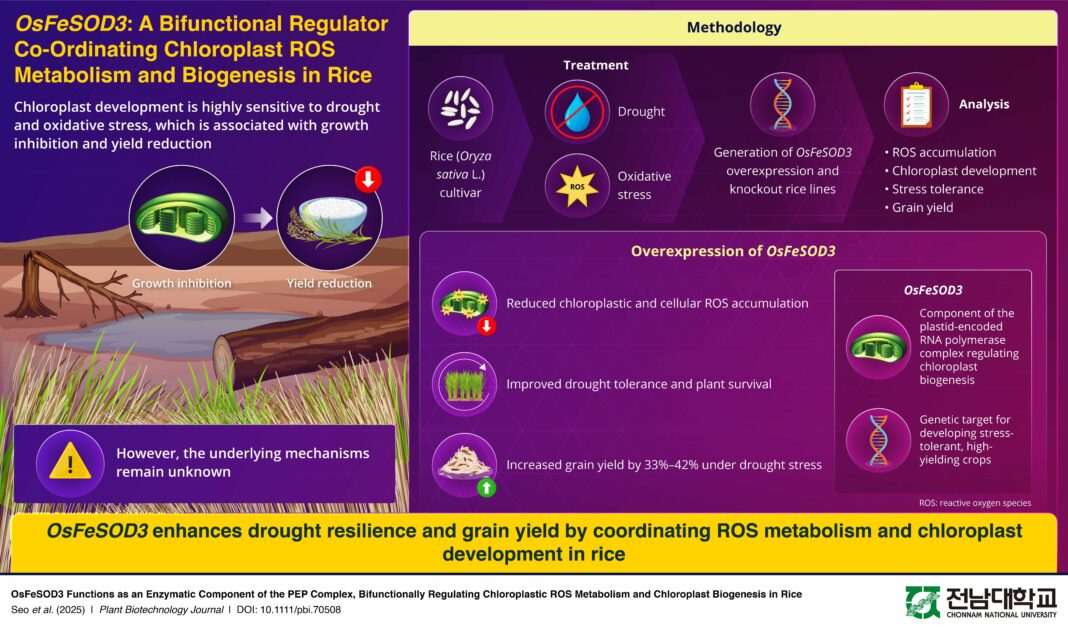
Scientists found that drought stress triggers the accumulation of harmful reactive oxygen species (ROS) inside chloroplasts, reducing photosynthetic efficiency and crop performance. By increasing the expression of OsFeSOD3, researchers were able to lower ROS levels, reduce cellular damage, and enhance drought tolerance.
The team also discovered that OsFeSOD3 is involved in chloroplast biogenesis as part of the plastid-encoded RNA polymerase (PEP) complex, linking stress protection with the maintenance of photosynthetic capacity.
Field trials conducted over two growing seasons showed that rice plants engineered to overexpress OsFeSOD3 produced 33–42% higher grain yields under drought conditions compared with conventional plants. The yield gains were mainly attributed to improved grain filling and increased grain numbers.
In contrast, rice plants lacking the gene developed severe chloroplast defects, albino leaves, and stunted growth, underscoring its importance in normal plant development.
Researchers believe the discovery could help breeders develop high-yielding crops capable of withstanding increasing drought and climate-related stresses, strengthening global food security.SECO