A giant crocodile once ruled Lucy’s world, lurking in ancient Ethiopian waters with jaws powerful enough to turn early human life into terror.
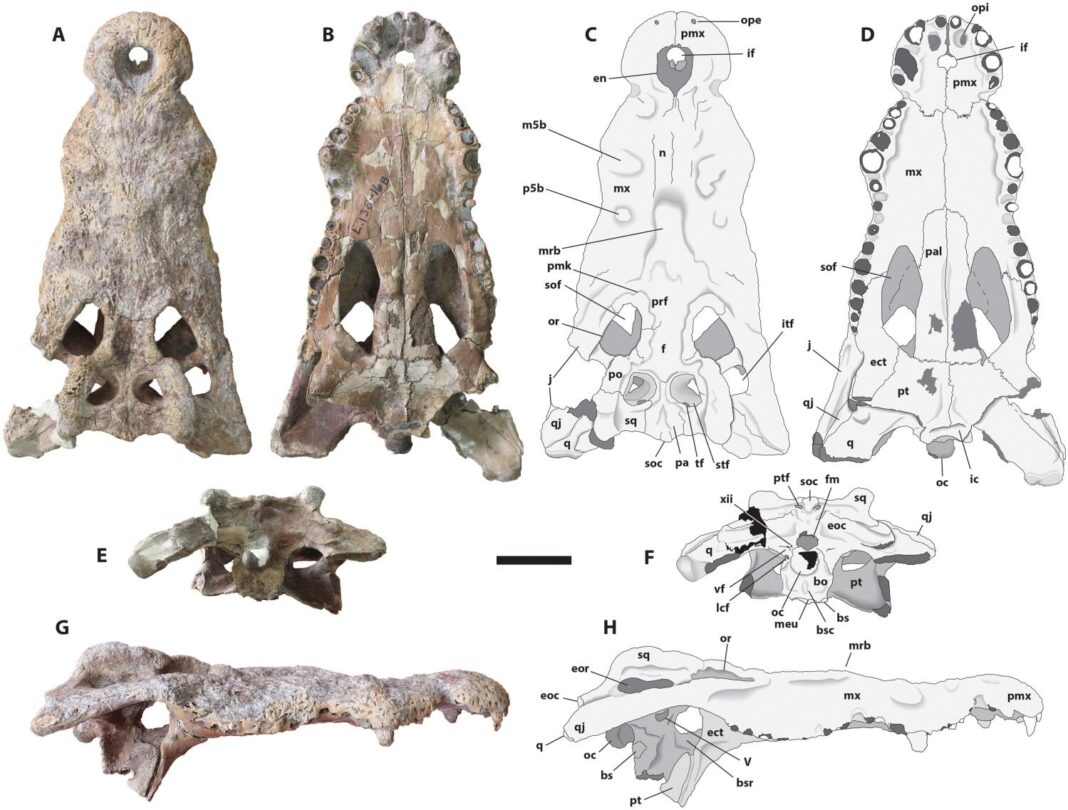
Between 3.4 million and 3 million years ago, the waterways of what is now Ethiopia harbored a crocodile large enough to take down the early human relatives living along the same shores. A University of Iowa-led team has formally identified that animal as a previously unknown species, named Crocodylus lucivenator, meaning “Lucy’s hunter.”
The study, published in the Journal of Systematic Palaeontology, draws on 121 cataloged fossil remains from the Hadar Formation in Ethiopia’s Afar region, including skulls, teeth, and jaw fragments from dozens of individuals.
Lucy, discovered in 1974, belonged to Australopithecus afarensis and remains one of the most significant fossil finds in human evolution. She helped confirm that walking upright evolved before larger brain size. The crocodile named in her honor shared her rivers and, researchers argue, regularly hunted her species.
A Massive Ambush Predator in a Mixed Landscape
Crocodylus lucivenator measured roughly 12 to 15 feet long and weighed between 600 and 1,300 pounds. That made it the largest predator in the Hadar ecosystem, outranking lions and hyenas.
The Pliocene Hadar landscape combined woodlands, gallery forests, wet grasslands, and shrublands alongside lake and river systems. Animals moving through this environment crossed water regularly, placing them within reach of an ambush predator waiting just below the surface.
For more https://url-shortener.me/NJDM