Ethiopia’s annual inflation rate climbed to 15.3 percent in July 2026, up from 13.7 percent a year earlier, with rising food prices continuing to weigh heavily on households while higher non-food costs added to the pressure.
The latest data also points to a faster increase in prices in the short term. Month-on-month inflation reached 2.6 percent in July, compared with 1.3 percent in the same month last year.
The increase comes at a time when global commodity and shipping markets are still feeling the effects of the conflict that erupted between Iran, Israel and the United States in late February, particularly around the strategically important Strait of Hormuz.
The disruption to one of the world’s most important shipping routes has pushed up energy, freight and insurance costs globally. The Strait of Hormuz carries around a quarter of global seaborne oil trade and a significant share of fertilizer shipments. UN Trade and Development has warned that disruptions to the route could raise energy, transport and agricultural input costs, with developing economies particularly exposed.
The impact has extended beyond oil. Shipping companies have faced higher war-risk insurance premiums and sharply increased tanker rates as vessels were forced to avoid or limit passage through the region. S&P Global reported that war-risk premiums for vessels using the strait surged by more than 1,000 percent at the height of the initial disruption, while tanker earnings also jumped sharply.
For Ethiopia, which depends heavily on imported fuel, fertilizer and other essential commodities, higher international shipping and commodity costs can eventually feed into domestic prices. The country’s dependence on the Djibouti trade corridor also leaves import costs sensitive to developments affecting the wider Red Sea and Gulf shipping routes.
The July inflation figures, however, show that domestic food and non-food pressures remain important drivers of the increase.
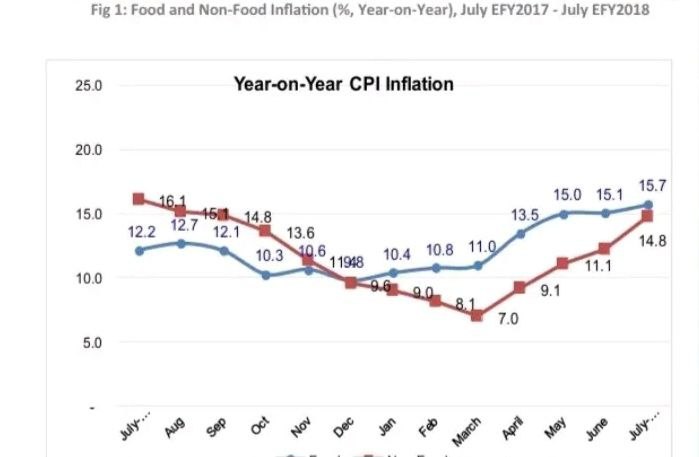
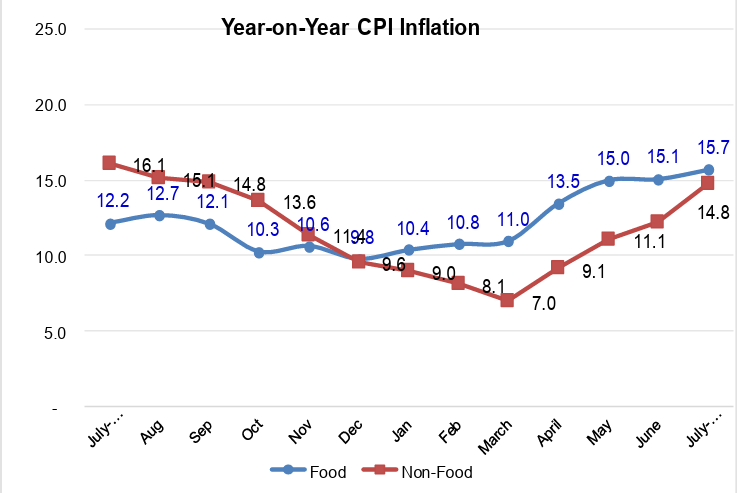
Food and non-alcoholic beverages recorded annual inflation of 15.7 percent in July. Prices of several major food items increased significantly over the past year.
Sugar, jam, honey and chocolate recorded the largest increase at 39.4 percent. Meat prices rose by 21.6 percent, while oils and fats increased by 20.3 percent. Fruit prices rose 19.2 percent, milk, cheese and eggs increased 18.9 percent, and other food products rose 18.2 percent.
Vegetable prices increased by 13.6 percent, while bread and cereals, which have a large weight in the consumer basket, rose by 8 percent. Non-alcoholic beverages and coffee recorded a particularly sharp increase of 33 percent.
At the same time, inflation is becoming increasingly broad-based. Non-food inflation reached 14.8 percent in July, reflecting higher prices across transport, education, household goods, restaurants and other services.
Education recorded the highest increase among the major non-food categories, rising 25.3 percent year-on-year. Miscellaneous goods and services increased 19.3 percent, while alcoholic beverages and tobacco rose 16 percent.
Transport costs increased 15.6 percent, restaurants and hotels rose 15.3 percent, and furnishings, household equipment and routine household maintenance increased 15.2 percent.
Clothing and footwear prices went up 15 percent, while housing, water, electricity, gas and other fuels increased 13.3 percent. Health costs rose 12.8 percent and communication prices increased 8 percent.
The combination of domestic price pressures and an uncertain global trading environment could therefore keep inflation elevated. Although the July figures cannot be attributed solely to the Hormuz crisis, the conflict has added another layer of pressure through energy prices, shipping costs, insurance and key imported commodities.
The latest developments around Hormuz underline the risk. Even after diplomatic efforts to restore shipping, vessel traffic through the strait remains far below normal levels. Reuters reported on August 26 that only five commodity vessels transited the strait on the previous day, compared with a 10-day average of 15.
For Ethiopia, continued volatility in global energy, fertilizer and freight markets could translate into higher import costs and add to pressure on domestic prices, particularly if disruptions persist.
With annual inflation now 1.6 percentage points higher than in July 2025 and monthly inflation accelerating sharply, the latest figures suggest that the battle against rising prices remains a significant challenge for policymakers and consumers.SECO