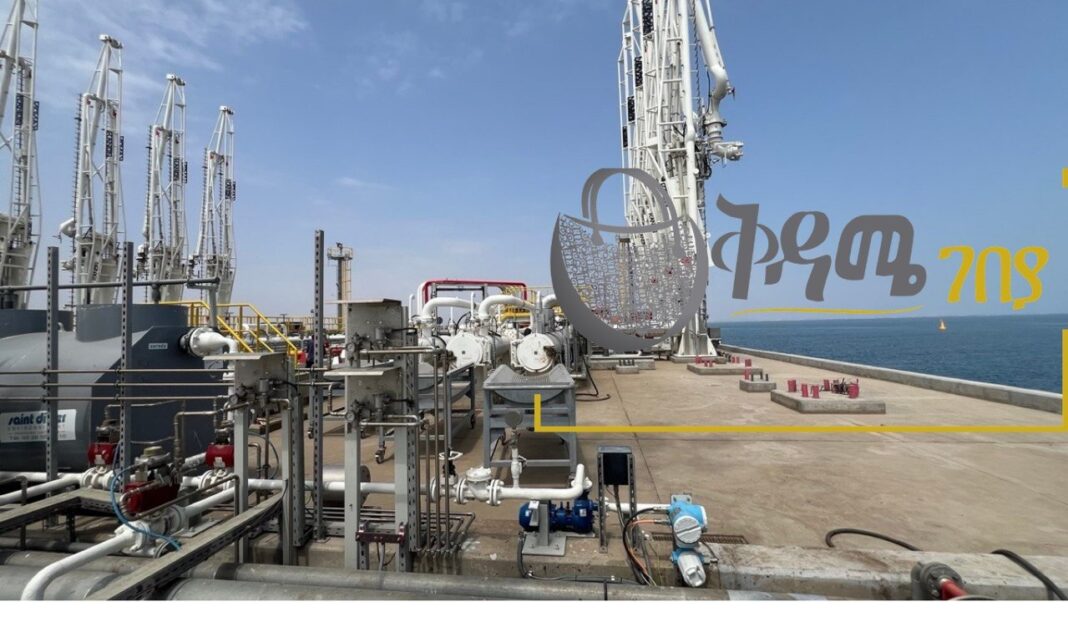
–Move comes alongside the planned pipeline project linking Horizon Terminal to Dawale
–Ethiopia’s Potential Stake in the New Project Remains Unclear
Djibouti’s long-delayed Damerjog Liquid Bulk Port could finally get its missing oil storage terminal, as Nigerian industrial giant Dangote Group moves to invest in the project, potentially reviving a major fuel infrastructure facility designed to serve Ethiopia and the wider region.
The Djibouti Ports and Free Zones Authority (DPFZA) has disclosed that Dangote Group is coming forward to invest in the construction of petroleum storage facilities at the Damerjog Liquid Bulk Port, offering a potential breakthrough for a project whose completed jetty has remained without the storage infrastructure needed to make the facility fully operational.
According to DPFZA, the planned investment involves the development of petroleum product storage tanks with a total capacity of 375,000 cubic metres and an annual throughput capacity of 5 million tonnes. The facility is expected to occupy an 80-hectare site and will be directly connected to the Damerjog-Nagad railway corridor.
The storage terminal will also be linked to the Damerjog Liquid Bulk Port (DLBP) through a common-user manifold system, allowing petroleum products unloaded from vessels at the port’s jetty to be transferred directly into storage.
The announcement comes after years of uncertainty over how Djibouti would finance the remaining components of Damerjog. While the port’s marine infrastructure, including its jetty, has been completed, construction of the storage depot has remained a critical missing piece.
The groundbreaking ceremony for the project is expected to take place soon, according to information from the Djibouti Ports and Free Zones Authority (DPFZA).
Ethiopia had previously expressed interest in taking a stake in the Damerjog project. More recently, however, Addis Ababa appears to have shifted its focus toward a pipeline-based fuel supply strategy in cooperation with the Dangote Group, rather than directly investing in additional fuel storage capacity in Djibouti.
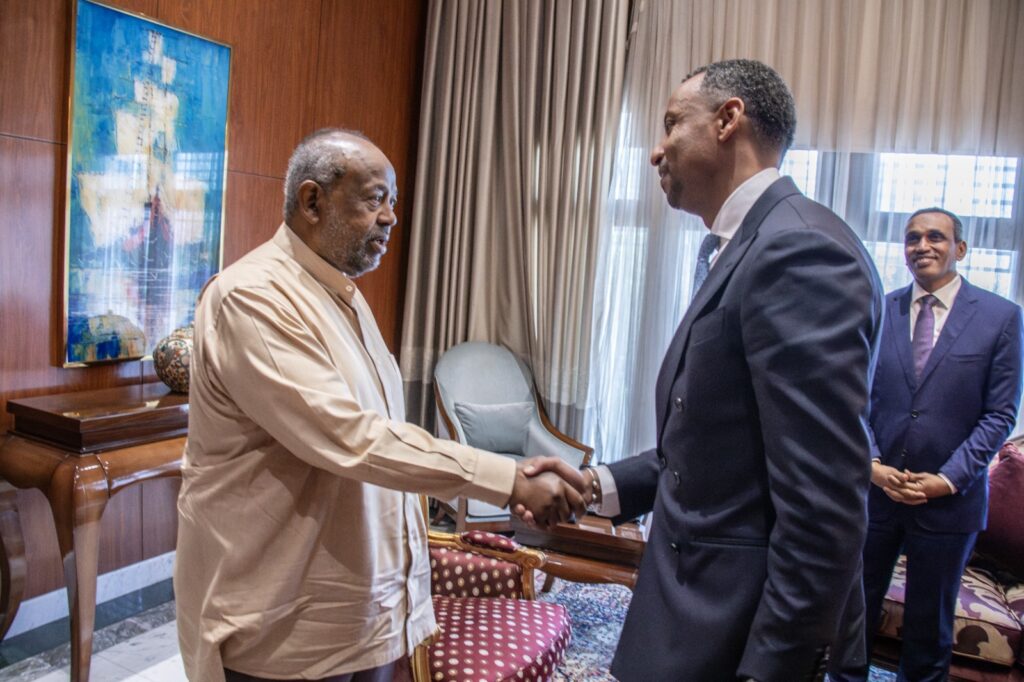
The emerging strategy was underscored by a recent visit to Djibouti by Ethiopian Investment Holdings (EIH) CEO Brook Taye and senior officials from the Dangote Group. The delegation met with Djibouti President Ismail Omar Guelleh as discussions on future energy and infrastructure cooperation continued.
The proposed plan involves constructing a pipeline linking Djibouti’s Horizon Oil Terminal with Dawale, a border town in Ethiopia.
It remains unclear whether EIH is involved in the new storage project being pursued by the Dangote Group.
The potential Damerjog investment comes as Dangote expands its industrial and energy interests across East Africa. The group is already partnering with EIH on a $2.5 billion fertilizer project in Gode, Ethiopia’s Somali Region, while Dangote is also pursuing plans for a major refinery in Kenya.
Dangote is simultaneously seeking to raise capital through the planned initial public offering of part of its Nigerian refinery business, highlighting the group’s broader push to expand its energy operations across Africa.
For Ethiopia, the growing relationship with Dangote could link the Gode fertilizer project, fuel pipeline plans and Djibouti’s maritime infrastructure into a wider regional industrial and logistics network.
The development could give new momentum to a project that Djibouti initially pursued as an alternative to expanding the existing Horizon Djibouti Terminals facility.
The earlier bottleneck at Damerjog had become particularly significant because the port’s jetty could receive tankers, but without adequate storage facilities there was no complete logistics chain for receiving, storing and distributing petroleum products.
With Dangote potentially investing in the missing storage component, Damerjog could finally move from a completed jetty awaiting a depot to a functioning petroleum logistics hub.
The project is also strategically positioned to connect maritime fuel imports with railway infrastructure, potentially strengthening Djibouti’s role as a regional energy gateway for landlocked Ethiopia and the wider Horn of Africa.SECO