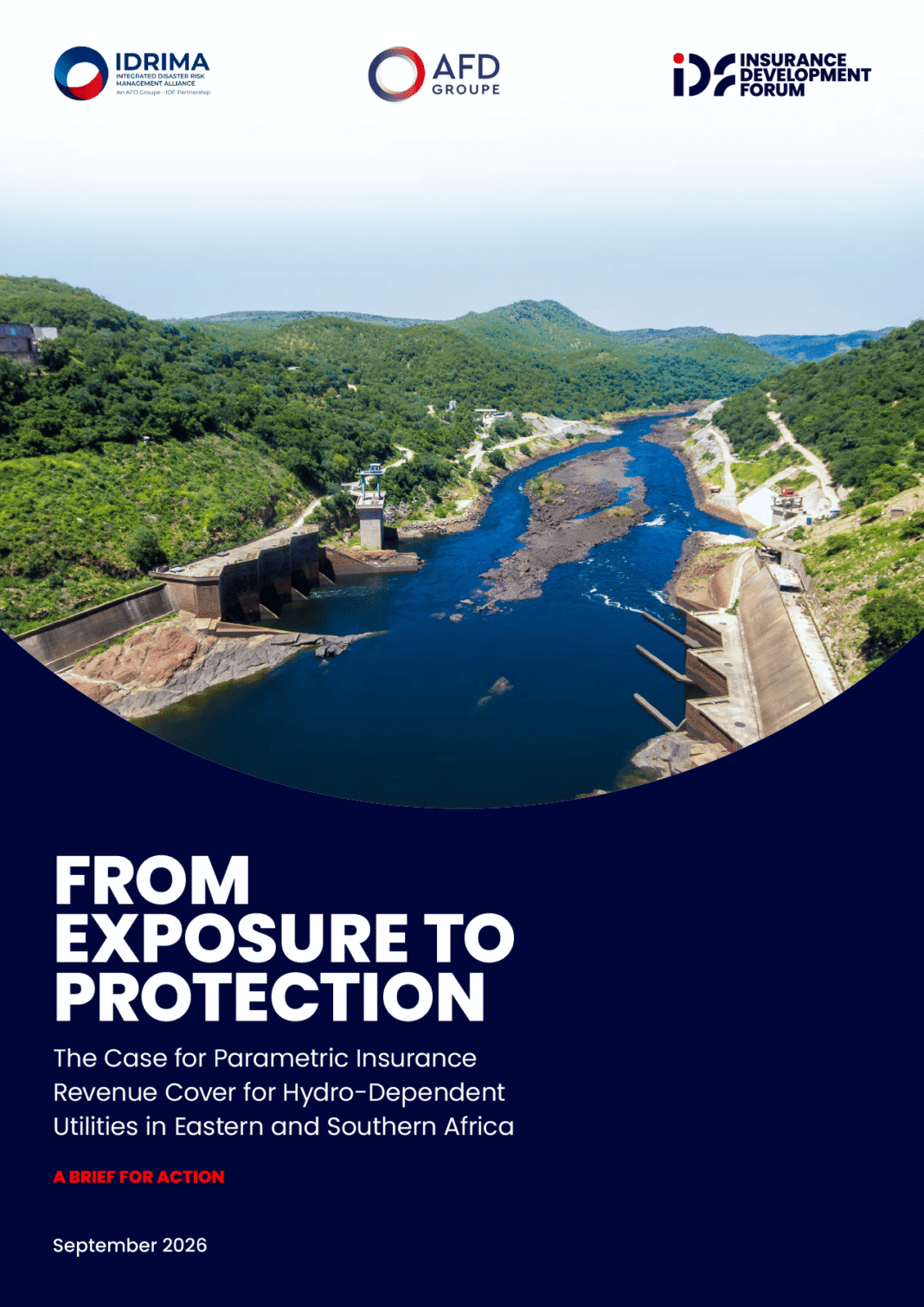
Ethiopia’s heavy dependence on hydropower is putting the country’s electricity revenues and public finances increasingly in focus as a new regional initiative calls for climate-risk insurance to protect hydro-dependent utilities across Eastern and Southern Africa.
A September 2026 brief by the Agence Française de Développement (AFD) Group, Insurance Development Forum (IDF) and Integrated Disaster Risk Management Alliance (IDRIMA) identifies Ethiopia among African countries where hydropower accounts for more than 80 percent of electricity generation. The report warns that such dependence exposes electricity supply, utility revenues and public finances to increasingly unpredictable hydrological conditions.
The report argues that the main financial threat is not necessarily a decline in average hydropower output, but more frequent and deeper drought-related shortfalls. An assessment of 64 hydropower plants across 13 African countries projects a relatively modest average continental decline in capacity, while warning that extreme drought years could create much larger financial and operational disruptions.
For Ethiopia, the exposure is particularly significant because the country is also becoming an important electricity supplier to neighbouring markets. The report notes that Kenya has imported electricity from Ethiopian Electric Power since November 2022 through the 500 kV Ethiopia–Kenya high-voltage interconnector, under a 25-year power purchase agreement that began at around 200 MW and is expected to scale toward 400 MW. Ethiopia also exports electricity to Djibouti and Sudan, with Tanzania interconnection identified as a further development.
This regional trade provides a potential buffer when individual countries experience generation shortfalls, but it also creates a vulnerability: countries relying on imports could face additional pressure if drought affects their electricity supplier at the same time.
The report therefore points to the possibility of a regional hydropower revenue-insurance mechanism involving countries connected through the Eastern African Power Pool (EAPP). Such a system could spread climate-related financial risk across countries whose hydrological conditions are not perfectly correlated. However, the report stresses that the actual correlation of drought conditions must first be assessed using historical rainfall, streamflow, reservoir and generation data.
Kenya is already emerging as an important test case. The IDRIMA-backed project involving KenGen is developing a rainfall-triggered parametric insurance product. KenGen operates about 850 MW of hydropower capacity, accounting for around 40 percent of Kenya’s national output, while four significant droughts have affected the Tana River basin since 1999.
The proposed approach could have wider implications for Ethiopia and other East African utilities. Parametric insurance pays when an agreed climate indicator, such as rainfall, reservoir levels or streamflow, crosses a predetermined threshold, allowing payouts to be made rapidly without conventional loss assessment. The mechanism is intended to provide liquidity when hydropower revenues fall and backup electricity costs rise.SECO