It is a victory — partial, fragile, and fiercely contested. Reporting by The Observer, published this weekend, has revealed that the Gondarine Gospel, a sacred Ethiopian manuscript stolen by British troops from the fortress of Emperor Tewodros II 158 years ago, has been withdrawn from public sale following an international campaign led by a renewed historian and pressure from the Ethiopian government.
The book dealer that listed it, however, is not backing down.
The Gospel That Came Home to No One
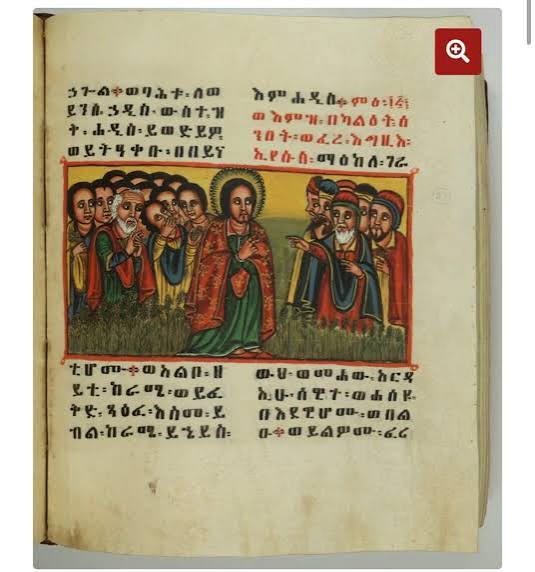
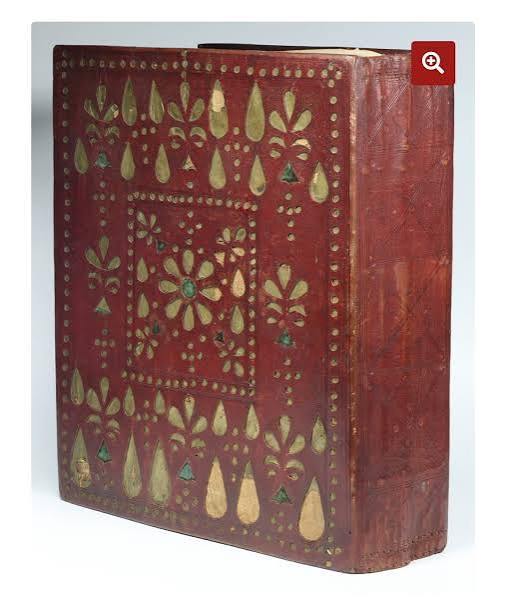
The Gondarine Gospel is one of the most extraordinary objects to survive the Battle of Magdala. Produced between 1730 and 1740 and written in Ge’ez — Ethiopia’s ancient liturgical language — it contains the complete text of the Gospel of Luke and all but the final 16 verses of the Gospel of John, illustrated with 235 vivid paintings in reds, greens, and yellows depicting biblical miracles and the resurrection. Bound in glossy leather with intricate gold patterns, it is as much a work of art as a sacred text.
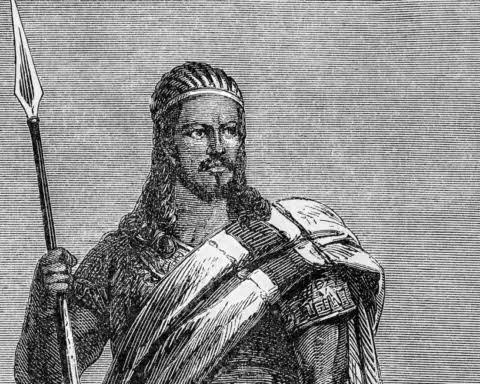
It belonged to Emperor Tewodros II. In April 1868, British forces under General Robert Napier stormed Magdala, the Emperor’s mountain fortress. Tewodros died that day — taking his own life rather than surrendering. His treasury was looted. The Gospel left Ethiopia in the hands of Napier himself, who was subsequently awarded the title Baron Napier of Magdala by the British Crown.
For the 158 years that followed, the manuscript passed through private collectors, auction houses, and institutions across Europe — Bernard Quaritch, the Pitt Rivers Museum, the Schøyen Collection, and the collections of Sir Paul Ruddock and Sam Fogg — before arriving, this September, in the sales catalogue of Inlibris, a rare books dealer based in Austria, listed at a guide price of €250,000 at the Abu Dhabi International Book Fair.
The Man Who Raised the Alarm
It was Alula Pankhurst — a renowned historian specialising in Ethiopian history and the grandson of Sylvia Pankhurst, the English suffragette and activist who devoted much of her later life to defending Ethiopia during the Italian invasion of 1936 — who first alerted Ethiopian authorities to the sale, The Observer reports.
His intervention triggered a swift response. The Ethiopian Heritage Authority wrote formally to Inlibris requesting that the manuscript be withdrawn from sale and returned to Ethiopia on “moral and ethical” grounds. The Authority’s position was clear: since Inlibris openly acknowledged that the manuscript had been looted, it should first be withdrawn, and negotiations for repatriation could then begin.
According to The Observer, the campaign worked — up to a point. The Gondarine Gospel was withdrawn from sale at the Abu Dhabi Book Fair. It will not be sold there this week. But the dealer has made clear that withdrawal from this particular sale does not mean repatriation. It does not mean the manuscript is going home.
Every Museum in the West Would Be Empty
In the face of mounting international pressure, Inlibris has remained publicly defiant. Reporting by Al Jazeera found that the dealer’s representative disputed the characterisation of Ethiopia’s communications as reasonable, claiming the letters from Ethiopian authorities had been “threatening” in nature — a claim flatly rejected by Pankhurst.
“The Ethiopian Heritage Authority wrote them a polite letter which was not a threat,” Pankhurst told Al Jazeera.
The dealer’s broader argument — and the one that will resonate painfully with anyone who has followed the restitution debate — is that accepting the moral logic of Ethiopia’s claim would have consequences far beyond one manuscript. If objects looted during colonial campaigns must be returned to their countries of origin on moral grounds, the argument goes, then the British Museum, the V&A, the Louvre, and dozens of other Western institutions would face demands they could not satisfy.
That argument has a name. Critics call it the “empty museums” defence. It is the same argument deployed whenever the Benin Bronzes are discussed, whenever Greece asks for the Elgin Marbles, whenever a former colony asserts its right to its own cultural heritage. If we give this back, we would have to give everything back. And if we give everything back, our museums would be empty.
It is, in its way, an admission. If accepting moral responsibility for colonial-era looting would empty Western museums, then Western museums are, to a significant degree, built on looting.
Ethiopia Rejects the Buyback
In the course of negotiations, Inlibris offered Ethiopia the opportunity to purchase the manuscript at a “preferential price” — framed as a gesture of goodwill. Ethiopia rejected the offer outright.
The Ethiopian Heritage Authority’s position is straightforward: you do not buy back what was taken from you. The manuscript was looted. It was not sold, not traded, not gifted. It was taken by force from a country that was never colonised — a point of profound national pride — during a military campaign that the British government itself later acknowledged involved the removal of cultural property on a massive scale.
To pay for its return would be to legitimise the chain of transactions that followed the looting. Ethiopia is not willing to do that.

A Movement Gathering Momentum
The Gondarine Gospel case arrives at a moment when the global restitution movement is gaining significant ground. In November 2024, an ornamented Ethiopian shield also stolen during the Battle of Magdala was successfully repatriated after more than 150 years, following negotiations led by Prince Ermias Sahle-Selassie Haile-Selassie through the Royal Ethiopian Trust. That shield had been withdrawn from a UK auction house after public pressure and diplomatic intervention — a direct precedent for what has just happened in Abu Dhabi.
The pattern is becoming familiar: a looted Ethiopian artefact appears at auction, campaigners and diaspora networks mobilise, pressure is applied, and the sale is withdrawn. What has not yet happened — with the exception of the shield — is the artefact actually returning to Ethiopia.
The Gondarine Gospel has been withdrawn. It has not been returned. Where it goes next — whether into another private collection, another auction house, or eventually home to the National Museum of Ethiopia — remains to be seen.
What Is at Stake
This is not, at its core, a story about one book. It is a story about what looting means — not just in 1868, but now, in 2026, when the objects taken during that campaign continue to circulate openly on the international market, changing hands for hundreds of thousands of euros, while Ethiopia watches from a distance.
Emperor Tewodros II died defending his country. The manuscript that bore his name has since been held by a British general, several European collectors, an Oxford museum, and now a rare books dealer in Abu Dhabi. It has been openly catalogued, publicly sold, and institutionally held for a century and a half. Its origins were never concealed. Its destination was never questioned.
Until now.
Alula Pankhurst — the grandson of a woman who gave years of her life to Ethiopia’s freedom — has helped ensure that, at least for this week, the Gospel will not be sold again. His grandmother would have understood why.
The dealer says that applying restitution logic would empty Western museums. Perhaps that is exactly where the conversation should begin.