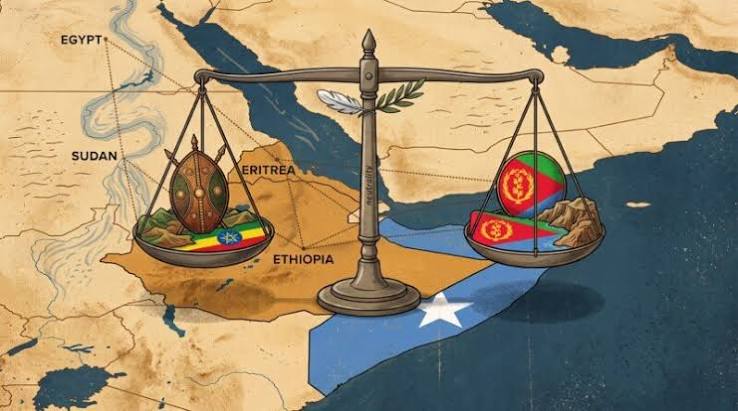
Somalia says it will maintain its relations with both Ethiopia and Eritrea, seeking to distance itself from the escalating dispute between the two neighbouring countries as fears grow of a wider conflict in the Horn of Africa.
Somalia’s Deputy Foreign Minister Hassan Mohamed Ali Nadaara told the BBC that Mogadishu remains committed to peace and neutrality, stressing that its diplomatic relations with the two countries have not changed, according to a report by Garowe Online published on Monday.
The statement comes amid growing scrutiny of Somalia’s regional diplomatic position following President Hassan Sheikh Mohamud’s participation in a four-country summit in Egypt on October 4, alongside the leaders of Egypt, Eritrea and Sudan.
The summit in Alamein produced a joint declaration addressing regional sovereignty, Nile water disputes and security in the Red Sea. The discussions have attracted attention in Ethiopia, which has longstanding disagreements with Egypt over the Grand Ethiopian Renaissance Dam and has called for greater access to the Red Sea.
Nadaara rejected suggestions that Somalia’s participation in the summit signalled an alignment against Ethiopia. He maintained that Mogadishu could pursue diplomatic partnerships with different countries without becoming involved in their disputes.
He also indicated that security cooperation between Somalia and Ethiopia remains intact. Ethiopian troops continue to participate in the African Union’s security mission in Somalia and work with federal authorities against security threats.
Addressing speculation about a possible Ethiopian troop withdrawal following renewed fighting in northern Ethiopia, Nadaara said Mogadishu had not received official notification confirming such a move.
However, he acknowledged that further escalation in Ethiopia could affect Somalia’s security, economy and cross-border movement, given the countries’ shared border and close ties.
Relations between Ethiopia and Eritrea have deteriorated sharply in recent days, with Addis Ababa accusing Asmara of sending troops into the Tigray region and supporting armed groups opposed to the federal government. Ethiopia has said it reserves the right to defend its territory.
Eritrea has denied the allegations and accused Ethiopia of preparing the ground for military action. Both countries have taken their grievances to the United Nations Security Council.
The worsening dispute has revived concerns that renewed fighting in northern Ethiopia could develop into a direct confrontation between the two countries, threatening the fragile peace established by the 2022 Pretoria agreement that ended the two-year war in Tigray.
For Somalia, maintaining ties with both neighbours carries significant security and economic implications. A wider regional conflict could disrupt trade, cross-border movement and security cooperation at a time when governments across the Horn of Africa are already facing overlapping political and security challenges.
Somalia’s latest statement signals an effort to preserve diplomatic flexibility as tensions rise, while avoiding a public commitment to either side.