The International Monetary Fund (IMF) has credited Ethiopia’s foreign-exchange market reforms and fuel-subsidy reductions with helping the country absorb external economic shocks, while highlighting the pressure of rising international energy prices on domestic fuel costs.
In its October 2026 Regional Economic Outlook Update for Sub-Saharan Africa, the IMF said earlier reforms in Ethiopia and Nigeria had supported more stable macroeconomic conditions and provided a clearer basis for private investment, helping the economies withstand a less supportive external environment.
The report comes as disruptions to global energy supplies linked to the Middle East conflict have pushed up fuel and other import costs, exposing energy-importing economies to renewed inflationary pressure.
The IMF’s assessment shows that Ethiopia passed through approximately 38 percent of the increase in the international gasoline benchmark into domestic retail prices between February 23 and September 14, 2026. The corresponding figure for diesel was 44 percent, excluding the higher commercial diesel tariff.
The figures illustrate the extent to which domestic fuel prices have adjusted in response to international market movements, although the report does not provide a three-year comparison of Ethiopian retail fuel prices.
The Fund said Ethiopia had differentiated temporary fuel subsidies by product and customer to contain fiscal costs. However, it warned that broad-based price relief can be expensive and often benefits better-off households disproportionately, potentially diverting resources from essential social spending.
The report recommended that governments make fuel subsidies and tax relief transparent, time-limited and properly funded, with support targeted at vulnerable households. It also cautioned that losses accumulated by fuel importers and state-owned utilities could result in arrears, shortages or rationing.
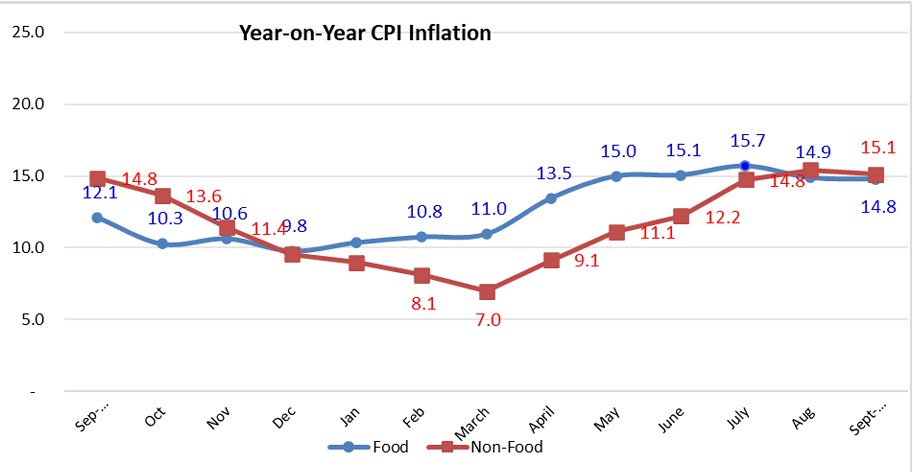
For Ethiopia, the risks extend beyond fuel prices. Higher energy and fertilizer costs could feed into transport, production and food prices, while climate-related disruptions could add pressure to agricultural output and public finances.
The IMF said El Niño typically brings drier June–September conditions to northern and western Ethiopia. Forecasts for October–December 2026, however, point to above-normal rainfall in parts of southern Ethiopia, potentially benefiting agriculture while increasing the risk of flooding and infrastructure damage.
The report also identified Ethiopia among countries that have made progress with sovereign debt restructuring, alongside Ghana and Zambia.
While recognizing the contribution of economic reforms to resilience, the IMF cautioned that the regional outlook remains exposed to renewed energy disruptions, tighter financing conditions and climate shocks.SECO