By EBV staff writer
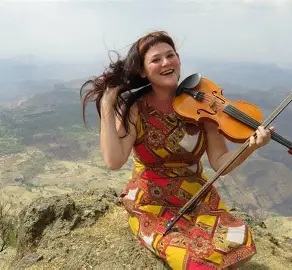
Violinist and composer Kaethe Hostetter, a pivotal figure in the contemporary Ethiopian music scene for over twenty years, is preparing to release her first solo album. The record, titled Woradj Alle (Impressions of Ethiopia), is scheduled for release on April 20, 2026, through the New Orleans-based label Domino Sound.
The project marks a significant turning point for the New York-based artist, representing a synthesis of extensive study and lived experience in Ethiopia, where she resided for eleven years. The album arrives with the support of Domino Sound, a label widely recognized for its work in preserving and reissuing classic Ethiopian recordings, establishing a contextual foundation for Hostetter’s original compositions.
According to materials accompanying the announcement, the album’s construction relies on live-looped violin and electronic elements, integrating Ethiopian melodic frameworks with minimalist dub production and improvisational approaches. Hostetter describes the resulting work not as a fusion of genres but as a form of “transmission,” with each piece intended as a sonic vignette reflecting individuals, encounters, and atmospheres encountered during her time in Addis Ababa.
The album’s title derives from an Amharic phrase commonly heard in the city’s minibus taxis, translating roughly to “let me off around here.” The phrase informs the album’s conceptual structure, which seeks to create immersive sonic environments where memory and place are layered through violin-based composition.
The release coincides with Hostetter’s recognition as a 2026 Jerome Foundation Awarded Artist at Roulette Intermedium in Brooklyn. In connection with this honor, she is scheduled to present a multimedia iteration of Woradj Alle at the venue in April, incorporating visual elements into the performance. In the period preceding the album’s launch, Hostetter plans to share archival material from Ethiopia and documentation tracing the project’s visual development.
Hostetter’s background includes founding the Addis Ababa-based ensemble Qwanqwa, and her performance history features collaborations with prominent Ethiopian musicians including Mahmoud Ahmed, Mulatu Astatke, and Teddy Afro. Her work has consistently explored intersections between American and Ethiopian musical traditions, incorporating experimental and electronic approaches.©SECO