EBV staff writer, Washington DC, USA
The Ethiopian government has announced that the ongoing global shock stemming from the situation in the Gulf region could affect the deep economic reform program launched in July 2024. Officials are currently in discussions with international partners to address the emerging challenges.
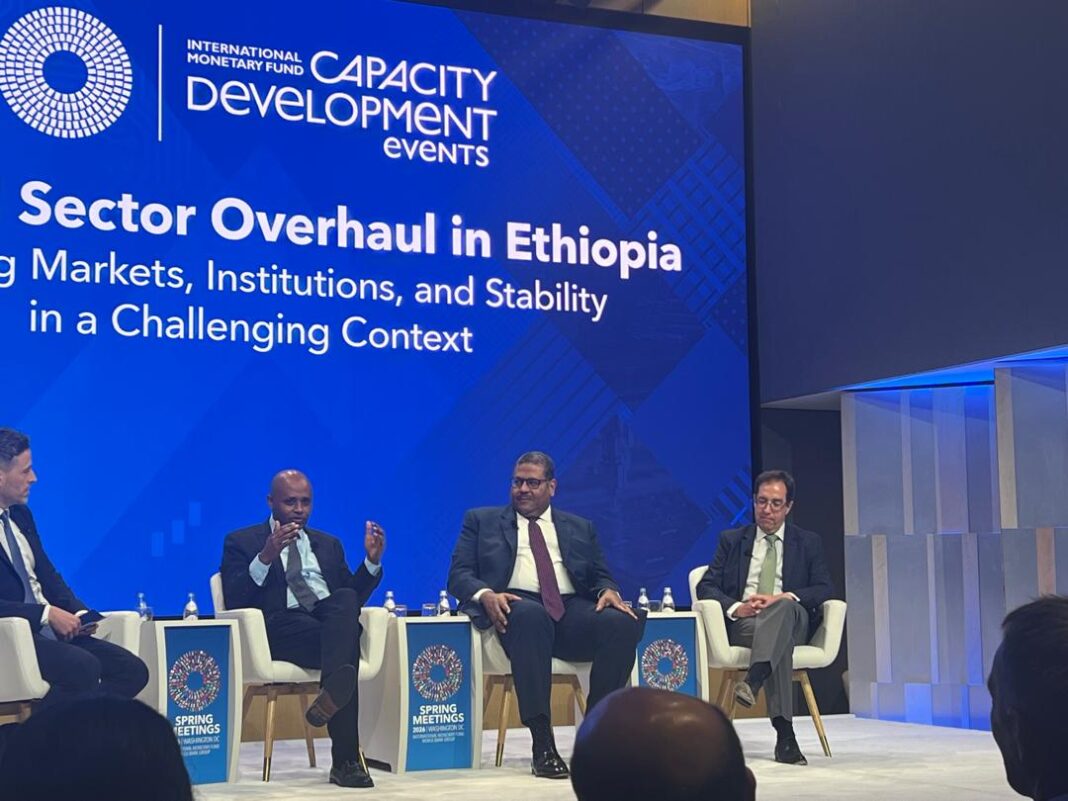
Speaking on the sidelines of the International Monetary Fund (IMF) and World Bank Spring Meeting in Washington, D.C., the Governor of the National Bank of Ethiopia (NBE), Eyob Tekalegn (PhD), stated that disruptions to fuel and fertilizer supplies resulting from the Gulf crisis pose a threat to the reform agenda.
“The reform is being carried out with the understanding and collaboration of our partners,” Governor Eyob said. “So we are again in that spirit of partnership, discussing with our partners. We say, ‘Okay, how do we manage this temporary shock so that we remain focused on our long-term goals, but find a creative way out of this particular challenge?’”
Describing the situation as a “very difficult time,” the governor expressed optimism about Ethiopia’s ability to weather the crisis. “Rest assured that, as we have done in the past, we will find a way to overcome this challenge—possible other shocks, COVID, some domestic conflicts. The Ethiopian community has shown resilience and has emerged even stronger than the shock. So I remain optimistic.”
The IMF, in its regional economic outlook, noted that the Gulf situation is tightening fuel availability in many African countries, including Ethiopia. The Fund also warned that a 20 percent increase in international food prices could push an additional 20 million people across Sub-Saharan Africa into moderate or severe food insecurity.
Experts suggest that the Ethiopian government may need to review or delay certain components of its reform program in response to the Gulf crisis. The conflict has already disrupted the movement of fertilizer and oil, key inputs for Ethiopia’s agriculture and transport sectors.©SECO