Government misses long-standing goal of reaching middle-income status as World Bank keeps Ethiopia among 25 low-income economies.
Ethiopia has remained in the World Bank’s low-income country category for another year, extending its stay on the list of the world’s poorest economies despite successive government pledges to achieve middle-income status.
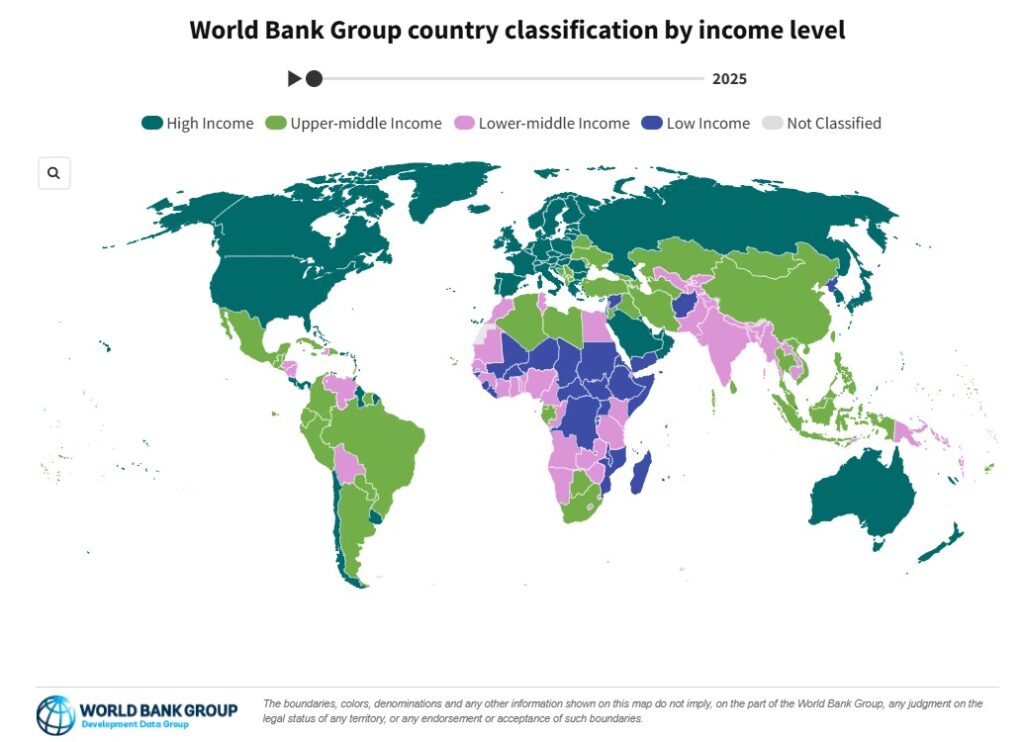
The latest World Bank Group Country Income Classifications, released on July 1, places Ethiopia among 25 low-income economies worldwide. The annual classification, which covers 218 economies, will remain in effect until the end of June 2027.
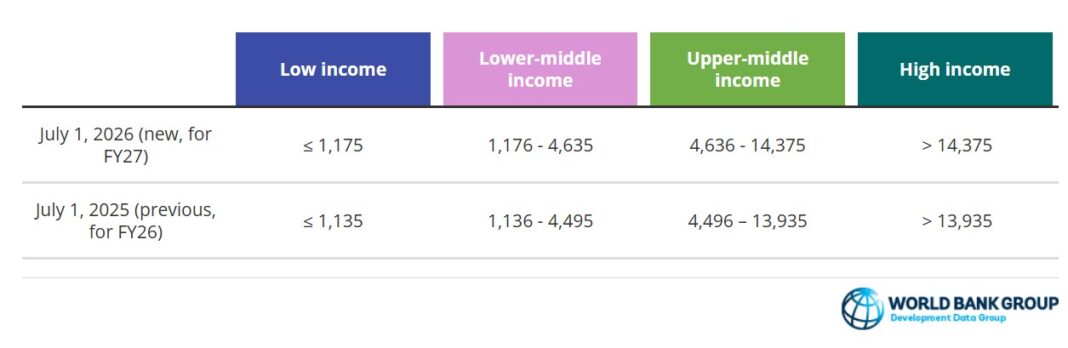
The classification means Ethiopia continues to have a gross national income (GNI) per capita of USD 1,175 or less, the threshold for low-income economies under the World Bank’s methodology.
The latest assessment marks another setback for the country’s long-standing development ambitions. When the former Ethiopian People’s Revolutionary Democratic Front (EPRDF) launched the Growth and Transformation Plan (GTP I) in 2010, it projected that Ethiopia would attain middle-income status by 2025. Political leaders have repeatedly maintained over the past two decades that the country was on track to join the lower-middle-income group within a relatively short period.
However, the latest World Bank update that EBV reviewed shows Ethiopia has yet to cross the income threshold required to move into the lower-middle-income category.
The World Bank noted that while the global income landscape has changed significantly since it introduced the classification system in 1987, Ethiopia remains among the countries yet to graduate from the lowest income group.
According to the report, the share of countries classified as low income has fallen from 30 percent in 1987 to 11 percent today, reflecting broad improvements in income levels across many developing economies.
This year’s update saw Togo graduate from the low-income to the lower-middle-income category. Meanwhile, Jordan, Micronesia, the Philippines, Sri Lanka and Vietnam advanced from lower-middle-income to upper-middle-income status.
The World Bank said the annual classifications are based on gross national income per capita estimates for the previous calendar year and are updated every July 1 by its Development Data Group.
The classifications are widely used to determine eligibility for concessional financing and development assistance, while also serving as a benchmark for governments, researchers and international organizations to monitor economic progress.
Of the 25 countries currently classified as low income, 21 are in Sub-Saharan Africa. The remaining countries in the group are Afghanistan, North Korea, Syria and Yemen. SECO