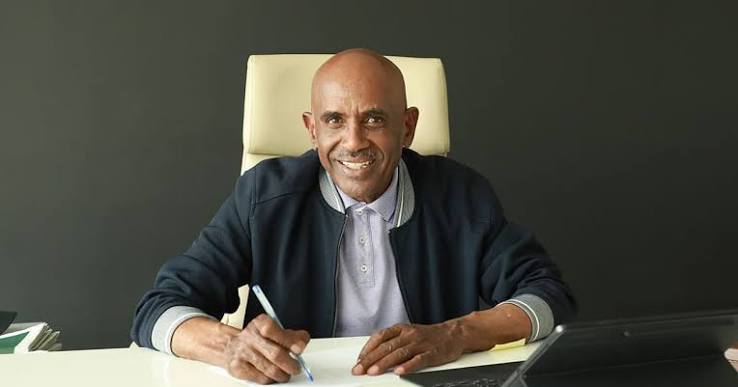
There was a time when Awotaheign Kiros did not have to look for a job.
He was the man creating jobs.
For nearly three decades, Awotaheign built Akir Construction from a small contractor into one of Ethiopia’s better-known construction companies, taking on projects in some of the country’s most difficult and remote locations.
The company built bridges, roads, universities, schools and health centres. It constructed airports. It moved cement by donkey for days to reach a construction site. In one of the harshest chapters of its history, 23 of its workers died from malaria while working in a remote area of Afar, and even the doctor hired to care for the workers died there.
Akir survived governments, political transitions and difficult business conditions.
But eventually, it could not survive the accumulation of its own troubles.
Today, the man who once owned the company is an employee of DMC, a construction company that was once considered one of Akir’s competitors.
And on September 2, he may have a chance to turn the clock back.
Akir is scheduled to be sold through a public auction following a court decision in a seven-year dispute between Awotaheign and the company’s buyers. The former owner says he wants to participate in the auction and, if successful, reclaim the company he founded more than four decades ago.
For Awotaheign, it is more than a business transaction.
It is a possible return to a life he thought he had lost.
The boy from Mayguagua
Awotaheign was born in Mayguagua, on the outskirts of the historic town of Adwa in Tigray.
His childhood took him to different parts of Ethiopia, including Eritrea and Metu in western Ethiopia. After graduating from university, he spent two years working as a civil servant before joining construction companies.
Those early experiences eventually convinced him to build something of his own.
In 1986, he established Akir Construction.
The name itself came from the first letters of his name and that of his father.
What began as a contractor eventually became an enterprise that, according to Awotaheign, participated in more than 200 major projects during its roughly 30 years of operation.
“When I established my construction company called Akir in 1986, I became involved in several projects,” he told Dawit Taye, senior editor at Ethiopian Reporter.
One of the company’s early assignments was the Gondar Soft Drink Factory, where Akir constructed a storehouse and part of the factory.
The projects grew larger.
So did the company’s reputation.
Building where others feared to go
Akir’s story was not built only on contracts and balance sheets. Much of it was built in places where construction itself was an act of endurance.
Awotaheign remembers one project in an area called Gondar Ayga where cement had to be transported by donkey for as long as six days before a school could be built and handed over.
In Afar, the challenge was even greater.
At a site in an area called Artuma, cement had to be transported from town by tractor because the location was regarded as almost unreachable.
“We bravely entered, fought through many struggles, completed the work and handed it over,” he recalled.
The price was devastating.
Twenty-three workers died of malaria.
The company hired a doctor to protect its workforce. He also died there.
For Awotaheign, those memories remain inseparable from Akir’s success.
The company eventually left its mark across the country.
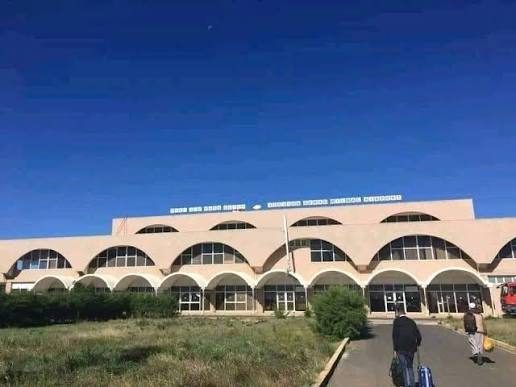
It constructed the Omo Bridge, described as one of Ethiopia’s longest and largest bridges. It built four prominent airports — Jigjiga, Assosa, Bale and Kombolcha — and worked on universities including Gondar, Mekelle and Arba Minch.
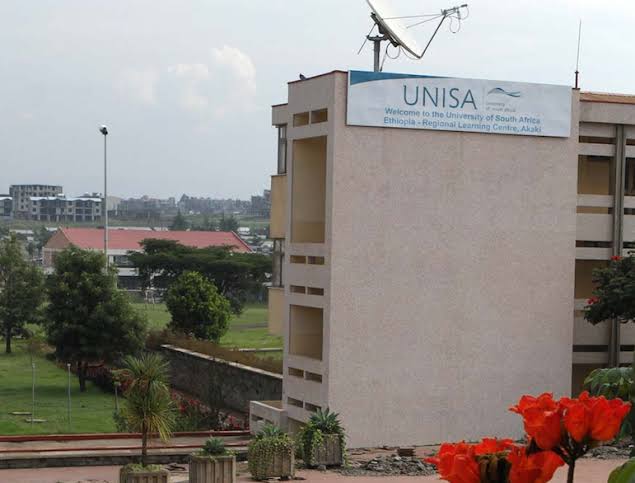
It built the Banking and Insurance Training Institute near Akaki, later known as UNISA University.
Its road projects included the Jigjiga-Togo Wajaale road and urban road construction in Mekelle, Adama and Dire Dawa, as well as rural roads in different parts of the country.
By then, Akir was no longer simply a contractor.
It was a brand.
When the work stopped coming
The collapse did not happen because Akir suddenly forgot how to build.
Awotaheign says the company still had projects under execution. The deeper problem, he argues, was that new projects stopped coming.
The Ethiopian Roads Administration, one of the company’s biggest clients, became central to his explanation of what went wrong.
He alleges that Akir was prevented from securing new road projects despite its performance record.
“We were prevented from being awarded contracts without our knowledge,” he said, arguing that being denied projects he believed the company was entitled to receive created enormous financial pressure.
There was, he says, a particularly painful contradiction.
Akir had been publicly recognized by the Roads Administration as one of the country’s top-performing contractors, yet the company was simultaneously struggling to obtain new projects.
“Being publicly recognized on the notice board for ranking first in performance while simultaneously being restricted from obtaining new work placed an extreme burden on us,” he recalled.
Those allegations are Awotaheign’s account of the events and would require responses from the relevant former officials and institutions to establish the full picture.
Then another blow came.
In 2017, Akir’s project camp for the Debark-Muhayit road was destroyed by fire.
The project itself was difficult, running through mountainous terrain, while security problems made the situation even harder.
The destruction of the camp added another layer of losses.
Meanwhile, the company’s existing bank debt remained.
Without enough new work to sustain the business, the pressure became overwhelming.
Akir was running out of room.
Selling the company he built
Awotaheign says the company’s employees were also beginning to face uncertainty.
He feared that if the situation continued, the workforce would scatter.
So he made what he considered the least damaging choice available: sell Akir to people he believed had the capacity to keep the business alive.
It was not, he says, a sale made from a position of strength.
It was a rescue attempt.
At the time, he says, Akir owned buildings, workshops, more than 120 dump trucks and numerous other vehicles, including dozers, graders and loaders.
The value of the company’s property exceeded one billion birr, according to Awotaheign’s recollection — a fortune at the time.
His agreement with the buyers, he says, was straightforward.
They would take responsibility for Akir’s existing debts, retain its employees, continue the company’s work and complete projects already under construction. Any remaining amount from the transaction would then be paid to him.
But the arrangement did not unfold as expected.
The money was not fully paid.
The dispute eventually reached court.
What followed was a legal battle that lasted seven years.
Seven years in court
The case recently reached a final verdict.
According to Awotaheign’s account of the ruling, the buyers, Seyifu Ambaye and Yikunoamlak Ambaye, were ordered to settle outstanding obligations from the transaction.
But there was another twist.
The compensation Awotaheign is entitled to receive is tied to the sale of Akir through a public auction scheduled for September 2.
The company he once owned is therefore set to go under the hammer.
And the former owner wants to bid.
He says he wants Akir back.
Yet even as he looks toward the auction, he remains concerned about unsettled obligations associated with the company and what exactly would remain if he were to regain control.
For a businessman who once controlled a company with hundreds of projects and substantial assets, the possibility of buying back his own former company is a remarkable reversal.
From owner to employee
Perhaps the most striking part of Awotaheign’s story is not the courtroom.
It is where he is now.
He currently works for DMC, a company that was once a competitor of Akir.
The man who once competed for construction contracts against other companies now works as an employee alongside people in an industry he once entered as an owner.
But he does not describe the relationship simply as a fall.
He calls the owner of DMC, Daniel Mamo, a friend.
“I worked with my friend Daniel Mamo’s company, a former competitor,” he said.
And if Awotaheign succeeds in buying Akir at auction, Mamo has promised to help him, he says.
The possibility of returning to Akir therefore comes with an unusual circle of relationships: a former competitor could become part of the effort to revive the company.
The losses beyond the balance sheet
But the collapse of Akir was not the only thing Awotaheign lost.
His personal life had already begun to unravel years earlier.
He separated from his wife, with whom he has five children, about 12 years ago.
His children now live abroad — four in the United States and one in Britain.
Distance, however, is not the only thing separating him from them.
He says he rarely communicates with most of them.
His youngest son, now 18, is the one who calls him more often.
The memory of raising his children remains vivid.
He recalls taking them to school and preparing breakfast for them. He sent them to Sanford School, one of Addis Ababa’s better-known private schools.
Now, he says, most of his older children have established their own families and no longer need his financial support.
But what hurts him is not the money.
It is the distance.
“They need their mother’s willingness to call me,” he said, describing the emotional separation from children he once raised closely.
It is a different kind of loss from losing a company.
A company can perhaps be bought back.
A childhood cannot.
What remains
Awotaheign’s story is therefore not simply the story of a failed construction company.
It is a story about how quickly a person’s position can change.
A man who once controlled heavy machinery, employed hundreds of people and moved between major construction projects now works as an employee of a former competitor.
A company that once owned more than 120 dump trucks and other heavy equipment is now headed toward a public auction.
A businessman who once had the means to educate his children at one of Addis Ababa’s elite schools now speaks more about hearing from them than about supporting them financially.
Yet he does not speak only about what he lost.
He still talks about construction.
He still talks about Akir.
And he still talks about the future.
The industry, he says, has changed dramatically.
Projects that once took long periods to complete can now be delivered in much shorter periods, reflecting changes in technology, equipment, financing and construction methods.
He wishes he could be part of that transformation again.
Preferably under the name he created decades ago.
“I wish I would be part of such developments under the name of Akir,” he said.
On September 2, that wish will face its most concrete test.
The former owner will stand on the other side of the transaction this time — not as the seller, but potentially as a bidder.
Whether he can buy back Akir remains uncertain.
But whatever happens at the auction, Awotaheign Kiros has already lived through an extraordinary reversal: from founder to former owner, from businessman to employee, from building an enterprise to fighting in court for what remained of it.
Now he is waiting to see whether he can build it again.SECO