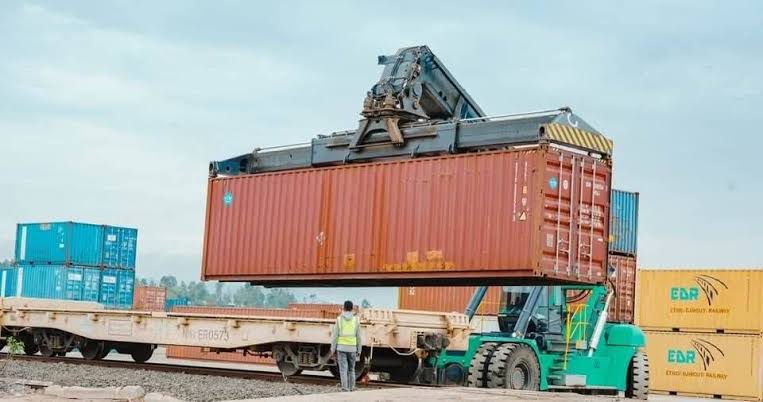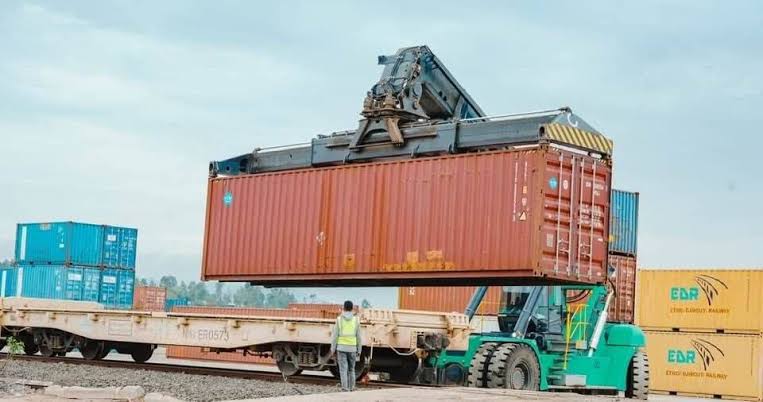
The directive eliminates additional cargo transfers from Gelan to Kality for customs processing, addressing unnecessary transportation costs, delays and inefficiencies in Ethiopia’s multimodal logistics chain.
The Ethiopian Customs Commission has directed its Addis Ababa branch to relocate customs clearance for rail-imported cargo destined for Gelan Multipurpose Port (GMP) to the terminal itself, ending the practice of transporting consignments by truck to the Kality Customs Branch Office for clearance.
In a letter dated November 11, the Commission instructed the Addis Ababa Kality Customs Branch Office to implement the revised procedure, following a formal request from the Ethio-Djibouti Railway.
According to correspondence reviewed by ETBusinessView, the railway operator had raised concerns over the existing arrangement, under which cargo arriving by train at GMP was being transferred onto heavy-duty trucks and transported to Kality for customs processing.
The railway company argued that the practice was increasing domestic transportation costs, creating unnecessary cargo-handling requirements and causing delays, while extending the logistics chain and undermining customer satisfaction.
It also highlighted the repeated loading and unloading of consignments as an avoidable operational expense that raises the overall cost of moving imported goods.
In its communication to the Commission, the railway operator said the arrangement contradicted the government’s multimodal transport strategy. It proposed that containers destined for GMP undergo customs clearance at the facility before being released directly to their respective customers.
The Commission has now endorsed the proposed operational adjustment, instructing the relevant customs office to ensure that goods transported by rail under the multimodal system complete all applicable customs formalities at the customs office located within the terminal.
Under the directive, consignments arriving at GMP will no longer need to be transported to Kality for customs processing and release. Instead, customs clearance and authorization for free circulation will be completed at the port.
The change is expected to eliminate an additional leg of inland transportation, reduce cargo-handling costs and streamline the movement of imported goods through the country’s multimodal logistics network.
The development also reinforces GMP’s role as an integrated inland logistics and customs clearance facility, supporting government efforts to improve trade facilitation and reduce the cost of moving goods across the supply chain.
The Ethio-Djibouti Railway, jointly owned by Ethiopia and Djibouti, has been working to modernize its operations and strengthen its position as a strategic freight transport corridor and alternative gateway for Ethiopia’s international trade.
The railway’s expanding role in the logistics sector comes amid broader efforts to diversify multimodal transport services. In addition to existing Ethiopian Shipping and Logistics operators, six additional multimodal transport operators have been licensed to participate in the sector, creating further opportunities to expand service capacity and competition.SECO