Weak financial safeguards, sovereign debt exposure and limited access to finance leave parts of the region vulnerable to external shocks
Sub-Saharan Africa’s financial sector faces mounting vulnerabilities amid global economic uncertainty, with the escalating Middle East conflict adding pressure through higher energy prices, tighter financial conditions and potential disruptions to remittances, the World Bank has warned.
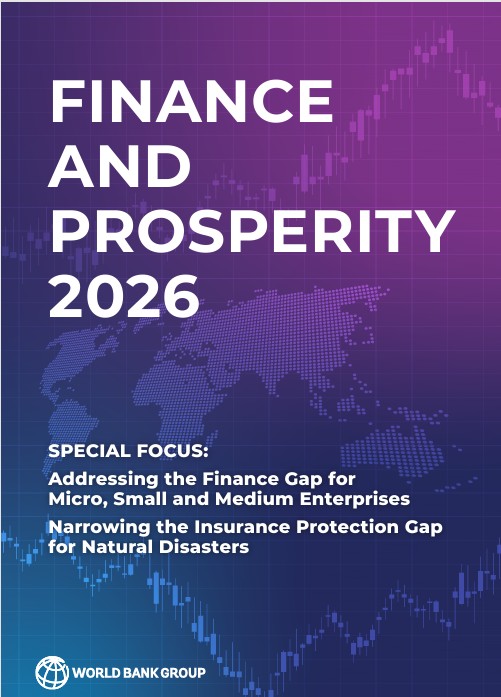
In its ‘Finance and Prosperity 2026’ report, the World Bank identifies Sub-Saharan Africa among the regions where financial sector risks were already elevated, particularly in lower-income economies, even before the escalation of Middle East tensions in March 2026.
The conflict is increasing macrofinancial pressures through rising commodity prices, currency depreciation and tighter financing conditions. The report warns that capital outflows, disruptions to remittance flows and growing links between sovereign debt and banking systems could further expose vulnerable economies.
Although banks across emerging and developing economies generally appear capable of absorbing shocks, their exposure to government debt remains a concern. Banks in these economies hold sovereign debt equivalent to a median of 15 percent of their total assets, with the most exposed 10 percent of banking systems exceeding 28 percent.
The World Bank cautions that heavy exposure to government debt can limit banks’ capacity to finance private businesses, particularly smaller enterprises that already struggle to access credit.
Weak financial supervision and inadequate safety nets are also identified as structural challenges in several developing economies. Outdated financial laws, limited independence of regulators, insufficient supervisory resources and weak crisis-management arrangements leave parts of the financial system inadequately prepared for shocks.
Businesses face a substantial financing gap
The report highlights limited access to finance as one of the major constraints on business growth and job creation in developing economies.
Micro, small and medium-sized enterprises account for 80 to 90 percent of employment in low-income and lower-middle-income economies yet continue to face substantial financing constraints.
As of 2023, the credit gap for formal MSMEs across emerging and developing economies stood at four trillion dollars, equivalent to 11 percent of their combined GDP. The annual equity financing gap was estimated at no less than 1.4 trillion dollars during 2022–24.
The World Bank says providing formal loans can increase employment at firms by an average of 12 percent while boosting sales and profits by approximately 18 percent.
It recommends expanding digital financial services, modernising credit reporting systems and developing regulatory frameworks that enable alternative lenders and financial technology providers to reach underserved businesses.
Insurance protection remains limited
Insurance is another major area of concern for developing economies, particularly in Africa, where exposure to natural disasters remains high while financial protection is limited.
Emerging and developing economies account for 40 percent of global economic losses from disasters but hold only 13.2 percent of global insurance assets and receive just 3.4 percent of insurance claims payments.
The average natural disaster insurance protection gap over the past decade stood at 58 percent, exceeding 80 percent in parts of Africa, Asia and Latin America.
The report calls for stronger insurance regulation, improved data infrastructure, public-private partnerships and greater use of financial technology to expand coverage.
It also stresses the importance of developing deeper domestic capital markets to mobilise savings, attract private investment and provide long-term financing for infrastructure and businesses.
The World Bank urges financial authorities to monitor currency and commodity-related exposures, strengthen institutional buffers and conduct stress tests to ensure that financial institutions can withstand external shocks.SECO