“The African Union should be more than an annual meeting of heads of state discussing the same issues over and over; it must drive concrete political action.”
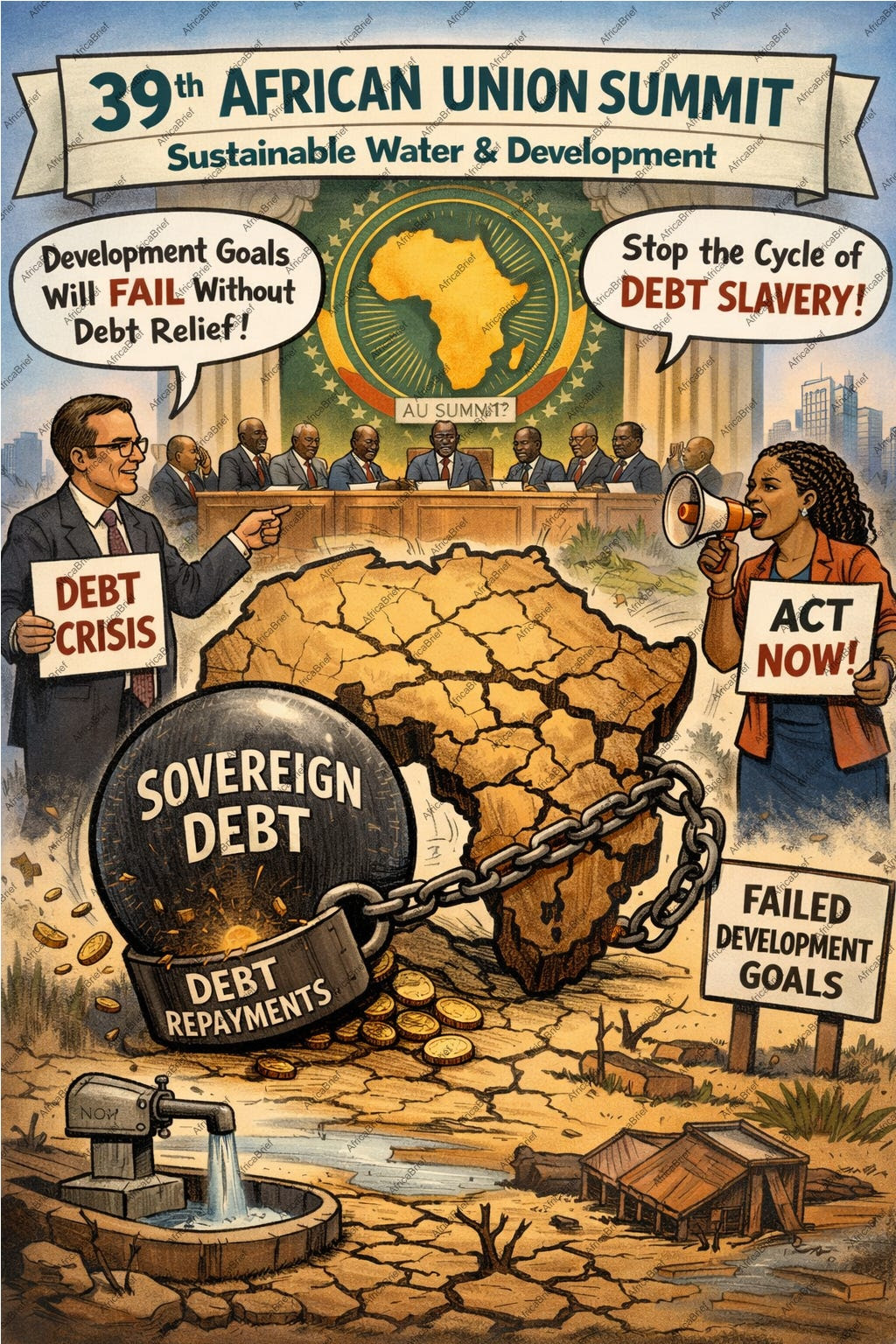
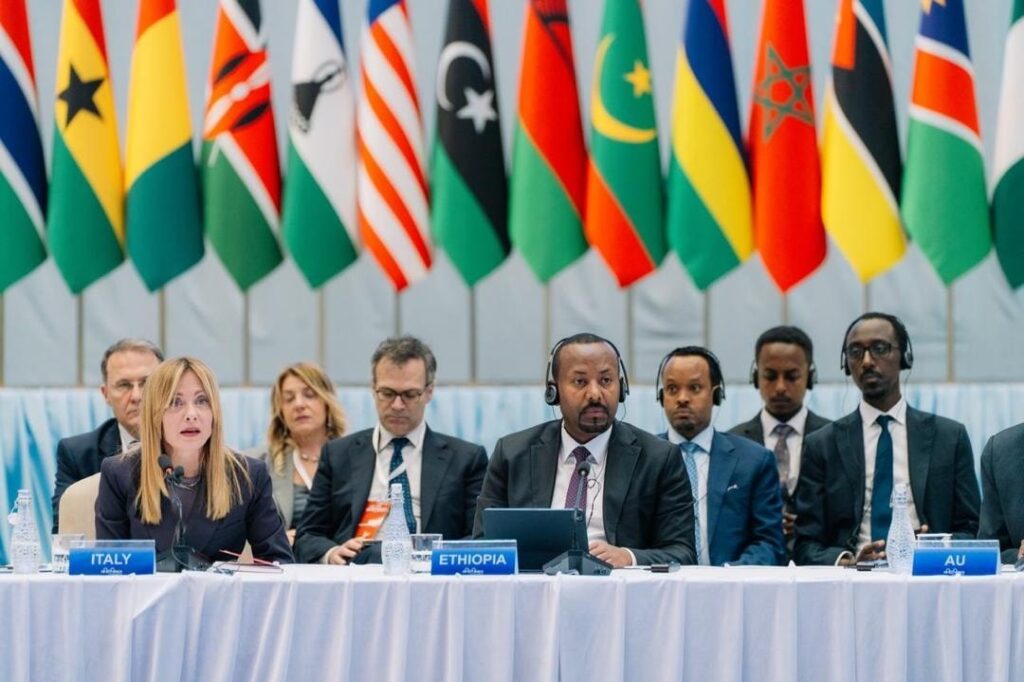
As African heads of state gather for the 39th Summit of the African Union under the theme of sustainable water availability, a coalition of economic experts and civil society leaders is warning that the continent’s ambitious development goals are doomed to fail unless the crushing weight of sovereign debt is immediately addressed, writes Winston Mwale.
In a virtual press briefing ahead of the summit on Friday, leading researchers and economists argued that the continent’s water crisis is not merely a result of climate change or scarcity, but a direct consequence of a “broken” global financial architecture that forces nations to prioritise creditor repayments over the basic survival of their citizens.
With Africa’s public debt now exceeding $2.14 trillion and 22 countries officially in debt distress, the fiscal space required to invest in essential infrastructure has all but evaporated.
Experts are now calling for a radical policy shift: a mandatory cap on debt servicing payments to free up capital for water and sanitation systems.
The Great Crowding Out
The scale of the financial haemorrhage facing the continent is staggering. According to Yungong Theophilus Jong, Interim Executive Director of the African Forum and Network on Debt and Development (AFRODAD), African nations are projected to spend $90 billion on debt service in 2026 alone—a figure that eclipses the total GDP of many member states.
“The theme of the African Union comes at a time when African countries are in a very difficult position in dealing with their debt burdens,” Jong said.
“Due to high interest rates, the cost of servicing Africa’s debt is diverting resources that could otherwise be invested in infrastructure. Debt service continues to crowd out funds for social spending and for the development of critical infrastructure, especially water and sanitation systems.”
The trade-off is stark and deadly. In Ghana, debt service obligations in 2023 exceeded the government’s combined spending on health and education. In Zambia, heavy debt burdens have decimated the fiscal space needed to maintain, let alone expand, water networks.
The African Development Bank estimates that the continent needs to spend between $130 billion and $170 billion annually on infrastructure to meet the demands of its growing population.
Yet, an annual financing gap of up to $108 billion remains, widened by the outflow of capital to external creditors.
“This underinvestment affects agriculture and industrial water needs, and the African countries end up with a lean tax base that limits domestic resource mobilization,” Jong explained.
“In the end, the African countries must borrow more in foreign currency from the system that is not ‘kind’ to African countries.”
A Radical Proposal: Capping Debt Service
Facing this vicious cycle, Frank Adu, a Senior Researcher at the African Center for Economic Transformation (ACET), presented a concrete policy proposal that challenges the orthodoxy of international finance.
Adu argues that African governments should cap debt service payments at a sustainable threshold—between 10% and 15% of government revenue—and ring-fence the savings specifically for high-multiplier investments like water infrastructure.
“Water is both a consumption good and a productivity investment,” Adu said.
“Irrigation stabilizes agricultural output and reduces import dependence; urban water systems improve public health and lower healthcare costs; industrial water access strengthens manufacturing competitiveness.”
Adu, who previously worked at Ghana’s Ministry of Finance during its debt restructuring process, contends that the current approach to debt relief is too reactive and creditor-led.
He argues that if debt relief or servicing caps could free up just 2% to 3% of a country’s GDP annually, the economic returns from investing that capital in climate-resilient water systems would eventually exceed the value of the debt relief itself.
“This would transform the trajectory,” Adu said.
“It would shift from crisis management to productive investment, strengthen domestic revenue mobilization over time because higher productivity would in turn expand the tax base, and break the debt–water–poverty cycle.”
The proposal is technically feasible, Adu noted, citing precedents in sovereign debt contracts in Zambia and Ghana. The barrier, he insisted, is not technical but political.
“The constraint is not technical feasibility but political coordination and creditor alignment,” Adu said.
“The G20 Common Framework has struggled largely because it is creditor-led, slow, and lacks enforceability, especially with private bondholders.”
A “Broken” Architecture
The briefing served as a scathing indictment of the global financial architecture, which the speakers described as structurally unfair and rooted in colonial power dynamics.
A primary target of their critique was the dominance of Western credit rating agencies.
Jong argued that the “subjective” and often adverse ratings assigned to African economies force them to borrow at prohibitively high interest rates, creating a “premium” that has nothing to do with economic fundamentals.
“The system is broken because the ability of countries to mobilize resources is determined by the credit ratings they receive,” Jong said. “
Most African countries receive adverse ratings, and lending is very sensitive to these ratings; as a result, countries face very high interest rates on the debts they carry.”
Recent reports indicate that African nations can face bond yields of up to 11%, while advanced economies like Germany or the UK borrow at rates as low as 0.2% to 1%.
This disparity is compounded by the fact that much of Africa’s debt is denominated in foreign currencies, leaving economies vulnerable to exchange rate volatility.
When local currencies like the Nigerian Naira, Ghanaian Cedi, or Ethiopian Birr depreciate, the real cost of debt skyrockets, further constraining the ability to invest in development.
“This architecture has colonial roots, an injustice that needs to be addressed because it makes it difficult for countries to mobilise resources for development without falling into debt distress,” Jong added.
Green Colonialism and Reparatory Justice
The intersection of debt, water, and global inequality was brought into sharp focus by Lavender Namdiero, a Strategic Campaigner at the African Futures Lab. Namdiero reframed the water crisis not as a failure of African governance, but as a symptom of historical extraction that continues under the guise of the “green transition.”
She pointed to the rise of “green colonialism,” where highly indebted African nations are pressured to concede water resources for export-oriented projects—such as green hydrogen production, mining for critical minerals, and biofuel monocultures—to generate the foreign exchange needed to service debt.
“Africa is asked to power a global green transition while many of its citizens can’t access clean water,” Namdiero said.
“This is a structural contradiction.”
She cited the example of green hydrogen projects in arid regions like Namibia, which require massive amounts of freshwater or energy-intensive desalination.
While these projects are touted as sustainable solutions for the Global North, they often compete with local communities for scarce water resources.
“The problem is not primarily scarcity, but about water concessions: who controls water? Who benefits from it? And how debt pressure distorts these decisions,” Namdiero said.
“Many African countries are trapped in debt and forced to prioritize foreign exchange over people’s basic needs.”
Namdiero advocated for a “reparatory justice” approach, where debt cancellation is viewed not as charity, but as restitution for historical and ongoing extraction.
She argued that debt relief must be explicitly tied to social investment, ensuring that the fiscal space created is used to build pipes, treatment plants, and clinics rather than flowing back to external creditors.
“Reparatory justice is therefore not only about history but about correcting a financial system that reproduces extraction today,” she said.
“Without debt relief and financial reform, water will continue to be sacrificed for repayment and export.”
The Failure of the G20 Common Framework
The experts were unanimous in their assessment that current international mechanisms for dealing with debt distress are failing.
The G20 Common Framework, launched with fanfare to help nations restructure their debts, was described as “inadequate,” “highly inefficient,” and “creditor-centric.”
Adu noted that the framework has failed to bring private bondholders to the table effectively and moves too slowly to provide relief when it is needed most.
He called for the establishment of a rules-based multilateral debt-resolution mechanism anchored at the United Nations, rather than the IMF or World Bank, which are dominated by Western powers.
“The G20 Common Framework has not lived up to expectations,” Jong agreed.
“It has underperformed: it is creditor-led, slow, and insufficiently ambitious given today’s larger debt burdens.”
The speakers urged the African Union to use the 39th Summit to formally endorse the Lomé Declaration, which calls for a UN Framework Convention on Sovereign Debt.
Such a convention would provide a legal basis to prevent “hold-out” creditors from blocking restructuring deals and ensure that debt sustainability assessments take into account human rights and development needs, not just the ability to pay.
A Call for Political Will
Ultimately, the panel emphasized that technical solutions exist, but they require a unified political front from African leaders.
The fragmentation of African states in global negotiations has allowed creditors to dictate terms, perpetuating the cycle of debt and underdevelopment.
“We have not managed to coordinate ourselves properly as a continent, to have that voice that African countries deserve,” Jong said.
“The Lomé Declaration and similar instruments will be as strong as the political coordination.”
Adu echoed this sentiment, calling for the African Union to institutionalize a technical platform to harmonize debt sustainability analysis and share negotiation expertise.
He also suggested that if AU member states agreed on a common benchmark for debt servicing caps, it would shift the global debate from “whether to restructure” to “how much fiscal space is needed.”
“Collective positioning will strengthen the African leverage in global negotiations,” Adu said.
The Role of Civil Society
As the summit proceeds, the role of civil society, media, and citizens in holding governments accountable is highlighted as a critical piece of the puzzle.
Namdiero warned that debt relief alone is not a silver bullet; without transparency and strong governance, freed resources could easily be misappropriated or diverted to non-essential projects.
“Reparations will not materialise on their own; they require coordinated pressure and collective action,” Namdiero said.
“Governments should treat water and related services as protected public goods… Citizens should demand transparency in debt deals, water concessions, and PPP contracts to prevent elite capture and corruption.”
She urged the media to investigate the impacts of water-intensive extractive industries and for civil society to link financing debates to human rights.
Looking Ahead
The 39th Summit of the African Union represents a critical juncture. With the continent facing a convergence of crises—debt, climate change, and water insecurity—the decisions made in Addis Ababa will reverberate for decades.
For the experts gathered at the briefing, the path forward is clear: Africa must stop asking for permission to develop and start asserting its right to economic sovereignty.
By capping debt service, demanding systemic reform, and prioritizing the basic needs of its people over the demands of external creditors, the continent can begin to turn the tide.
“We expect to see the 39th summit of the African Union adopt a strong stance on these issues,” Jong concluded.
“The African Union should be more than an annual meeting of heads of state discussing the same issues over and over; it must drive concrete political action.”
As the summit unfolds, the world will be watching to see if African leaders can summon the political will to challenge the status quo and deliver on the promise of Agenda 2063—a prosperous Africa based on inclusive growth and sustainable development.
The alternative, the experts warned, is a future where the continent continues to export its wealth while its people thirst.